


Cold Room Construction for Culinary Schools and Hotel F&B Training Centers
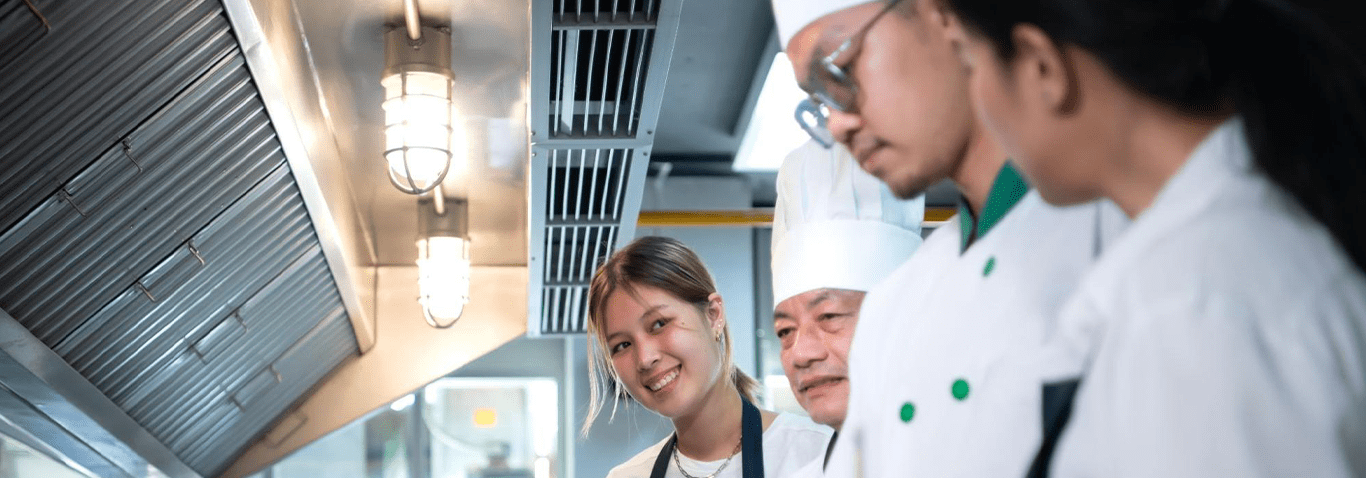
As the hospitality industry grows more complex, the demand for professionally trained chefs, pastry artists, and kitchen staff has never been higher. Culinary schools and hotel F&B training centers play a vital role in equipping the next generation of hospitality professionals—not only with cooking skills but also with real-world experience handling commercial kitchen equipment, including cold rooms and cold food storage.
Unlike typical hotel kitchens, training facilities must accommodate constant foot traffic, multiple simultaneous users, and a wide range of perishable ingredients. This calls for a unique approach to cold room construction—prioritizing durability, flexibility, and safety, while still reflecting real-world commercial kitchen standards.
In this article, we explore how Kiat Lay supports culinary schools cold room setups tailored to teaching environments, and how careful design improves both learning outcomes and food safety.
1. Designing Cold Rooms for Teaching and Practice Kitchens
Culinary schools and F&B training centers operate differently from hotels or restaurants. Instructors and students use the facilities simultaneously, with each station handling its own ingredients, prep work, and clean-up. Cold room design must support this hands-on, multi-user environment.
Coldroom Design Features for Training Facilities:
- Multiple Access Points:
Install dual-door configurations or wider entrances to allow multiple students or teams to access the coldroom without causing congestion. - High Visibility Storage:
Glass-door display chillers or transparent labeling systems help instructors supervise inventory usage and teach proper stock rotation techniques. - Zoned Internal Layouts:
Divide internal coldroom spaces into labeled sections (e.g., dairy, proteins, produce) to simulate real-world kitchen organization and reinforce food safety practices.
Case Example: Culinary Academy, Bukit Timah
A hospitality school in Bukit Timah collaborated with Kiat Lay to revamp its central cold storage area. The original design had a single-entry chiller shared by 30 students, leading to delays during training sessions. Kiat Lay installed a two-room walk-in chiller system—one for instructors and pre-prepared materials, and one for active student use. This improved lesson pacing and reduced coldroom congestion significantly.
2. Durable Freezer Room Setups for Repeated Use
Unlike commercial hotel kitchens that operate with fixed teams, training centers expose coldrooms to intensive wear and tear from hundreds of students over time. Doors are opened more frequently, and shelving systems are constantly adjusted. Materials and mechanical systems must be built to endure this volume of use.
Best Practices for High-Durability Coldroom Construction:
- Impact-Resistant Panels:
Use reinforced PU panel walls with anti-scratch surfaces to withstand knocks from trolleys, trays, and kitchen equipment. - Heavy-Duty Doors and Hinges:
Install commercial-grade freezer doors with reinforced hinges and long-lasting gasket seals that can handle repeated opening and closing. - Industrial Flooring:
Choose anti-slip, load-bearing coldroom flooring with drainage systems to handle frequent cleaning and foot traffic. - Reliable Refrigeration Units:
For institutions with ongoing training cycles, Kiat Lay recommends using compressor systems with energy-efficient fans and low-maintenance condensers to minimize breakdowns.
Case Example: Hotel Training Center, Kuala Lumpur
A hotel chain’s in-house training center in Kuala Lumpur experienced constant issues with its freezer room doors wearing out every few months. Kiat Lay was brought in to retrofit the system with steel-clad doors and magnetic sealing strips, increasing door lifespan and reducing temperature leakage. Since then, the freezer has remained fully operational across three training cohorts with no reported maintenance issues.
3. Storage Solutions for Diverse Training Ingredients
F&B training centers often simulate a full kitchen environment, which means students may work with everything from fresh seafood and raw meats to baked goods and molecular gastronomy supplies. Storage must be versatile enough to support all types of ingredients across short and long-term durations.
Coldroom Layout Recommendations:
- Adjustable Shelving Systems:
Use modular shelving to accommodate ingredient types of varying size and packaging. This helps students learn how to optimize storage according to actual kitchen needs. - Dedicated Deep-Freezing Zones:
Include a small walk-in freezer compartment to store long-term proteins or specialty ingredients used in pastry and butchery courses. - Prep Staging Areas:
Build adjacent prep zones outside the coldroom where students can portion and organise their ingredients before service simulations. - Inventory Control Aids:
Digital temperature monitoring and barcode inventory systems help teach proper storage tracking—an essential skill for F&B cost control and food safety.
Case Example: Polytechnic Culinary Course, Singapore
A local polytechnic engaged Kiat Lay to build a new coldroom for its culinary diploma program. The training center needed to store dairy, meats, fermented products, and vegan supplies, often simultaneously. Kiat Lay installed a three-zone walk-in chiller, each with a separate temperature setting. This enabled instructors to guide students in storing each ingredient type at the correct temperature range and reduced spoilage across semesters.
4. Educational Benefits of Coldroom Best Practices
Designing coldrooms for training facilities isn’t just about hardware—it’s about preparing students for real-life kitchen conditions. Well-constructed coldrooms teach essential industry habits from day one:
- FIFO Rotation and Labelling:
Teach students to follow proper stock rotation and expiry date tracking using visible shelving and labeling systems. - Safe Food Handling in Cold Environments:
Coldroom use helps students build the discipline of organizing, portioning, and moving perishables in controlled settings. - Understanding Kitchen Workflow:
With clear coldroom zoning, students begin to see how cold storage supports prep, cooking, and service efficiency across F&B operations.
Conclusion
Culinary schools and F&B training centers rely on well-designed coldrooms to create realistic, safe, and effective learning environments. From handling a broad inventory of perishable ingredients to managing student foot traffic and practicing real-world hygiene protocols, these facilities need coldroom systems that are built to educate and endure.
At Kiat Lay Coldroom Specialists, we understand the unique needs of hospitality education. Our coldroom solutions for training kitchens are designed for durability, clarity, and operational flexibility—allowing instructors to teach, and students to learn, in a space that reflects real-world F&B standards.
Planning a culinary training space or hotel F&B academy? Contact Kiat Lay for expert consultation on coldroom design built for the future of food service.