


Cold Room Design for Pharmaceutical Packaging and Labelling Areas
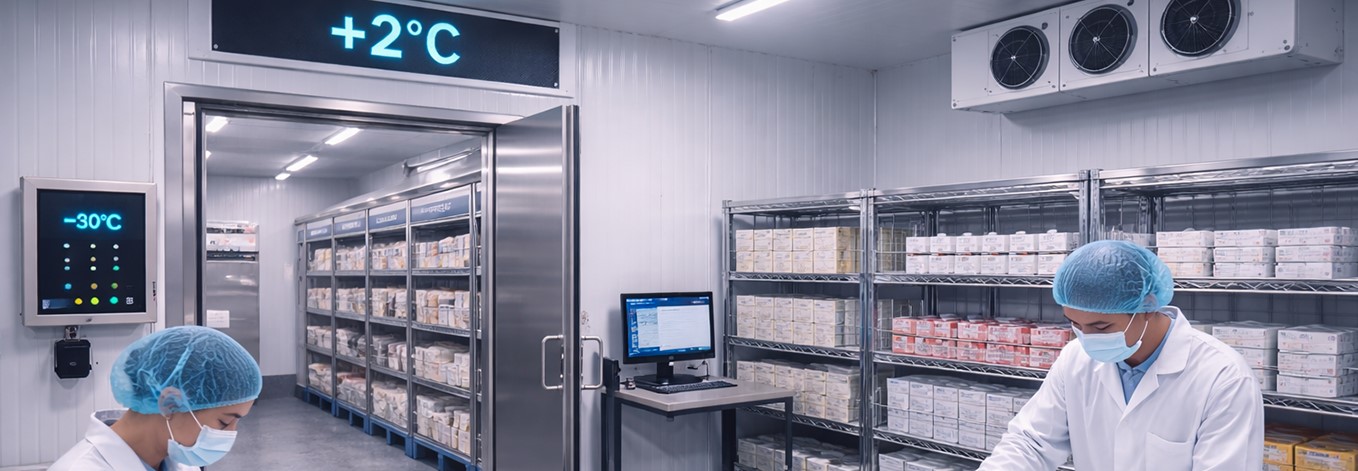
In the pharmaceutical industry, the packaging and labelling phase is a critical step in the product lifecycle, especially for temperature-sensitive drugs, vaccines, biologics, and sterile injectables. This stage often bridges manufacturing and distribution, requiring careful temperature management to preserve product integrity while meeting strict regulatory, traceability, and compliance requirements.
Unlike standard storage areas, cold rooms in packaging and labelling zones must support active workflows, not just passive holding. They must maintain precise temperature conditions during secondary handling, integrate with controlled production zones, and provide short-term staging capacity without breaking cold chain conditions.
This guide explains how to design cold rooms for pharmaceutical packaging and labelling areas, including layout strategies, airflow control, staging design, and compliance requirements.
Maintaining Temperature During Secondary Packaging Processes
Even after primary manufacturing and initial storage, pharmaceutical products often require secondary operations such as bundling, boxing, cartoning, and labelling. These steps can expose products to ambient temperatures if not properly controlled.
Why Temperature Matters in Packaging
Temperature excursions during packaging can:
- Alter drug potency or stability
- Affect excipient performance
- Compromise sterile fills or barrier properties
- Create inconsistency between batches
For biologics and vaccines, temperature control during packaging is just as critical as during storage.
Cold Room Design Principles for Packaging Zones
1. Locating Packaging Cold Rooms Near Production Areas
Cold rooms should be positioned next to packaging lines and labelling stations to minimise transport time and exposure.
In a Singapore biopharmaceutical facility, planners placed a chilled packaging cold room between the final fill area and the packaging conveyor. Products spent less than 30 seconds outside controlled conditions, reducing thermal stress during handling.
2. Controlling Airflow During Handling
Packaging cold rooms experience frequent door openings and movement. Design must include:
- Directed airflow to prevent stagnant zones
- Air curtains or strip barriers at entry points
- Zoned cooling near doors and workstations
Proper evaporator placement and airflow modelling help maintain a stable and uniform temperature.
Example: Biologic Packaging Cold Room Upgrade
A biotech manufacturer producing monoclonal antibodies experienced product inconsistencies during peak packaging runs. After redesigning airflow and adding a chilled staging zone, temperature variance improved from ±3°C to ±1°C, reducing deviations in stability data.
Integrating Walk-In Chillers into Packaging Workflows
1. Workbridge Layouts Instead of Standalone Rooms
Cold rooms should function as part of the workflow, not isolated spaces.
A workbridge layout allows:
- Direct access between cold room and packaging stations
- Conveyor systems passing through controlled zones
- Equipment positioned partly inside chilled areas
This reduces handling time and exposure to ambient temperatures.
2. Temperature Buffer Vestibules
To reduce heat ingress, cold rooms often include buffer vestibules or ante-rooms.
These spaces allow:
- Pre-staging of materials
- Controlled transition between ambient and chilled zones
- Faster temperature recovery inside the main cold room
In a multi-brand packaging centre, ante-rooms helped stabilise temperatures and reduce energy consumption.
3. Ergonomic Cold Room Access
Efficient packaging requires easy and safe access. Design considerations include:
- Sliding doors for smooth movement
- Ramps for carts and trolleys
- Non-slip, low-temperature flooring
Good ergonomics improve productivity and reduce safety risks.
Short-Term Cold Room Storage During Staging
1. Staging Zones Within or Near Cold Rooms
Staging areas should remain within controlled environments. Best practices include:
- Dedicated racks near cold room exits
- Auxiliary chillers for overflow staging
- Segmented zones within cold rooms
This reduces temperature exposure during high-volume operations.
2. High-Turnover Storage Racks
Staging areas require fast access without affecting airflow. Design may include:
- Open shelving systems
- Pull-out racks
- Digital tracking for staged inventory
Case Scenario: Seasonal Vaccine Packaging Surge
During a flu vaccine rollout, a GMP facility added temporary staging racks near the labelling line within the cold room. These operated at the same temperature setpoint, enabling fast processing.
Quality teams recorded zero temperature excursions during peak periods.
Quality, Compliance, and Regulatory Considerations
1. Digital Temperature Monitoring
Packaging cold rooms should include:
- Networked temperature sensors
- Redundant logging systems
- Real-time alarm alerts
- Secure audit trails
These systems support GMP and GDP compliance.
2. Cleanability and Hygiene
Materials must be:
- Non-porous
- Corrosion-resistant
- Easy to clean
Design features such as floor drains, coved walls, and seamless insulated panels support hygiene standards.
3. Access Control and Product Segregation
Cold rooms should support:
- Segregation of product batches
- Restricted operator access
- Traceability tracking
Advanced systems can log operator activity linked to batch data.
FAQs
What temperature should a pharmaceutical packaging cold room maintain?
Most pharmaceutical packaging cold rooms operate between 2°C and 8°C, depending on product requirements. Some biologics may require tighter ranges or frozen conditions.
Why are cold rooms needed during packaging and labelling?
Cold rooms prevent temperature excursions during secondary handling, ensuring drug stability, efficacy, and compliance with regulatory standards.
How do you prevent temperature loss during frequent door openings?
Facilities use air curtains, strip doors, vestibules, and zoned cooling systems to minimise temperature fluctuations.
What is a workbridge cold room design?
A workbridge layout integrates the cold room directly into the packaging workflow, allowing seamless movement between storage and processing areas.
How do cold rooms support GMP compliance?
Cold rooms provide controlled environments with temperature logging, audit trails, and access control, all of which are required for GMP and GDP compliance.
What materials are best for pharmaceutical cold rooms?
Non-porous insulated panels, stainless steel components, and hygienic flooring systems are commonly used to meet cleanability and durability standards.
Packaging-Ready Cold Rooms as Operational Assets
Cold room design for pharmaceutical packaging and labelling is not limited to storage. It supports workflow continuity, product quality, and compliance.
By focusing on:
- Stable temperature control during packaging
- Integration with production workflows
- Efficient staging design
Facilities can reduce risk, improve efficiency, and meet regulatory expectations.
Planning a pharmaceutical packaging facility or upgrading your cold chain infrastructure?
Speak with Kiat Lay cold room specialist in Singapore to design a compliant, efficient, and future-ready solution tailored to your operations.