


Freezer Room Design for Frozen Dessert and Bakery Operations
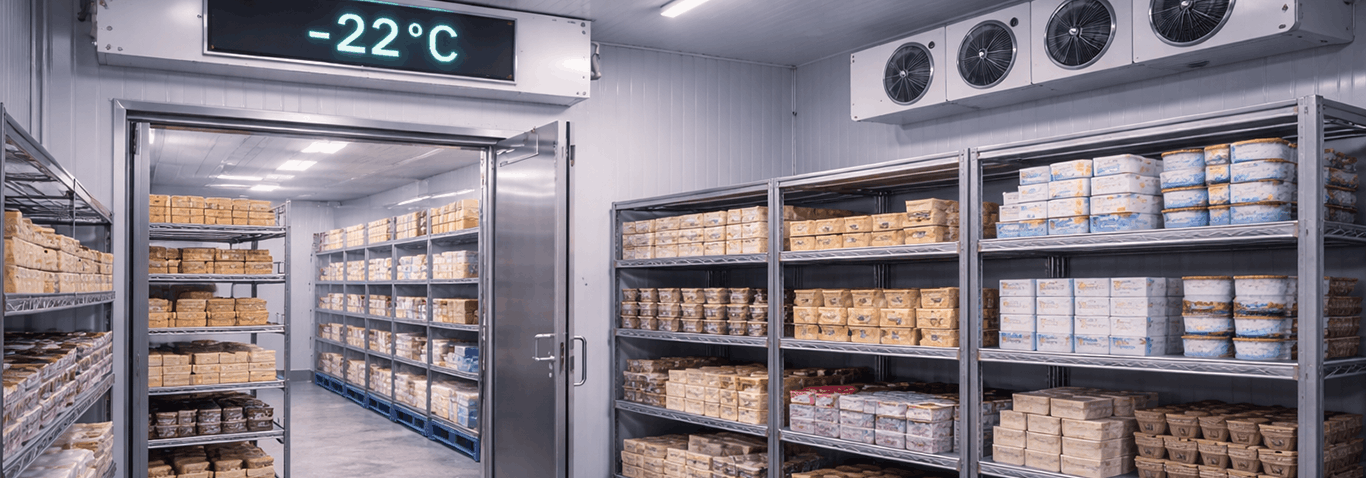
Frozen desserts and bakery products depend on precise temperature control to preserve texture, flavour, and consistency. From laminated dough and cake bases to ice cream and mousse desserts, poor freezer room design can lead to product damage, inefficiencies, and unnecessary waste.
For central bakeries, dessert manufacturers, and large-scale F&B operations, an industrial freezer room is more than storage. It plays a direct role in production quality and workflow efficiency.
This guide covers key freezer room design considerations, including product handling, humidity control, and industrial solutions that support consistent output.
Why Freezer Room Design Matters for Bakeries
Freezer rooms directly impact product quality, food safety, and operational flow. Inconsistent temperatures or poor airflow can affect structure, taste, and shelf life.
A well-designed freezer room helps you:
- Maintain stable product quality across batches
- Reduce wastage caused by freezer burn or temperature fluctuations
- Improve workflow efficiency in high-volume environments
- Meet food safety and audit requirements
Managing Dough, Pastries, and Frozen Desserts
Different bakery and dessert products require different storage conditions.
Dough and Laminated Pastries
Products such as croissants and puff pastry are highly sensitive to temperature changes. If stored too warm, yeast activity may restart. If frozen too quickly without proper airflow, moisture migration can cause cracking or freezer burn.
To prevent this:
- Maintain temperatures between -18°C and -25°C depending on product type
- Ensure even airflow to eliminate hot or cold spots
- Use racking systems that allow air circulation without direct exposure to strong airflow
Frozen Desserts and Ice Cream Products
Ice cream, gelato bases, and mousse cakes are sensitive to micro temperature changes. Even slight fluctuations can cause ice crystal growth, resulting in grainy textures.
Recommended Zoning Approach
A zoned freezer layout improves control and consistency:
- Dough and pastry storage
- Frozen dessert holding
- Blast-frozen products awaiting dispatch
For example, a central bakery may store dough at -20°C and frozen desserts at -25°C in separate zones to maintain optimal quality.
Frost and Humidity Control in Freezer Rooms
Humidity is a major challenge in bakery freezer environments. Frequent door openings and moisture from dough introduce warm air into the space, leading to frost build-up.
Common Issues Caused by Frost
- Reduced cooling efficiency
- Increased energy consumption
- Slippery floors and safety risks
- Damage to packaging and products
Effective Design Solutions
- Insulation and Vapour Barriers
High-quality insulated panels reduce moisture entry from surrounding areas. - Door Systems
Use fast-closing insulated doors, strip curtains, or air curtains to minimise warm air infiltration. - Evaporator Design
Choose evaporators designed for low temperatures with proper fin spacing to reduce frost accumulation. - Defrost Systems
Match defrost cycles to operational schedules. For example, run defrost cycles during low production hours to maintain temperature stability.
Industrial Cold Room Features for Consistent Quality
Consistency is essential for bakery and dessert brands. Customers expect the same taste and texture every time.
Key Structural Features
- Non-slip insulated flooring for safety
- Stainless steel kick plates for durability
- Reinforced doors to handle heavy use
Monitoring and Control Systems
- Digital temperature sensors for real-time tracking
- Alarm systems for early detection of issues
- Data logging for compliance and audits
Space and Workflow Planning
In space-limited environments such as Singapore, efficient layout is critical:
- Position doors to reduce cross-traffic
- Create clear flow between prep, freezing, storage, and dispatch
- Include access points for quick checks without prolonged door openings
Designing for High-Volume Production
High-output operations require freezer rooms that support frequent access without compromising temperature stability.
Layout Best Practices
- Wide aisles for smooth trolley movement
- Logical racking systems for faster loading and retrieval
- Separate zones for incoming and outgoing products
Use of Ante-Rooms
Temperature buffer zones help reduce thermal shock and maintain internal conditions during frequent access.
Food Safety Considerations
Proper segregation of raw dough, finished goods, and allergen products supports compliance and simplifies audits.
Conclusion
Freezer room design is a critical part of frozen dessert and bakery operations. From managing sensitive products to controlling humidity and supporting efficient workflows, every detail affects product quality and business performance.
A well-designed industrial freezer room supports consistency, hygiene, scalability, and long-term reliability. With the right design approach and an experienced partner, F&B operators can protect product quality while growing their operations with confidence.
Frequently Asked Questions
What is the ideal freezer temperature for bakery products?
Most bakery products are stored between -18°C and -25°C. The exact temperature depends on the product type and storage duration.
Why do frozen desserts develop ice crystals?
Ice crystals form due to temperature fluctuations. Stable, low temperatures help maintain smooth texture and prevent quality loss.
How can frost build-up be reduced in freezer rooms?
Frost can be controlled through proper insulation, fast-closing doors, humidity control systems, and well-planned defrost cycles.
Should bakeries use zoned freezer rooms?
Yes. Zoning allows different products to be stored at optimal temperatures, improving quality and operational efficiency.
What features are important in an industrial freezer room?
Key features include durable flooring, proper insulation, airflow design, temperature monitoring systems, and efficient layout planning.
How does freezer room design affect food safety?
Proper design ensures temperature consistency, prevents cross-contamination, and supports compliance with food safety standards.
Looking to improve your bakery or frozen dessert operations with a reliable freezer room solution?
Kiat Lay specialises in industrial cold room design tailored for food manufacturing environments. From layout planning to installation, our team ensures your freezer room supports consistent quality and efficient production.
Contact Kiat Lay today to discuss your freezer room requirements.