


How Cold Room Traffic Affects Temperature Control in Food Manufacturing
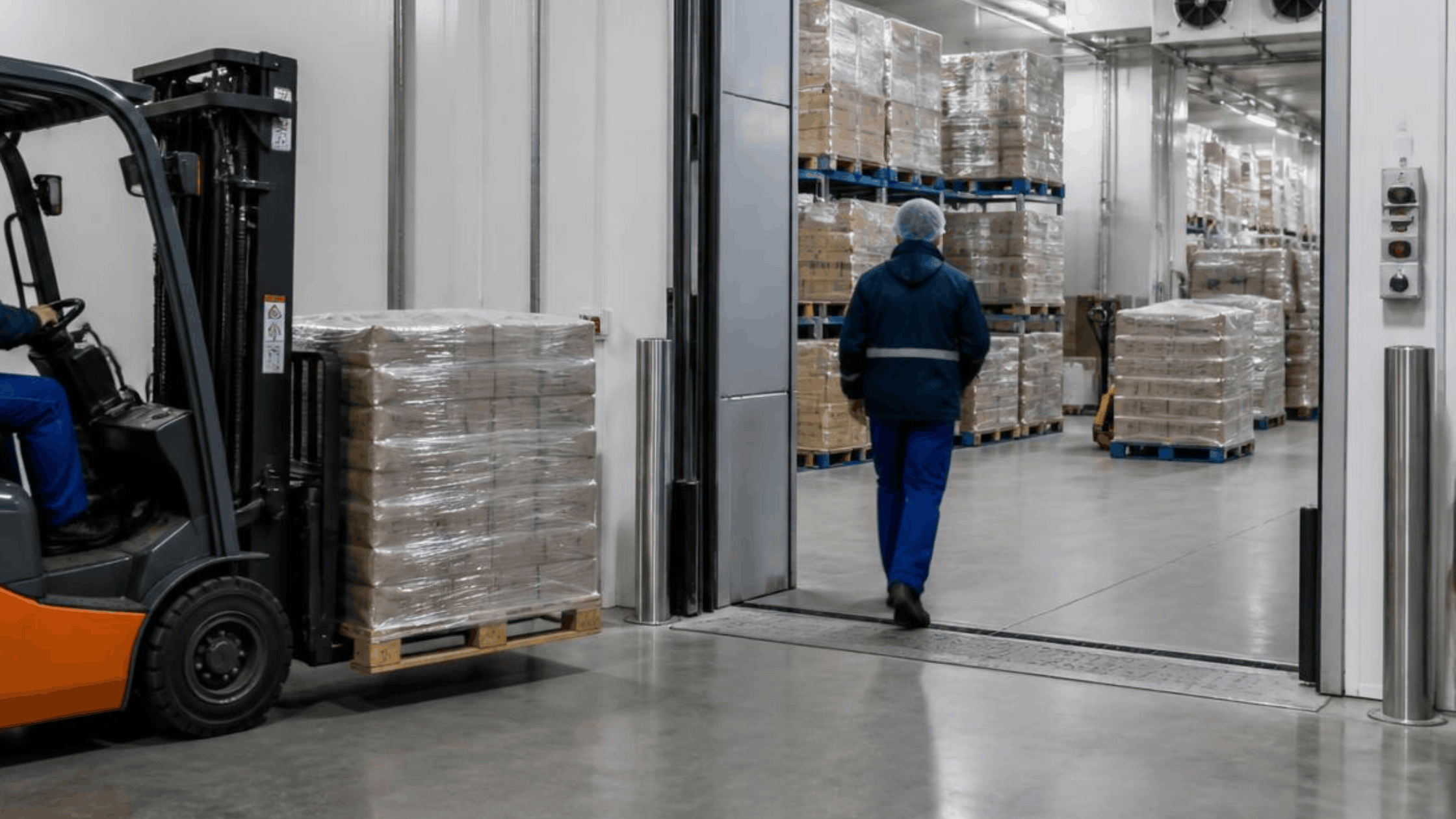
A food manufacturing cold room can look simple from the outside, but its performance depends heavily on how the space is used throughout the day. Raw materials may enter after delivery, production staff may retrieve ingredients regularly, and finished products may move through the room before dispatch. This movement creates traffic, and traffic is an important consideration when planning temperature controlled storage.
Every time a cold room door opens, warmer ambient air can enter while cooled air escapes. The more frequently the room is accessed, the greater the potential impact on temperature stability and refrigeration workload. For a food manufacturer operating multiple production shifts, this can become a significant part of the cold room’s daily operating conditions. Understanding traffic patterns early can therefore help manufacturers develop a cold room that supports production without creating unnecessary temperature fluctuations.
What Creates Traffic Inside a Cold Room?
Cold room traffic is not limited to people walking in and out. It includes any movement that requires access to the refrigerated space. In a food manufacturing facility, this may include receiving raw materials, transferring ingredients into production, retrieving stored products, replenishing inventory and moving finished goods towards dispatch.
The level of traffic can vary significantly throughout the day. A facility may have relatively low activity in the morning before receiving begins, followed by a busy period when several deliveries arrive close together. Production schedules can create another peak when multiple teams need to retrieve ingredients at the same time. Understanding these patterns provides a clearer picture of the actual demands placed on the cold room.
Frequent Door Openings Can Increase Heat Gain
A cold room needs to remove heat entering from outside in order to maintain its required internal temperature. Door openings are one source of this heat gain because warm ambient air can enter whenever the door is opened. The impact depends on several factors, including the difference between indoor and outdoor temperatures, the size of the doorway, how long it remains open and how frequently it is used. For a high traffic food manufacturing cold room, these factors can add to the refrigeration load throughout the day.
This does not mean that access should be restricted to the point where production becomes inefficient. Staff still need to retrieve and move products. Instead, the room should be designed around the expected level of traffic so that normal movement can take place without creating unnecessary exposure to ambient conditions.
Traffic Should Be Considered During Cold Room Planning
Cold room dimensions are often discussed in terms of storage capacity, but traffic should be considered at the same time. A manufacturer may have sufficient space for its inventory but still experience operational problems if the access route is too narrow, the door is poorly positioned or several activities compete for the same entrance.
The planning process should therefore consider how products move between:
- Receiving
- Cold storage
- Production
- Packing
- Finished product storage
- Dispatch
A logical route can reduce unnecessary movement and help staff complete daily tasks more efficiently. For example, if frequently used ingredients are stored far from the production access point, staff may need to make repeated trips through the cold room. A more practical layout can reduce these movements while keeping inventory organised.
Not All Cold Room Traffic Happens at the Same Time
Traffic patterns can be influenced by production schedules, supplier deliveries and dispatch arrangements. A facility that receives raw materials throughout the day may have relatively consistent traffic, while another manufacturer may receive several large deliveries within a short period.
Peak traffic periods should be considered because the cold room may experience greater temperature and refrigeration demand during these times.
|
Traffic Pattern |
Potential Cold Room Consideration |
|
Frequent staff access |
More repeated door openings |
|
Large supplier deliveries |
Higher short term traffic and product loading |
|
Batch production |
Increased ingredient retrieval during production |
|
High dispatch volume |
More finished product movement |
|
Multiple shifts |
Longer periods of regular access |
This does not mean the cold room should be designed around the absolute highest possible traffic level. Instead, manufacturers should understand when peaks occur and how long they typically last.
Door Location Can Influence Workflow
The position of the cold room door can affect both traffic and temperature control. A door positioned close to receiving may make it easier to transfer incoming materials directly into storage. However, if the same door is also used for production retrieval and dispatch, different activities may compete for the same access point. Separating these movements may be beneficial where traffic volumes are high.
The available building space will ultimately determine what is practical, but the objective should be to create a logical flow rather than forcing every activity through one route. Door location should also be considered alongside equipment movement. Forklifts and pallet trucks need sufficient clearance to enter and exit safely, while staff need practical access for smaller product movements.
Storage Layout Can Reduce Unnecessary Movement
The internal arrangement of the cold room can influence how often staff need to move through it. Frequently used ingredients can be positioned in locations that are easier to access, while slower moving inventory can be stored in less active areas. This can shorten picking routes and reduce unnecessary door openings when products are being retrieved.
Storage layout should also account for inventory rotation. Products with shorter shelf lives may need to be positioned so that they can be identified and accessed easily. The objective is to create a balance between storage density and operational accessibility. Maximising every available storage position may not be beneficial if staff then need to spend significantly more time moving through the room.
High Traffic May Require Additional Cold Room Features
Where traffic is consistently high, manufacturers may need to consider features that help reduce the effect of repeated access. Depending on the facility, this could include rapid closing doors, strip curtains or other access arrangements designed to limit the amount of time the cold room is exposed to ambient conditions.
The appropriate solution depends on the operating environment. A facility with occasional pallet movement will have different requirements from a production facility where employees enter the cold room repeatedly throughout several shifts.
Traffic and Food Hygiene Should Be Considered Together
Food manufacturing facilities need to manage both temperature control and hygiene. High traffic areas can introduce additional opportunities for dirt, moisture and other contaminants to enter the cold room. Frequent movement of pallets, equipment and staff can also make cleaning more challenging if the layout is congested.
A practical cold room should therefore provide enough space for products to move without creating unnecessary congestion. Door areas, floors and access routes should be easy to clean, while drainage should be planned to support regular cleaning and maintenance. This becomes particularly important when the cold room supports multiple stages of the manufacturing process.
Another consideration is how long the cold room door remains open during each movement. A facility may not have an unusually high number of entries, but extended loading or unloading periods can still allow significant amounts of warm air to enter the room. This can happen when pallets are being positioned, products are being checked or several items need to be transferred at once. Reviewing both the frequency and duration of door openings can therefore give manufacturers a more accurate understanding of the traffic load placed on their cold room and whether the existing access arrangement supports the way the facility operates.
Refrigeration Performance Can Reveal Traffic Problems
Temperature patterns can sometimes provide clues about how traffic is affecting the cold room. If temperature fluctuations occur mainly during busy receiving or production periods, the traffic pattern may be contributing to the additional heat load. This does not necessarily mean the refrigeration system is faulty, but it can indicate that the system is operating under a higher demand than expected.
Maintenance teams can review temperature records alongside operating schedules to identify these patterns. If repeated fluctuations occur despite appropriate refrigeration capacity, the facility may also need to review door seals, access procedures, airflow and the physical layout of the room.
Kiat Lay provides Industrial Refrigeration Maintenance and Repair services covering refrigeration diagnostics, refrigerant checks, condenser performance, evaporator efficiency and control systems.
Planning for Current and Future Traffic
A cold room should support the manufacturer’s current operation while allowing for reasonable future changes. Production volumes may increase, additional product lines may be introduced or delivery schedules may change. A room that works well under today’s traffic conditions could become more difficult to operate if access frequency increases significantly. This is why traffic should be considered alongside future inventory requirements when planning a new cold room.
Kiat Lay’s Custom Cold Room service takes inventory, traffic and accessibility into account when determining cold room dimensions and cooling requirements. For manufacturers expecting significant changes, discussing future traffic patterns during the design stage can provide greater flexibility than trying to modify the room after construction.
When an Existing Cold Room Has Too Much Traffic
Existing cold rooms can also develop traffic related problems as production expands. Signs may include frequent congestion around doors, staff repeatedly crossing the same areas, difficulty moving pallets safely or temperature fluctuations during busy periods.
The problem may not always require a completely new cold room. Changes to storage layout, access procedures or refrigeration components may improve the situation. In other cases, renovation or additional cold storage may be more appropriate if the existing room has become too small for the current operation.
A review of traffic, storage capacity and refrigeration performance can help identify which approach is most practical.
Designing Cold Storage Around How the Facility Actually Operates
Cold room traffic is ultimately part of the wider manufacturing workflow. Storage capacity, refrigeration, access, product movement and maintenance all need to work together if the room is going to perform reliably.
Kiat Lay provides Custom Cold Room solutions that can be developed around a business’s specific inventory, traffic and accessibility requirements. Its Walk In Cold Rooms service also supports businesses requiring dedicated temperature controlled storage for larger inventory volumes.
By considering traffic during the planning stage, manufacturers can create a cold room that supports efficient movement without placing unnecessary pressure on temperature control.
Conclusion
Cold room traffic can have a meaningful effect on temperature control in food manufacturing facilities. Frequent door openings, large deliveries, production activity and dispatch movements can all increase the amount of heat entering a refrigerated environment.
The solution is not simply to reduce access. Manufacturers should consider traffic patterns alongside storage capacity, door location, internal layout and refrigeration requirements. A well planned cold room can make product movement more efficient while helping the refrigeration system maintain consistent conditions during normal operations and peak activity.
Contact Kiat Lay to discuss your cold room requirements or request a consultation for a solution planned around your inventory, traffic and production workflow.