


When Should Hotels Consider Dedicated Cold Storage for Banquet Operations?
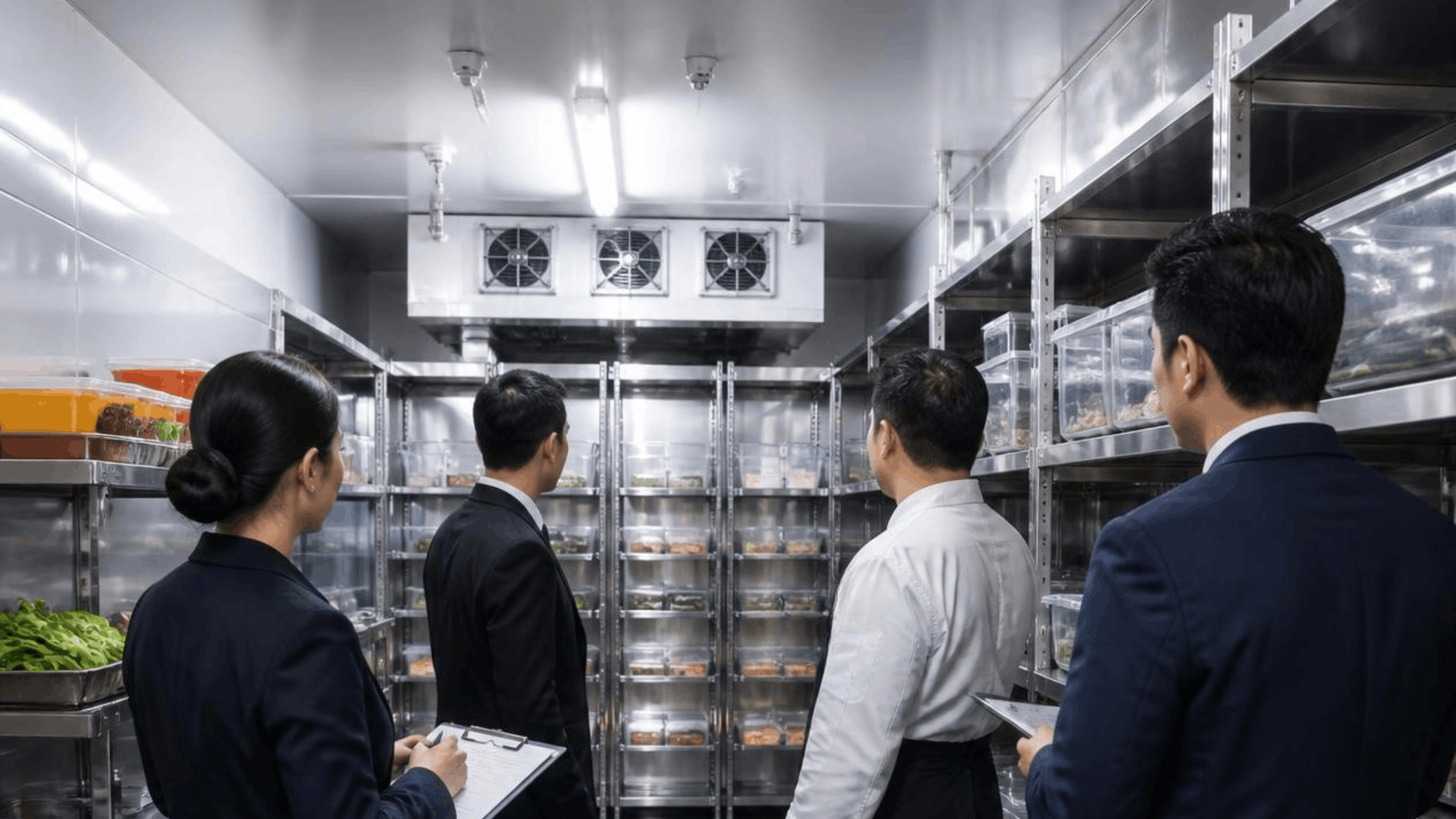
Banquet operations present a unique challenge for hotel refrigeration planning. Unlike restaurants that generally prepare meals according to daily guest demand, banquet kitchens often manage large quantities of food for conferences, weddings, corporate functions and seasonal events within a limited preparation window. These activities place very different demands on refrigerated storage, particularly when multiple events take place alongside normal hotel operations. Many hotels begin with a central cold room that serves restaurants, room service and banquet kitchens simultaneously. This arrangement can perform well while event volumes remain manageable. As banquet operations expand, however, kitchen teams may experience increasing competition for refrigerated storage, preparation space and product access during busy periods.
A carefully planned banquet cold room design helps hotels organise ingredients, improve production flow and support large scale catering activities without disrupting other hospitality services. Rather than viewing banquet refrigeration as additional storage capacity, hotels should consider how dedicated cold storage supports operational efficiency across the entire property.
Planning for banquet refrigeration also becomes increasingly important when hotels renovate existing event facilities, expand convention spaces or introduce larger catering operations. Reviewing cold storage requirements during these projects often provides greater long term value than simply increasing refrigeration capacity within existing facilities.
Banquet Operations Follow Different Production Patterns
One of the biggest differences between restaurant kitchens and banquet operations is the way food is prepared. Restaurants generally produce meals continuously throughout service periods based on guest orders. Banquet kitchens, by comparison, often prepare hundreds or even thousands of meals within a carefully planned production schedule before service begins.
This production pattern creates different refrigeration requirements. Ingredients may arrive several days before an event, while partially prepared items require temporary refrigerated storage before final assembly and service. If banquet operations rely entirely on shared cold storage, kitchen staff may spend valuable time moving products between departments while preparing for large events.
Consider a hotel hosting an international conference while continuing normal restaurant operations and room service. Ingredients for banquet production, restaurant kitchens and guest services may all require refrigerated storage during the same period. A dedicated banquet cold room helps separate these activities, allowing each department to operate more efficiently without competing for the same storage space.
Event Volume Often Determines When Dedicated Storage Is Needed
Hotels do not necessarily require separate banquet refrigeration from the beginning of operations. Smaller event venues or properties hosting occasional functions may continue operating effectively with shared refrigerated storage. As event frequency increases, however, operational priorities begin to change. Larger conferences, destination weddings and corporate events introduce additional inventory, more frequent deliveries and higher production volumes within compressed preparation schedules.
Rather than evaluating storage requirements based only on refrigeration capacity, hotels should review how event operations influence product movement throughout the property. Frequent congestion, temporary refrigerated storage or repeated inventory transfers often indicate that banquet operations have outgrown the original refrigeration strategy.
Recognising these operational changes early allows hotels to plan dedicated banquet cold storage before workflow inefficiencies begin affecting guest service or event preparation.
Banquet Refrigeration Should Support Event Workflow
Designing a banquet cold room begins with understanding how products move through the event preparation process. Ingredients typically arrive through receiving areas before being transferred into refrigerated storage, prepared within banquet kitchens and delivered to function spaces according to event schedules. Positioning banquet cold storage close to preparation areas reduces unnecessary transport while helping kitchen teams organise ingredients more efficiently during busy production periods.
Storage layouts should also allow sufficient flexibility to accommodate different event sizes throughout the year. Wedding receptions, business conferences and festive celebrations rarely require identical storage arrangements, making adaptable refrigerated space an important consideration during the planning stage.
Planning Cold Storage Around Different Hospitality Operations
Hotels rarely operate a single food service outlet. Restaurants, banquet kitchens, room service, executive lounges and staff dining facilities may all depend on refrigerated storage throughout the day. While these operations share the same objective of supporting guest services, their inventory profiles and production schedules are often very different.
Restaurant kitchens usually require frequent access to smaller quantities of ingredients during service hours. Banquet kitchens, on the other hand, often receive larger ingredient deliveries before scheduled events and prepare food according to fixed production timelines. These differences should be reflected in the cold room layout to reduce unnecessary movement between departments. Rather than assigning storage space based only on available floor area, hotels should consider allocating dedicated storage zones according to operational priorities. This approach allows each department to access inventory more efficiently while reducing congestion during periods of high activity.
Planning Considerations for Banquet Cold Room Layouts
An effective banquet cold room should support both daily hotel operations and large scale event preparation. The following planning considerations are commonly reviewed when designing refrigerated storage for hotels with banquet facilities. These planning considerations should always be evaluated alongside the hotel’s operational requirements rather than applied as a standard layout across every hospitality project.
|
Planning Consideration |
Why It Matters |
Operational Benefit |
|
Dedicated banquet storage zones |
Separates event inventory from restaurant supplies |
Improves inventory organisation |
|
Direct access from receiving areas |
Shortens product transfer time |
Reduces unnecessary handling |
|
Flexible storage allocation |
Accommodates different event sizes throughout the year |
Improves operational adaptability |
|
Clear product segregation |
Organises ingredients for multiple hospitality departments |
Supports efficient stock management |
|
Logical access to banquet kitchens |
Reduces travel distance during food preparation |
Improves workflow efficiency |
|
Provision for future expansion |
Supports additional event facilities or dining outlets |
Reduces future renovation requirements |
Preparing for Future Hospitality Expansion
Hotels rarely remain unchanged throughout their operational life. Many properties expand their event facilities, renovate restaurants or introduce new guest services as business requirements evolve. Refrigerated storage should therefore be designed with sufficient flexibility to support these developments without requiring significant operational disruption.
For example, a hotel planning to construct an additional ballroom or expand its convention facilities may experience a substantial increase in banquet preparation activities. If the original cold room layout already allows for future storage expansion or revised inventory zoning, these operational changes can often be accommodated more efficiently.
Considering future growth during the planning stage also allows project teams to review refrigeration capacity, workflow and storage allocation together instead of making isolated upgrades whenever operational demands increase.
Designing Cold Rooms That Support Hospitality Operations
Cold room planning should reflect how hospitality services operate on a daily basis rather than focusing only on refrigeration capacity. A well designed layout supports efficient receiving activities, organised inventory management and reliable product movement between storage areas and banquet kitchens, helping hotels maintain smooth operations during both routine service and major events.
Kiat Lay provides Walk In Cold Rooms that are customised to suit different hospitality environments, including hotels with restaurants, banquet facilities and multiple food service outlets. For projects requiring more specialised layouts, Custom Cold Room solutions are developed around operational workflows, available space and future expansion plans, allowing refrigerated storage to grow alongside the property’s hospitality operations.
Conclusion
Hotels with active banquet facilities require refrigerated storage that supports more than product preservation. A carefully planned banquet cold room design improves inventory organisation, streamlines product movement and helps different hospitality departments operate efficiently without competing for the same storage resources. By aligning cold room layouts with banquet operations and long term hospitality planning, hotels can improve operational flexibility while preparing for future expansion.
Contact Kiat Lay today to discuss your hospitality refrigeration project or request a consultation to develop a cold room solution tailored to your hotel’s operational requirements and future growth plans.