


Why Maintenance Access Should Be Considered in Hotel Cold Room Design
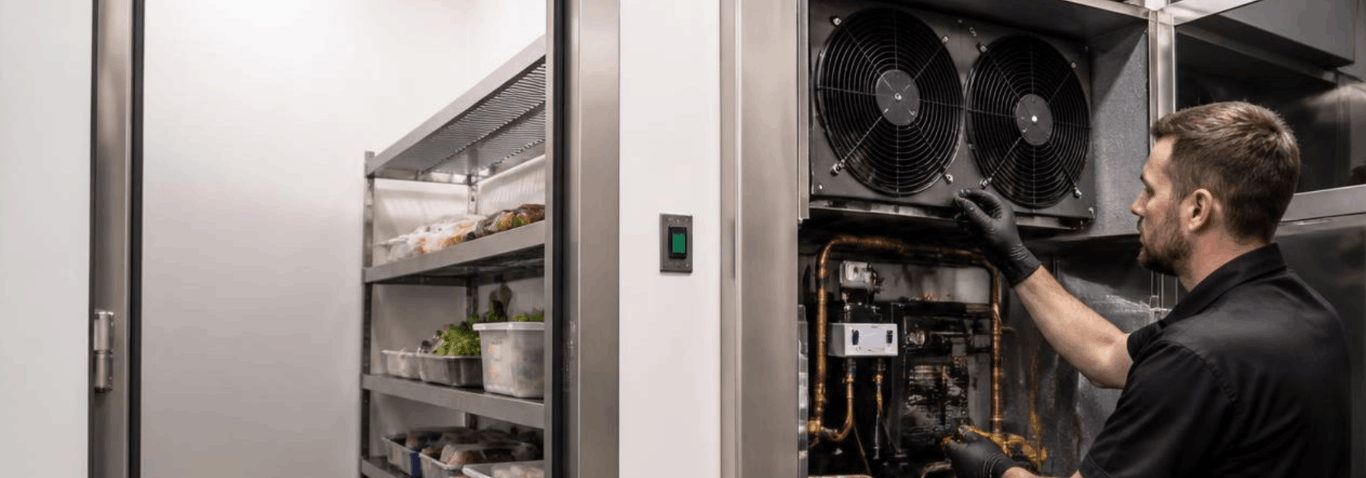
Hotel cold rooms operate behind the scenes, but they support some of the busiest areas of a property. Ingredients need to be received, stored and retrieved throughout the day, often supporting restaurants, banquets, room service and other food and beverage operations.
Because the cold room is part of an active hotel environment, maintenance cannot always be treated as something that happens after a problem appears. Refrigeration equipment, doors, insulation, drainage and temperature controls all need to remain accessible for inspection and servicing throughout the life of the room.
This is particularly important for hotels where cold storage is located close to busy kitchens or within limited back of house areas. A cold room may perform well when newly installed, but difficult access can make routine maintenance more disruptive and minor problems harder to address.
Kiat Lay’s cold room solutions for five star hotel kitchens highlight the importance of designing refrigerated storage around hotel kitchen workflow, including equipment placement, access and operational efficiency. When planning a hotel central kitchen cold room, maintenance access should therefore be considered alongside storage capacity, temperature control and kitchen workflow.
Why Maintenance Access Matters in Hotel Operations
Hotel kitchens rarely have long periods when all activities stop. Breakfast preparation may begin before sunrise, while banquet preparation, restaurant service and room service can continue into the evening.
A cold room that requires servicing during these busy periods can therefore create operational challenges. Technicians may need to work around kitchen staff, food deliveries or other equipment. If access to the refrigeration system is restricted, a relatively straightforward inspection may take longer than necessary.
Good maintenance access helps reduce this problem by giving technicians enough space to inspect important components safely and efficiently. This does not mean leaving large amounts of unused space around every piece of equipment. Instead, the cold room and refrigeration system should be planned with realistic servicing requirements in mind.
Refrigeration Equipment Needs Practical Access
The refrigeration system is one of the most important parts of a cold room, and several components require periodic inspection or servicing. Depending on the system, technicians may need access to:
- Compressors
- Condensers
- Evaporators
- Fans and motors
- Refrigerant connections
- Temperature controls
- Electrical components
- Drainage systems
If equipment is positioned in a difficult location, technicians may need to move other equipment or work within a restricted area to reach it.
Hotel projects can be particularly challenging because mechanical systems often need to fit within already constrained back of house spaces. Planning equipment locations together with service access can help avoid unnecessary complications later. The objective is to make the system compact enough for the available space while still allowing technicians to perform essential maintenance safely.
Evaporator Placement Can Affect Serviceability
Evaporators are installed within or around the cold room to circulate and remove heat from the storage environment. Their position affects both refrigeration performance and maintenance access. A poorly considered location can make inspection or cleaning difficult, particularly when shelving or stored products are positioned directly beneath or around the equipment.
Hotel cold rooms also tend to experience regular loading and unloading. If the evaporator is located where staff movement and storage activity are concentrated, servicing may require the area to be cleared first.
When planning the layout, operators should therefore consider both airflow and access. The evaporator needs to distribute cold air effectively while remaining accessible enough for cleaning, inspection and repairs. These requirements should be considered before the final shelving and storage arrangement is confirmed.
Door and Panel Access Should Not Be Overlooked
Maintenance access is not limited to refrigeration equipment. The insulated panels, doors and surrounding joints form an important part of the cold room envelope. Damaged seals, gaps or moisture ingress can affect temperature stability and refrigeration performance.
Hotel cold rooms may experience frequent door openings, particularly during busy kitchen operations. Door seals and closing mechanisms can therefore require regular inspection. Technicians should be able to examine these components without having to dismantle surrounding structures or disrupt normal kitchen operations. Similarly, insulated panels and joints should remain accessible enough for inspection when there are signs of damage or moisture. This becomes particularly important in older hotel properties where the cold room may have been modified several times over its operational life.
Drainage and Cleaning Areas Need Access Too
Cold room maintenance also involves areas that are easy to overlook during the initial design stage. Drainage systems need to remain accessible for cleaning and inspection. Blocked or poorly maintained drainage can result in standing water, unpleasant odours, hygiene concerns and, in some environments, ice formation.
Hotel kitchens already have high cleaning requirements, so drainage should be designed to support regular housekeeping activities without creating unnecessary obstacles. A practical design should allow staff to clean the cold room efficiently while giving maintenance teams access to drainage points when deeper inspection or servicing is required. This is especially important where the cold room is used frequently and receives regular deliveries throughout the day.
Maintenance Planning Should Consider Hotel Traffic
The location of the cold room within the hotel can influence how easily maintenance work can be carried out. A cold room positioned directly beside a busy kitchen may be convenient for chefs but more challenging for technicians working during service. Conversely, placing the room too far from the kitchen may increase product movement and handling time. There is no single layout that works for every hotel.
During planning, operators should consider:
|
Consideration |
Why It Matters |
|
Kitchen traffic |
Reduces conflict between technicians and kitchen staff |
|
Service routes |
Allows equipment and replacement parts to reach the cold room |
|
Refrigeration equipment location |
Provides practical access for servicing |
|
Door access |
Supports inspection and replacement of seals and hardware |
|
Drainage |
Allows cleaning and maintenance without major disruption |
|
Storage layout |
Prevents stored products from blocking service areas |
Considering these points during design can make future maintenance much easier without compromising daily kitchen operations.
Maintenance Should Not Require Major Disruption
Hotels cannot always choose when a refrigeration issue occurs. A temperature problem may appear during a busy breakfast service, while a refrigeration component may require attention before an important banquet event. If technicians cannot access the affected equipment easily, the resulting disruption can become more significant.
A maintenance friendly cold room gives operators more options. Routine servicing can be scheduled during quieter periods, while urgent repairs can be carried out more efficiently when access is required. This can help reduce the amount of time that kitchen teams need to work around maintenance activities. It also makes preventive maintenance more practical because technicians can inspect the system without creating excessive disruption.
Existing Hotel Cold Rooms May Need a Different Approach
Not every hotel is building a new cold room. Older properties may already have refrigeration systems that are difficult to access, inefficiently arranged or no longer suitable for current kitchen operations. Renovation can sometimes provide a more practical solution than continuing to work around an unsuitable layout.
Before deciding on a complete replacement, businesses can assess the condition of the insulation, refrigeration equipment, doors, drainage and internal configuration. Some rooms may only require selected components to be repaired or replaced, while others may benefit from a broader redesign.
Kiat Lay provides Custom Cold Room solutions that can include renovation of existing cold rooms, replacement of old insulation, repairs to damaged components and internal remodelling to make the space more workable. For hotels operating within existing buildings, this approach can help improve cold storage without necessarily treating every project as a completely new installation.
Designing for Maintenance Can Improve Long Term Reliability
Maintenance access is ultimately about more than making a technician’s job easier. When equipment can be inspected regularly, developing problems can be identified before they become larger failures. When doors, insulation and drainage can be checked properly, smaller defects can also be addressed before they affect the cold room environment.
This can support more predictable maintenance planning and reduce the likelihood of unexpected disruption. For hotel operators, that matters because cold room performance is closely connected to kitchen operations. A refrigeration problem can affect ingredient storage, food preparation and service schedules if it is not addressed quickly. Designing the cold room with maintenance in mind from the beginning can therefore support both equipment reliability and day to day hotel operations.
Building Maintenance Access Into the Initial Design
Maintenance should be considered while the cold room is being planned rather than added as an afterthought. The appropriate approach will depend on the hotel’s available space, storage requirements, refrigeration system, kitchen workflow and expected usage. Equipment locations, access routes and internal storage arrangements should work together so that technicians can perform routine servicing without unnecessarily interfering with hotel operations.
Kiat Lay provides Custom Cold Room solutions designed around the functionality, accessibility and storage requirements of individual businesses. The company also provides maintenance and repair services, allowing the design and long term servicing requirements of a cold room to be considered together.
For hotels planning a new cold room or reviewing an existing one, this can provide a more practical approach to long term refrigeration management.
Conclusion
Hotel cold rooms need to support more than storage. They also need to remain accessible for inspection, cleaning, maintenance and repair throughout their operating life.
Considering refrigeration equipment, evaporators, doors, panels, drainage and service routes during the planning stage can make future maintenance easier while reducing unnecessary disruption to hotel kitchen operations. For existing properties, a review can also determine whether selected repairs, renovation or a redesigned cold room would provide a more practical long term solution.
Contact Kiat Lay to discuss your hotel cold room requirements or request a consultation for a solution planned around your storage needs, kitchen workflow and long term maintenance requirements.