


How ASRS Improves Efficiency in Cold Storage Warehouses
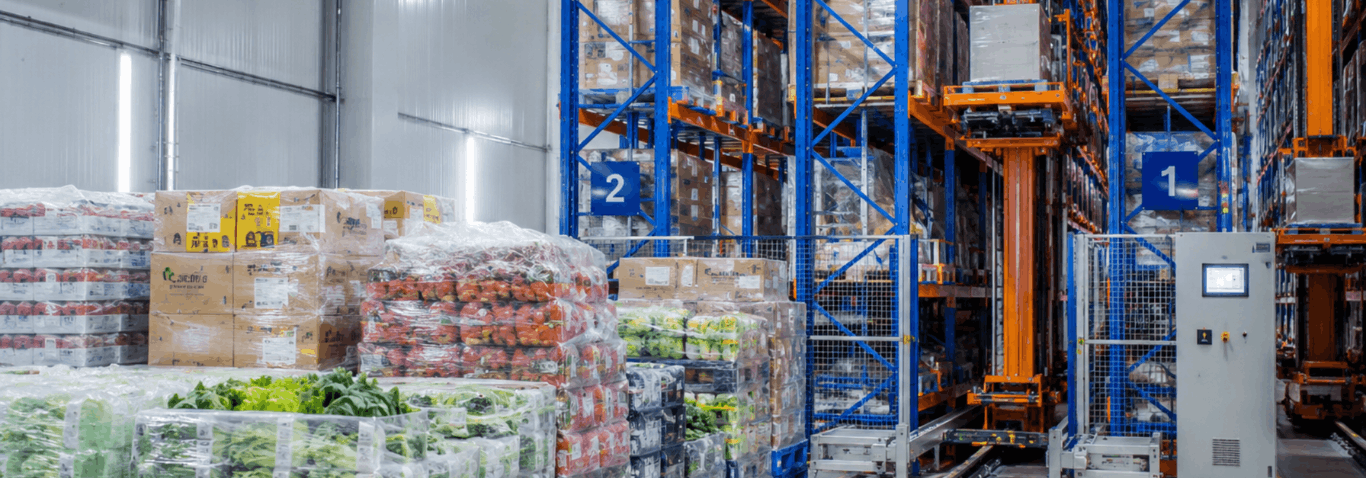
Cold storage warehouses are under increasing pressure to handle larger inventory volumes while maintaining fast turnaround times and strict temperature control. As supply chains continue to evolve, logistics businesses are expected to process more orders, improve inventory accuracy and maximise available warehouse space without compromising operational efficiency.
For many businesses, expanding the warehouse is not always the most practical solution. Land availability is limited, construction costs continue to rise and expanding operations may not always be feasible. Instead, many warehouse operators are looking at automation to increase storage capacity and improve productivity within their existing facilities.
One solution that has gained significant attention is the Automated Storage and Retrieval System (ASRS). Rather than relying on conventional storage methods, an ASRS cold storage warehouse uses automated equipment to store and retrieve pallets with greater speed and accuracy. When planned correctly, the system can improve warehouse operations while making better use of available space.
Why Cold Storage Warehouses Have Different Operational Challenges
Managing a cold storage warehouse is very different from operating a conventional warehouse.
Products must be kept within specific temperature ranges throughout storage and handling. At the same time, businesses need to process inbound and outbound shipments efficiently without exposing products to unnecessary temperature fluctuations.
Warehouse operators must also balance several operational priorities, including:
- Maximising storage capacity
- Maintaining inventory accuracy
- Reducing order fulfilment time
- Supporting efficient product movement
- Managing labour resources effectively
As warehouse operations become larger and more complex, these priorities become increasingly difficult to manage using manual processes alone.
Automation provides an opportunity to improve efficiency while supporting more consistent warehouse operations.
Why More Logistics Businesses Are Investing in ASRS?
Automation is becoming increasingly common across logistics facilities, particularly those handling high inventory volumes.
Rather than increasing the number of forklift operators or expanding warehouse space, many businesses are investing in systems that improve how inventory is stored and retrieved.
An Automated Storage and Retrieval System uses computer controlled equipment to move pallets between storage locations and designated pick up points. This reduces manual handling while improving consistency throughout warehouse operations. The system can also operate continuously with predictable performance, allowing businesses to manage inventory more efficiently during periods of high demand.
For companies planning long term warehouse improvements, ASRS is no longer viewed simply as an automation upgrade. It has become part of a broader strategy to improve operational efficiency and make better use of existing warehouse space.
Maximise Storage Capacity Within the Same Building
One of the biggest advantages of an ASRS is its ability to increase storage density. Traditional warehouses require sufficient aisle space for forklifts to travel safely between storage racks. While this arrangement works well for many operations, it also limits the amount of storage that can be achieved within a given floor area.
An ASRS operates differently. Because storage and retrieval are automated, warehouses can be designed with narrower aisles and taller racking systems. This allows businesses to maximise the cubic space inside the warehouse rather than focusing only on the available floor area.
For businesses operating in Singapore, where industrial land is both limited and costly, improving storage capacity without expanding the building can deliver significant long term value.
Instead of investing in additional warehouse space, businesses may be able to accommodate future growth by making more efficient use of their existing facility.
Improve Warehouse Throughput
Warehouse efficiency is not determined solely by how much inventory can be stored. It also depends on how quickly products move through the facility.
An ASRS improves throughput by reducing the time required to complete routine storage and retrieval activities.
When inventory arrives at the warehouse, pallets can be transferred directly into automated storage without relying entirely on manual handling. Likewise, products required for customer orders can be retrieved automatically and delivered to designated workstations for picking or dispatch.
This creates a smoother workflow across several warehouse activities, including:
- Goods receiving
- Put away operations
- Inventory storage
- Order picking
- Dispatch preparation
Reducing unnecessary travel throughout the warehouse allows employees to focus on tasks that require greater operational judgement while repetitive movements are completed by the automated system.
The result is a more predictable workflow that supports faster order fulfilment and improved operational consistency.
Reduce Product Handling
Every time products are moved unnecessarily, businesses spend additional time and labour without adding value to the operation.
In conventional warehouse environments, pallets may be relocated several times before they are finally dispatched. This increases equipment usage, creates additional forklift traffic and may slow overall warehouse performance. An ASRS reduces unnecessary product handling by storing inventory directly in allocated locations and retrieving it only when required.
This streamlined approach helps warehouse operations become more organised while reducing congestion in high activity areas.
For temperature controlled environments, reducing unnecessary movement also means warehouse doors can remain open for shorter periods during storage and retrieval activities, supporting more stable operating conditions.
Improve Inventory Accuracy
Inventory accuracy is essential for any logistics operation, particularly when handling temperature sensitive products with expiry dates or strict stock rotation requirements.
Manual inventory management can become increasingly difficult as warehouse capacity grows. Misplaced pallets, delayed stock updates and retrieval errors can all affect operational efficiency and customer satisfaction.
An ASRS records every storage and retrieval movement electronically, providing warehouse operators with greater visibility of inventory locations and stock levels. This improves traceability while making it easier to monitor inventory in real time. Accurate inventory data also supports better planning. Warehouse managers can make informed decisions about replenishment, storage allocation and order scheduling based on reliable information rather than manual stock checks.
For businesses handling food, pharmaceuticals or other products that require controlled storage conditions, improved inventory accuracy can contribute to more consistent warehouse operations.
Reduce Labour Dependency
Finding and retaining skilled warehouse workers continues to be a challenge for many logistics businesses. As warehouse operations expand, increasing manpower is not always the most practical or sustainable solution.
An ASRS allows businesses to automate repetitive storage and retrieval tasks, reducing the amount of manual handling required throughout daily operations.
This does not eliminate the need for warehouse personnel. Instead, employees can focus on higher value responsibilities such as inventory management, quality inspections, equipment monitoring and operational planning.
Reducing repetitive manual tasks can also improve workflow consistency, particularly during peak operating periods when order volumes increase significantly.
Is an ASRS Suitable for Every Cold Storage Warehouse?
Although an ASRS offers many operational advantages, it is not automatically the right solution for every warehouse.
Businesses should evaluate their operational requirements before deciding whether automation aligns with their long term objectives.
An ASRS may be a suitable investment for businesses that:
- Handle large pallet volumes every day.
- Need to maximise storage capacity within limited warehouse space.
- Experience frequent inventory movement.
- Plan to expand warehouse operations in the future.
- I want to improve inventory accuracy and operational consistency.
On the other hand, businesses with relatively small warehouse operations or low inventory turnover may find that conventional storage systems continue to meet their operational needs.
Understanding these differences helps businesses make investment decisions based on practical operational requirements rather than technology trends.
Key Planning Considerations Before Implementing an ASRS
Like any major warehouse investment, an ASRS should be planned carefully.
Before selecting a solution, businesses should review both their current operations and future growth plans.
Some important questions include:
- How many pallets need to be stored each day?
- How quickly do products move through the warehouse?
- What are the dimensions and weight of stored products?
- Will storage capacity need to increase over the next five to ten years?
- How will the ASRS integrate with existing warehouse operations?
Answering these questions early allows businesses to develop a solution that supports long term operational efficiency rather than simply addressing current storage limitations.
Warehouse design should also be considered alongside automation planning. Storage systems, refrigeration requirements and operational workflows all need to work together to achieve the best results. Learning more about warehouse design considerations before implementing automation can help businesses develop a more efficient cold storage facility.
Plan Automation Around Your Operations
An ASRS delivers the greatest value when it is designed around the way a warehouse operates.
Every logistics facility has different inventory profiles, order volumes and operational priorities. A solution that works well for one warehouse may not be suitable for another.
Rather than selecting automation based solely on storage capacity, businesses should evaluate how the system will improve product flow, inventory management and day to day warehouse performance.
Working with an experienced cold storage specialist during the planning stage allows these operational requirements to be considered before construction begins. If you are planning an automated cold storage warehouse, consult an experienced specialist to develop an ASRS solution that matches your operational requirements, warehouse capacity and future expansion plans.
Conclusion
As warehouse operations become more demanding, businesses are looking for practical ways to improve efficiency without expanding their existing facilities.
An ASRS cold storage warehouse offers a modern approach to warehouse automation by increasing storage capacity, improving inventory accuracy and streamlining daily operations. When planned carefully, it can also provide greater flexibility for future business growth while making better use of available warehouse space. Every warehouse has different operational requirements. Choosing the right automation strategy begins with understanding how your products move, how your inventory is managed and how your business is expected to grow.
If you are planning a new automated cold storage warehouse or upgrading an existing facility, contact Kiat Lay or request a consultant to discuss an ASRS solution tailored to your operational requirements.