


What Happens Before a Cold Room Is Installed in a Food Manufacturing Facility?
Installing a commercial cold room is a significant investment, and the success of the project often depends on the planning that takes place before construction begins. Understanding the early stages of a cold room project helps businesses make informed decisions, set realistic expectations and work more effectively with their chosen contractor.
Understanding Your Operational Needs
Instead of discussing drawings and technical specifications immediately, the first step is usually understanding the business itself.
Some useful questions include:
- What products will be stored?
- How much storage capacity is required?
- How does the cold room fit into the existing production process?
- Will the business require additional capacity in the future?
Answering these questions provides a clearer picture of what the project needs to achieve before detailed planning begins. Before moving into the next stage of the project, it is also helpful to consider how the cold room will support day to day operations beyond storage alone. For example, businesses may wish to think about how ingredients or finished products will move between production areas, whether storage requirements are expected to change over time and how the cold room will fit within existing workflows.
Having these discussions early does not mean every decision must be finalised immediately. Instead, it provides a clearer starting point for future project discussions and helps ensure that the proposed solution reflects the way the business operates.
Taking time to establish these priorities at the beginning of the project can also reduce the likelihood of significant changes later. While adjustments are sometimes unavoidable, identifying key operational requirements before detailed planning begins often leads to a smoother and more efficient project overall. Before moving into the next stage of the project, it is also worth considering how the cold room will support day to day operations as the business grows.
Businesses that establish these priorities early often find it easier to evaluate different options and make more informed decisions throughout the planning process.
Reviewing the Installation Environment
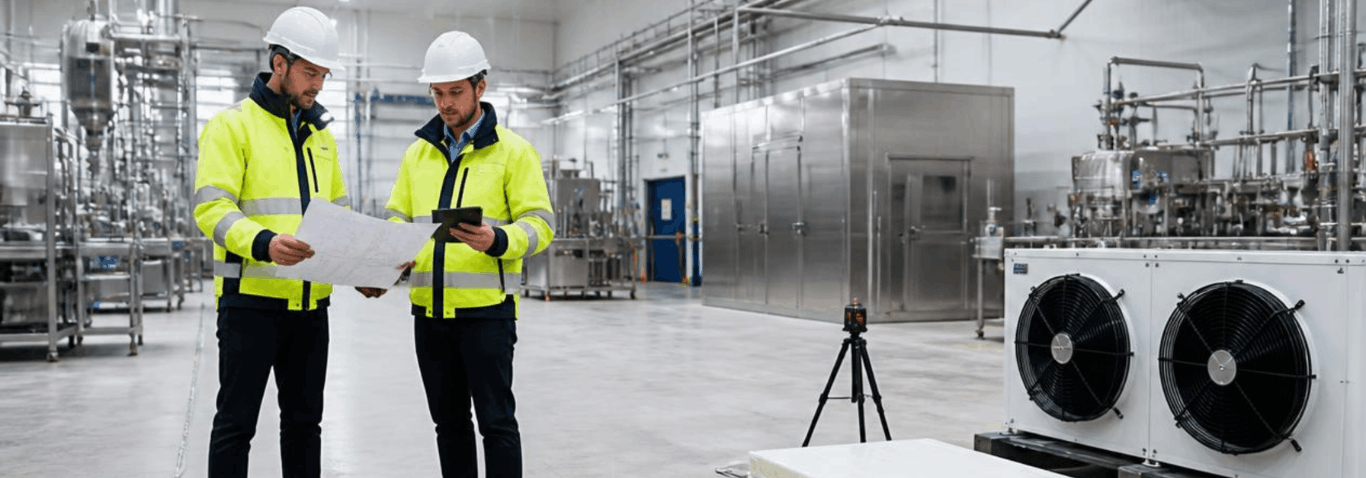
Once the project objectives are understood, the installation environment should be reviewed to identify any practical considerations that may influence the project.
This stage is not only about the available space. It also provides an opportunity to understand how the cold room will fit into the existing facility and how installation activities can be planned with minimal disruption to daily operations. Early discussions during this stage often help identify potential challenges before construction begins, making the overall project easier to manage.
Reviewing the installation environment also gives businesses an opportunity to consider how the proposed cold room will integrate with the wider facility. In food manufacturing, refrigerated storage is only one part of a larger production process, so understanding how different operational areas connect with one another is an important part of early planning.
For example, businesses may wish to consider whether the proposed location supports efficient movement of products, whether there is sufficient space for future operational changes and whether the planned layout will continue to meet business needs as production evolves. These considerations are not intended to determine the final design. Instead, they help establish useful discussion points before the project progresses, allowing both the business and the cold room specialist to develop a clearer understanding of the project’s objectives.
Reviewing the installation environment also provides an opportunity to identify practical considerations that may influence the overall direction of the project. These early discussions help create a shared understanding of the facility before more detailed planning begins.
Developing a Suitable Solution
After the initial planning stages, the contractor can recommend a solution based on the operational requirements that have been identified.
Rather than applying the same approach to every project, the proposed solution should reflect how the facility operates today while allowing flexibility for future business growth where appropriate. Developing a suitable solution is also an opportunity to balance current operational needs with future business objectives. While immediate requirements often shape the direction of the project, considering potential changes in production capacity or product range can help businesses evaluate whether additional flexibility may be beneficial over time.
This broader perspective supports more informed discussions before detailed project planning begins.
Food manufacturers requiring frozen storage, for example, may have different operational considerations from facilities storing chilled ingredients. Understanding these differences early helps ensure the proposed solution is appropriate for the intended application.
What Businesses Can Expect
|
Project Stage |
What to Expect |
|
Initial discussion |
Define business objectives and operational requirements |
|
Site review |
Understand the installation environment |
|
Solution proposal |
Review recommendations based on project needs |
|
Project planning |
Agree on timelines and installation arrangements |
|
Installation |
Carry out the project according to the agreed plan |
Although every project follows its own timeline, understanding these stages helps businesses prepare for discussions with greater confidence. Rather than viewing the process as a series of isolated activities, it is helpful to see each stage as building upon the previous one.
For instance, information gathered during the initial discussions helps shape the site review, while observations from the site review provide useful context when considering possible solutions. This step by step approach allows project decisions to be made with a better understanding of the business and its operational priorities. Having a clear overview of the process also makes it easier for internal stakeholders to understand how the project is progressing and what information may be required at different stages. Understanding the overall project journey also helps businesses prepare internal resources more effectively.
Preparing for Installation
Before installation begins, businesses and contractors typically confirm project timelines, site access and other practical arrangements. Having these details agreed in advance helps create a smoother installation process and allows both parties to prepare for the work ahead.
Good communication throughout this stage also helps minimise misunderstandings and supports better project coordination, particularly where manufacturing activities continue during the installation period. Another useful step before installation begins is ensuring that the relevant stakeholders within the business are aligned on the project’s objectives. Depending on the organisation, this may involve representatives from operations, production, facilities or management, each bringing a different perspective to the discussion.
When everyone shares a common understanding of the project’s priorities, it becomes easier to coordinate decisions, manage expectations and prepare for the work ahead. This collaborative approach is particularly valuable for projects that take place within active manufacturing environments, where careful planning helps minimise unnecessary disruption to daily activities.
Although every project is unique, maintaining open communication throughout the planning stage provides a stronger foundation for a successful installation.
Whether the focus is improving production efficiency, supporting future growth or upgrading existing facilities, taking time to establish clear objectives helps create a smoother transition from planning to implementation.
Conclusion
Every food manufacturing facility has different operational requirements, which is why careful planning before installation is an important part of any cold room project.
Understanding business needs, reviewing the installation environment and discussing project expectations early all contribute to a smoother installation process and a solution that is better aligned with day to day operations.
If you are planning a new cold room for a food manufacturing facility, contact Kiat Lay to discuss your project requirements. Our team works with businesses across Singapore to deliver cold room solutions tailored to a wide range of food manufacturing applications.