


Designing Cold Rooms for High-Value Biopharmaceutical Products
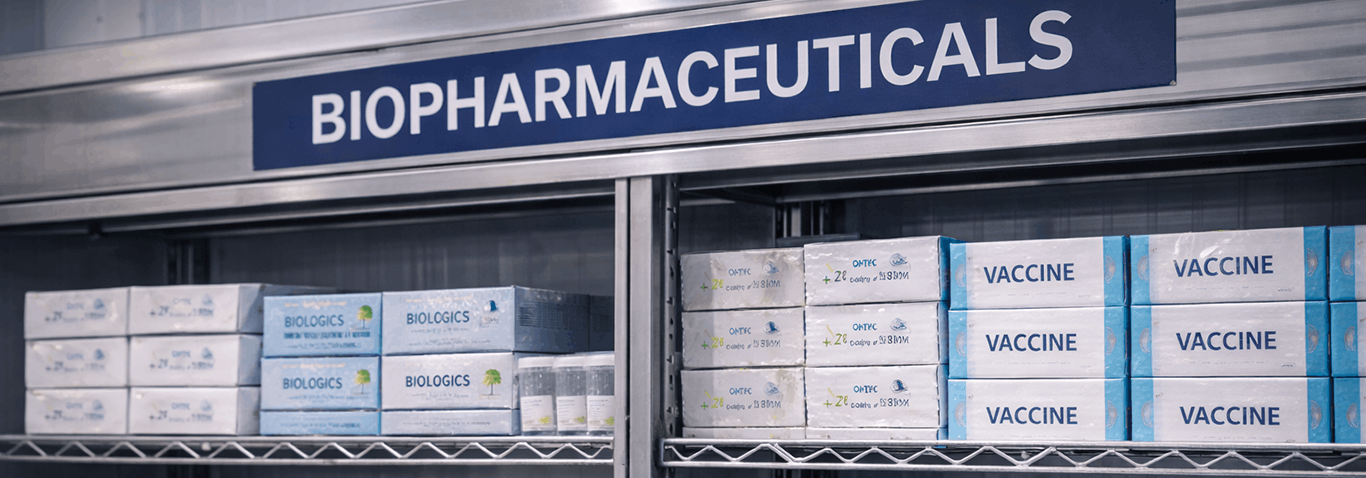
As biopharmaceutical products continue to grow in complexity and value, the requirements for cold room storage have become significantly more demanding. Unlike conventional pharmaceuticals, biologics such as monoclonal antibodies, vaccines, cell and gene therapies are highly sensitive to temperature fluctuations, contamination risks, and unauthorised access. A single deviation can result in irreversible product loss and regulatory non-compliance.
For manufacturers, distributors, and logistics operators in Singapore’s biopharmaceutical ecosystem, designing cold rooms that prioritise security, temperature stability, and controlled access is no longer optional. It is a critical component of Good Manufacturing Practice (GMP) and Good Distribution Practice (GDP) compliance.
This article explores the key cold room design considerations for storing high-value biopharmaceutical products safely and reliably.
Security Considerations in Pharmaceutical Cold Room Design
High-value biopharmaceutical products often represent millions of dollars in inventory within a relatively small footprint. As a result, cold room security must be addressed at both the physical and operational levels.
From a design perspective, pharmaceutical cold rooms should be constructed with reinforced insulated panels, tamper-resistant door systems, and industrial-grade locking mechanisms. Access doors are typically fitted with electronic locks integrated into access control systems, allowing only authorised personnel to enter the cold room.
In many biopharmaceutical facilities, cold rooms are also designed with segregated access points. For example, raw materials, intermediates, and finished biologics may each have dedicated cold room zones to prevent unauthorised movement or cross-handling. This zoning approach not only improves security but also supports traceability during audits.
Surveillance systems such as CCTV cameras, door access logs, and alarm notifications are commonly integrated into high-value cold room environments. These systems provide real-time monitoring and create audit trails that can be reviewed during internal quality reviews or regulatory inspections by HSA or international authorities.
Temperature Stability Requirements for Biologics
Biopharmaceutical products are far more temperature-sensitive than traditional small-molecule drugs. Many biologics must be stored within narrow temperature ranges, such as 2°C to 8°C, while some advanced therapies require frozen or ultra-low temperature storage.
Cold room design must therefore focus on maintaining exceptional temperature stability under all operating conditions. This starts with proper insulation thickness, vapour-tight panel joints, and high-performance cold room doors designed to minimise thermal leakage during frequent access.
Airflow management plays a crucial role in temperature stability. Poor air circulation can lead to hot spots, cold zones, and uneven cooling, all of which pose risks to biologics. Well-designed pharmaceutical cold rooms use strategically positioned evaporators, guided airflow paths, and sufficient clearance around storage racks to ensure uniform temperature distribution throughout the room.
In high-value storage environments, temperature mapping is typically conducted during commissioning and periodically thereafter. Cold room layouts must accommodate sensor placement at multiple heights and locations to validate temperature consistency across all storage zones.
Redundancy and Risk Mitigation in Cold Room Systems
Given the value and sensitivity of biopharmaceutical products, cold room failure is not an acceptable risk. Redundancy planning is therefore a core design principle.
Many biopharmaceutical cold rooms are equipped with dual refrigeration systems, allowing one system to take over automatically if the primary system fails. Backup power supplies, such as generators or uninterruptible power systems (UPS), are also essential to maintain temperature control during power disruptions.
Alarm systems are integrated into the cold room monitoring network to alert facility managers immediately if temperature deviations, equipment faults, or door breaches occur. These alarms are often connected to 24/7 monitoring services, ensuring rapid response even outside normal operating hours.
Such redundancy measures are not merely best practices—they are often expected by regulators and global pharmaceutical partners who require documented evidence of risk mitigation strategies.
Controlled Access in Industrial Cold Rooms
Controlled access is a defining feature of cold rooms designed for high-value biopharmaceutical storage. Beyond physical locks, access control policies are embedded into facility workflows.
Cold room design can support controlled access by incorporating airlocks, ante-rooms, or gowning areas before entry. These transitional spaces help maintain hygiene standards while limiting unnecessary access to the main storage area.
In facilities handling multiple biopharmaceutical products, access permissions may be role-based. For instance, quality assurance personnel may have broader access rights than operations staff. Cold room access systems can be configured to reflect these operational hierarchies.
Additionally, controlled access supports product integrity during inspections and audits. Clear access logs, restricted entry points, and defined storage zones demonstrate to auditors that the facility has robust controls in place to protect sensitive products.
Case Example: Biologics Storage for a Regional Distribution Hub
A regional biopharmaceutical distributor in Singapore required a cold room solution to store high-value biologics prior to onward distribution across Southeast Asia. The facility handled multiple products with strict 2°C to 8°C requirements and varying regulatory documentation needs.
Kiat Lay designed a pharmaceutical cold room with reinforced insulated panels, dual refrigeration units, and access-controlled doors linked to the company’s quality management system. The layout included segregated racking zones for different product categories, with clear labelling and airflow clearance to support temperature uniformity.
Temperature mapping confirmed minimal variation across all storage points, even during peak access periods. The facility successfully passed multiple GDP audits and reduced product deviation incidents significantly after commissioning the new cold room.
Supporting Compliance and Long-Term Reliability
Designing cold rooms for high-value biopharmaceutical products requires a long-term perspective. Beyond initial construction, the cold room must support ongoing compliance, maintenance, and scalability.
Materials used in pharmaceutical cold rooms must withstand frequent cleaning, disinfecting, and operational wear without compromising insulation performance. Flooring systems are typically anti-slip, hygienic, and resistant to chemical cleaning agents.
Maintenance access for refrigeration systems is also factored into the design to ensure servicing can be carried out without disrupting stored products. This proactive approach reduces downtime and supports continuous compliance with GMP and GDP standards.
Conclusion
High-value biopharmaceutical products demand cold room environments that go far beyond basic temperature control. Security, temperature stability, redundancy, and controlled access must all be carefully integrated into the cold room design from the outset.
For biopharmaceutical companies operating in Singapore’s highly regulated environment, investing in purpose-built cold room solutions is essential to protect product integrity, meet regulatory expectations, and safeguard valuable inventory.
With extensive experience in pharmaceutical cold room construction, Kiat Lay coldroom specialist supports biopharmaceutical manufacturers and logistics providers in designing secure, compliant, and reliable cold storage environments tailored to the unique demands of biologics and advanced therapies.