


Cold Room Construction for Pharmaceutical Import and Export Hubs
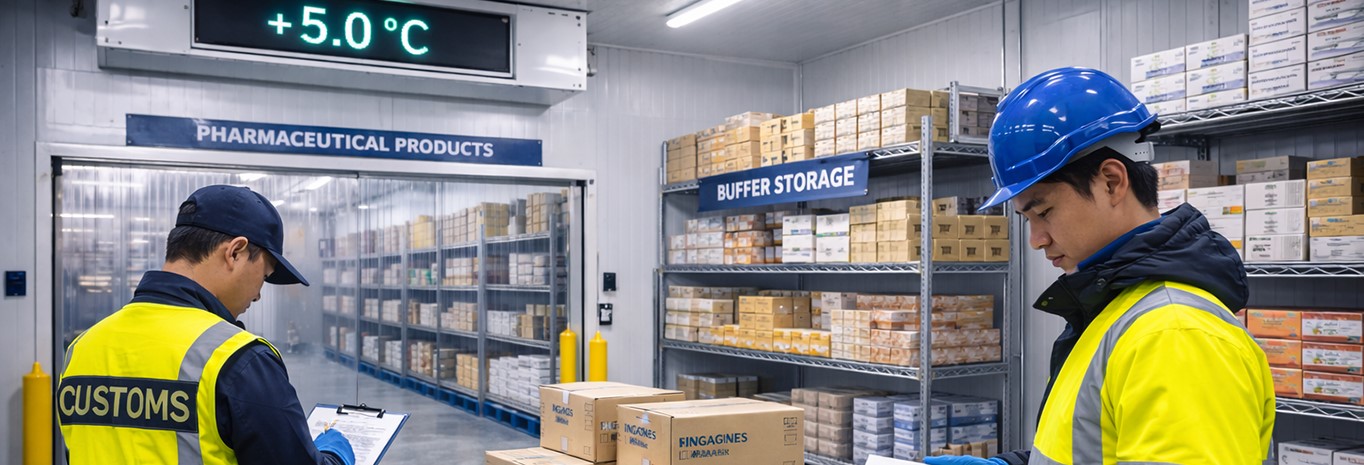
Pharmaceutical import and export hubs play a critical role in maintaining the integrity of temperature-sensitive medicines across borders. Products such as vaccines, biologics, injectables, and APIs often face delays due to customs clearance and regulatory inspections.
In these environments, cold room construction is not just about storage. It is essential for protecting product quality, ensuring regulatory compliance, and safeguarding patient safety.
This guide explores how purpose-built cold room construction supports pharmaceutical logistics hubs, with a focus on buffer storage, inspection workflows, and durable design for high-traffic operations.
Why Cold Room Construction Matters in Pharmaceutical Logistics
Pharmaceutical supply chains require strict temperature control at every stage.
Cold room construction for import and export hubs must support:
- Extended holding periods during customs delays
- High cargo turnover and continuous handling
- Strict regulatory inspection requirements
- Reliable and validated temperature conditions
Without proper cold storage infrastructure, temperature excursions can lead to product rejection, compliance issues, and financial loss.
Managing Customs Delays with Buffer Cold Room Storage
Customs clearance can be unpredictable, even with complete documentation.
Buffer Cold Rooms for Temporary Storage
Cold room construction for pharmaceutical hubs should include dedicated buffer cold rooms located near cargo handling areas.
These spaces allow:
- Immediate transfer of goods upon arrival
- Temporary holding without disrupting workflows
- Reduced exposure to ambient conditions during delays
Buffer cold rooms ensure temperature-sensitive products remain within required ranges even during extended inspections.
Design Features for High-Access Environments
Buffer cold rooms must handle frequent access and variable loads.
Key design elements include:
- High-performance insulation panels
- Fast-acting insulated doors
- Air curtains to reduce temperature loss
- Refrigeration systems designed for rapid temperature recovery
Example:
A pharmaceutical hub storing imported vaccines transfers pallets directly into a +2°C to +8°C buffer cold room upon arrival. This maintains compliance even when customs clearance extends overnight.
Maintaining Product Integrity During Inspections
Regulatory inspections require physical access to products, increasing the risk of temperature exposure.
Inspection Zones Within Cold Rooms
Cold room construction should integrate dedicated inspection zones inside temperature-controlled environments.
These zones include:
- Adequate lighting and clear aisle spacing
- Ergonomic workstations for inspection
- Layouts designed to minimise handling time
This allows inspections to be conducted without removing products from controlled conditions.
Continuous Temperature Monitoring
Temperature control must be maintained throughout inspection.
Essential systems include:
- Calibrated sensors for continuous monitoring
- Automated alarm alerts
- Digital data logging for compliance and audits
These systems provide real-time visibility and ensure immediate response to any deviation.
Multi-Temperature Segregation
Pharmaceutical hubs often handle products with different temperature requirements.
Cold room construction should include:
- Separate cold rooms for chilled and frozen products
- Compartmentalised zones within larger systems
- Clear physical and procedural segregation
This prevents cross-temperature exposure and supports compliance with product specifications.
Durable Cold Room Construction for Logistics Operations
Pharmaceutical hubs operate in high-traffic environments with continuous movement of goods.
Heavy-Duty Flooring Systems
Cold room floors must support:
- Forklifts and pallet jacks
- Repeated mechanical loads
- Long-term structural stability
Reinforced, non-slip flooring with proper insulation and vapour barriers prevents damage and moisture issues.
Impact-Resistant Panels and Protection
Walls and ceilings must withstand daily operations.
Key features include:
- Impact-resistant panels
- Protective kick plates and corner guards
- Bollards near high-risk areas
These elements reduce damage and extend the lifespan of the cold room.
Reliable and Redundant Refrigeration Systems
Continuous operation is critical.
Cold room construction should include:
- Dual compressor systems
- Backup power supply connections
- Remote monitoring systems
Redundancy ensures uninterrupted temperature control even during equipment failure.
Supporting Compliance and Operational Efficiency
Cold room design must support both regulatory requirements and operational workflows.
Layout Planning for Clear Workflow Segregation
Effective cold room construction includes clearly defined zones for:
- Inbound goods
- Buffer storage
- Inspection
- Outbound distribution
This reduces the risk of mix-ups and improves operational efficiency.
Integration with Monitoring and Management Systems
Modern pharmaceutical cold rooms integrate with:
- Warehouse management systems
- Temperature monitoring platforms
- Real-time tracking tools for inventory and conditions
This data supports audits, investigations, and client reporting.
Business Benefits of Purpose-Built Cold Rooms
Investing in specialised cold room construction provides measurable benefits:
- Reduced product loss and rejection
- Improved compliance with regulatory standards
- Enhanced operational efficiency
- Ability to offer value-added logistics services
Well-designed cold rooms strengthen a company’s position within the pharmaceutical supply chain.
FAQs about Cold Room Construction for Pharmaceutical Hubs
What is a buffer cold room in pharmaceutical logistics?
A buffer cold room is a dedicated storage area used to temporarily hold temperature-sensitive products during customs clearance or inspection.
Why are inspection zones needed inside cold rooms?
They allow regulatory checks to be carried out without exposing products to ambient temperatures, preserving cold chain integrity.
What temperature ranges are used in pharmaceutical cold rooms?
Common ranges include +2°C to +8°C for chilled medicines and –20°C or lower for frozen products.
How do cold rooms support pharmaceutical compliance?
They maintain validated temperature conditions, provide monitoring data, and ensure proper segregation of products.
What makes cold room construction suitable for logistics hubs?
Durable materials, high-capacity refrigeration systems, and layouts designed for heavy traffic and continuous operations.
Cold Room Construction as a Strategic Investment
Cold room construction for pharmaceutical import and export hubs requires more than basic temperature control.
It must support customs delays, inspection processes, and high-volume logistics operations while maintaining strict compliance.
With the right design, buffer storage, and durable infrastructure, pharmaceutical hubs can protect product integrity, reduce risk, and ensure smooth global distribution.