


Cold Room Construction for Logistics: How to Build a System That Actually Works
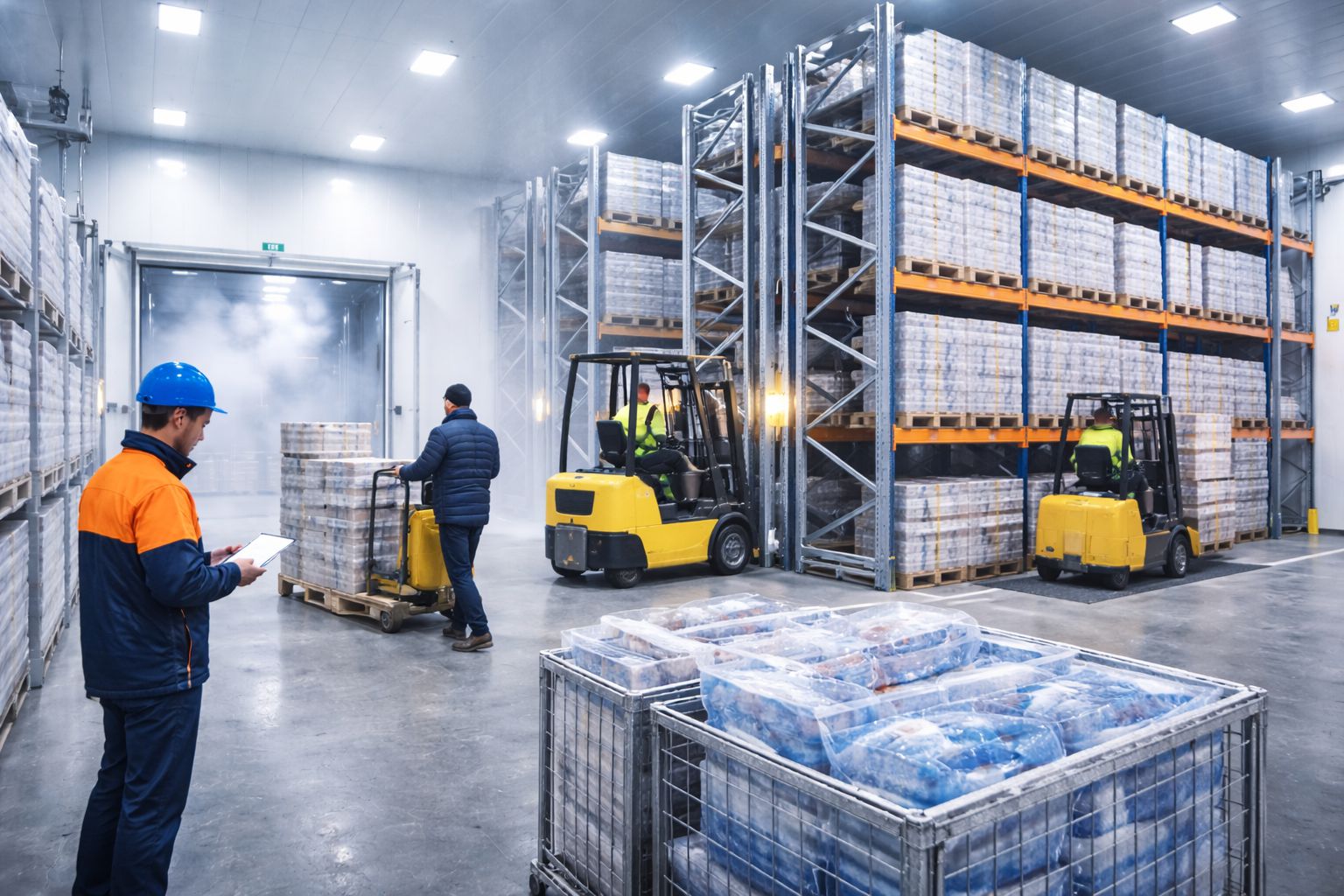
In logistics, a cold room is not simply a storage area. It is part of the operating system that keeps goods moving safely, efficiently and within the required temperature range. Whether a facility handles food, pharmaceuticals, fresh produce or other temperature-sensitive products, cold room construction has a direct impact on product quality, loading speed, energy use and business continuity.
A poorly planned cold room can create daily operational issues. Inefficient layouts, heat gain at loading points, weak insulation, poor racking design and limited expansion capacity can all increase cost over time. These problems may not be obvious during construction, but they quickly affect labour, maintenance, inventory control and delivery performance once operations begin.
This article explains about a cold room system that works for logistics operations, with a focus on layout planning, dock integration, insulation, racking, scalability and energy efficiency.
What Is Cold Room Construction for Logistics?
Cold room construction for logistics refers to the design and build of temperature-controlled storage spaces that support receiving, holding, picking, packing and dispatching goods within a cold chain operation.
A logistics cold room should be designed around:
- Product temperature requirements
- Inbound and outbound flow
- Loading dock access
- Storage capacity
- Racking and material handling equipment
- Door opening frequency
- Energy performance
- Maintenance access
- Future growth plans
The goal is not only to keep products cold. The goal is to create a controlled system that supports fast, safe and reliable movement of goods.
Why Cold Room Construction Matters in Logistics
Cold chain logistics depends on consistency. Every delay, temperature fluctuation or handling bottleneck can affect product quality, delivery timelines and operating cost.
Good cold room construction can help logistics businesses:
- Reduce loading and unloading delays
- Improve stock movement and picking efficiency
- Maintain stable temperatures
- Reduce energy loss
- Protect temperature-sensitive goods
- Improve staff and forklift safety
- Prepare for future capacity growth
- Reduce avoidable downtime
For logistics operators, the best cold room design is one that supports the workflow instead of forcing teams to work around it.
1. Layout Design: The Foundation of Cold Room Efficiency
The layout of a cold room determines how goods move from receiving to storage and dispatch. A strong layout should reduce unnecessary movement, prevent traffic conflicts and help staff complete tasks with fewer delays.
A well-planned logistics cold room should include:
- Clear receiving, storage, picking and dispatch zones
- Adequate aisle width for forklifts and pallet movement
- Logical flow from inbound to outbound goods
- Defined pedestrian and equipment routes
- Suitable staging areas for fast-moving items
- Easy access to high-turnover stock
Cold room layout should be planned together with the full logistics process, including delivery schedules, truck movement, picking methods and inventory turnover.
Why Layout Planning Matters
Poor layout can create:
- Bottlenecks during peak loading periods
- Longer travel distances for workers and forklifts
- Higher labour costs
- More door openings
- Increased safety risks
- Slower dispatch times
In cold chain logistics, layout efficiency also affects temperature stability. The longer products remain in transition areas, the greater the risk of temperature exposure.
Example: Food Distributor in Tuas
A food distribution company in Tuas experienced delays because forklifts and workers crossed paths inside the cold room. Narrow aisles also slowed picking and pallet movement.
After redesigning the layout with dedicated traffic lanes, wider aisle spacing and clearly defined zones, the facility improved loading speed and reduced safety risks.
This shows that cold room layout is not only a space-planning decision. It directly affects productivity, safety and cold chain performance.
2. Loading Dock Integration: Reducing Temperature Loss
The connection between the loading dock and cold room is one of the most important parts of cold room construction for logistics. Every movement between ambient conditions and cold storage creates potential heat gain, energy loss and product exposure.
A logistics cold room should be positioned and designed to reduce the distance between receiving, storage and dispatch.
Key features may include:
- Dock levellers for smoother truck alignment
- Fast-closing insulated doors
- Direct access between dock and cold room
- Air curtains or strip curtains where suitable
- Dock shelters or seals
- Temperature-controlled staging areas
- Clear traffic routes for pallets and forklifts
A well-integrated loading dock helps goods move quickly while reducing the load on the refrigeration system.
Why Dock Design Affects Cold Chain Performance
Poor dock integration can lead to:
- Longer exposure to ambient temperatures
- Higher refrigeration load
- Moisture and condensation issues
- Slower unloading and dispatch
- Product quality risk
- Higher energy bills
For high-volume logistics facilities, even small improvements at the dock can produce meaningful operational gains over time.
Example: Seafood Supplier Upgrade
A seafood supplier had a cold room located far from the loading dock, with products travelling through a long corridor before reaching storage. This created unnecessary heat exposure and slowed unloading.
The facility improved performance by relocating cold storage closer to the dock and installing insulated high-speed doors.
The upgrade reduced temperature loss, shortened handling time and improved the consistency of the cold chain during daily receiving operations.
3. Proper Insulation: More Than Walls and Ceilings
Insulation is one of the most important parts of cold room construction. It controls heat transfer, protects temperature stability and reduces the workload on the refrigeration system.
Many businesses focus on wall and ceiling insulation, but flooring is equally important. Cold rooms require a properly insulated envelope that includes:
- Insulated wall panels
- Insulated ceiling panels
- Floor insulation where required
- Vapour barriers
- Thermal breaks
- Proper panel sealing
- High-performance door seals
If insulation is poorly specified or installed, the cold room may consume more energy, struggle to maintain temperature and face long-term structural issues.
Why Floor Insulation Matters
Cold room floors are exposed to ground heat, moisture and heavy traffic. Poor floor design can cause:
- Heat transfer from below
- Condensation
- Frost buildup
- Icy surfaces
- Cracking or floor movement
- Higher maintenance costs
- Safety hazards
For freezer rooms, floor insulation and vapour barriers are especially important because subfloor moisture and temperature differences can create long-term damage.
Example: Beverage Warehouse Floor Failure
A beverage warehouse experienced floor cracks within 18 months of operation. The issue was traced to poor insulation and moisture control beneath the slab.
The floor was reconstructed with proper insulation boards, moisture barriers and a more suitable structural build-up.
After the upgrade, the facility reduced floor-related maintenance issues and improved safety in the cold room area.
4. Racking Systems: Supporting Storage, Safety and Speed
A cold room racking system does more than hold goods. It affects storage density, picking speed, airflow, safety and long-term scalability.
In cold environments, racking must be selected carefully because moisture, heavy loads and frequent equipment movement can increase wear.
A suitable cold room racking system should consider:
- Load capacity
- Pallet size and weight
- Forklift access
- Corrosion resistance
- Airflow requirements
- Product rotation method
- Safety barriers and guards
- Inventory visibility
- Future capacity needs
Racking should never be treated as an afterthought. It should be planned together with the cold room layout, refrigeration airflow and daily operating method.
How Racking Design Improves Logistics Performance
Good racking design can help:
- Increase storage capacity
- Reduce picking time
- Improve stock organisation
- Support first-in, first-out workflows
- Improve safety around forklifts
- Reduce product damage
- Keep airflow paths clear
Poorly planned racking can block airflow, create temperature inconsistencies and make stock retrieval slower.
Example: High-Density Storage Optimisation
A logistics operator upgraded its racking system to support vertical storage while maintaining safe load distribution and forklift access.
The improved system increased storage capacity without requiring additional floor space, reduced retrieval time and helped the team manage inventory more accurately.
5. Scalability: Planning for Future Growth
A common mistake in cold room construction is designing only for current storage needs. Logistics demand can change quickly due to new customers, seasonal peaks, product expansion or changes in distribution volume.
A scalable cold room is planned with future growth in mind.
Best practices include:
- Leaving space for expansion
- Using modular insulated panels
- Planning utility connections in advance
- Allowing room for additional refrigeration capacity
- Designing flexible storage zones
- Selecting racking that can adapt to changing stock profiles
- Planning future door and dock access points
Scalable design helps businesses avoid costly reconstruction and operational disruption later.
Example: Logistics Hub Expansion
A logistics hub in Singapore planned its cold room construction in phases. The initial build included expansion-ready infrastructure and service provisions.
When storage demand increased, the facility expanded capacity without stopping daily operations.
This approach protected business continuity while giving the operator room to grow.
6. Energy Efficiency: Reducing Long-Term Operating Costs
Cold rooms operate continuously, which makes energy efficiency a major cost factor. A low-cost build that performs poorly can become expensive over the life of the facility.
Energy-efficient cold room construction may include:
- High-performance insulated panels
- Correct refrigeration sizing
- Energy-efficient compressors
- LED lighting with motion sensors
- Proper door seals
- Reduced air leakage
- Smart temperature controls
- Preventive maintenance planning
- Real-time monitoring systems
The most efficient system is not necessarily the most complex one. It is the system that is correctly designed for the room size, product load, access frequency and operating conditions.
Example: Smart Cold Room Implementation
A food processing company installed inverter-driven compressors and automated temperature monitoring.
The system improved temperature stability, reduced unnecessary equipment strain and helped the operator manage energy use more effectively.
7. Digital Monitoring and Preventive Maintenance
Cold room construction should also account for long-term monitoring and service access. In logistics, breakdowns can affect product movement, delivery commitments and customer confidence.
A suitable monitoring system may include:
- Temperature logging
- Door opening records
- Alarm notifications
- Remote alerts
- Equipment performance tracking
- Humidity monitoring where required
- Maintenance reports
Digital monitoring gives logistics teams better visibility over system performance and helps identify issues before they become costly failures.
Preventive maintenance should also be built into the design. This means allowing safe access to evaporators, condensers, drainage points, control panels, doors and sensors.
8. Choosing the Right Cold Room Contractor for Logistics
The right cold room contractor should understand both refrigeration performance and logistics workflow. A cold room may meet its temperature target but still fail operationally if it creates bottlenecks, maintenance issues or energy waste.
Before appointing a contractor, consider whether they can support:
- Site assessment and workflow planning
- Layout design for receiving, storage and dispatch
- Refrigeration load calculation
- Insulated panel and flooring specification
- Loading dock integration
- Racking coordination
- Energy efficiency planning
- Monitoring system integration
- Maintenance access planning
- Future expansion strategy
For logistics operations, cold room construction should be treated as critical infrastructure that supports daily movement, customer commitments and long-term reliability.
Conclusion
Cold room construction for logistics is about more than creating a cold space. It is about building a system that supports product movement, temperature stability, staff safety, energy efficiency and business continuity.
Kiat Lay cold room builders design and construct cold rooms for logistics businesses that need reliable temperature control, efficient product flow and long-term operational confidence. From layout planning and dock integration to insulation, refrigeration, monitoring and maintenance access, our team builds cold room systems around real operating needs.
Speak to Kiat Lay to plan a cold room construction solution that improves workflow, protects product quality and supports your future growth.
FAQs About Cold Room Construction for Logistics
What is the most important factor in cold room construction for logistics?
The most important factor is designing the cold room around the actual workflow. Layout, dock access, racking, insulation and refrigeration must work together to support fast movement, stable temperatures and safe handling.
How should a cold room be laid out for logistics operations?
A logistics cold room should have clear zones for receiving, storage, picking and dispatch. It should also provide wide aisles, logical product flow, forklift access and staging areas for fast-moving goods.
Why is loading dock integration important for cold rooms?
Loading dock integration reduces the distance goods travel outside controlled temperatures. This helps minimise heat gain, product exposure, energy loss and handling delays during receiving and dispatch.
Does cold room flooring need insulation?
Yes, many cold rooms and freezer rooms require proper floor insulation, vapour barriers and structural flooring systems. This helps prevent heat transfer, frost buildup, condensation and long-term floor damage.
What racking system is best for cold rooms?
The best racking system depends on product type, pallet load, storage density, picking method and forklift access. Racking should also allow proper airflow and safe movement inside the cold room.
How can cold room construction reduce energy costs?
Energy costs can be reduced through high-performance insulation, correct refrigeration sizing, efficient compressors, LED lighting, proper door seals, reduced air leakage and smart temperature controls.
How can a cold room be designed for future expansion?
A cold room can be designed for expansion by using modular panels, planning service connections in advance, allowing extra space for refrigeration capacity and creating flexible storage zones.
What temperature should a logistics cold room maintain?
The required temperature depends on the products stored. Chilled goods commonly require 0°C to 4°C, frozen goods are usually stored at -18°C or lower, while pharmaceuticals or specialist products may have their own validated temperature range.
Why should logistics businesses use digital monitoring for cold rooms?
Digital monitoring helps track temperature, door activity and equipment performance. It also supports faster response to issues, better maintenance planning and stronger cold chain control.