


Cold Room Design for Clinical Trial Material Storage
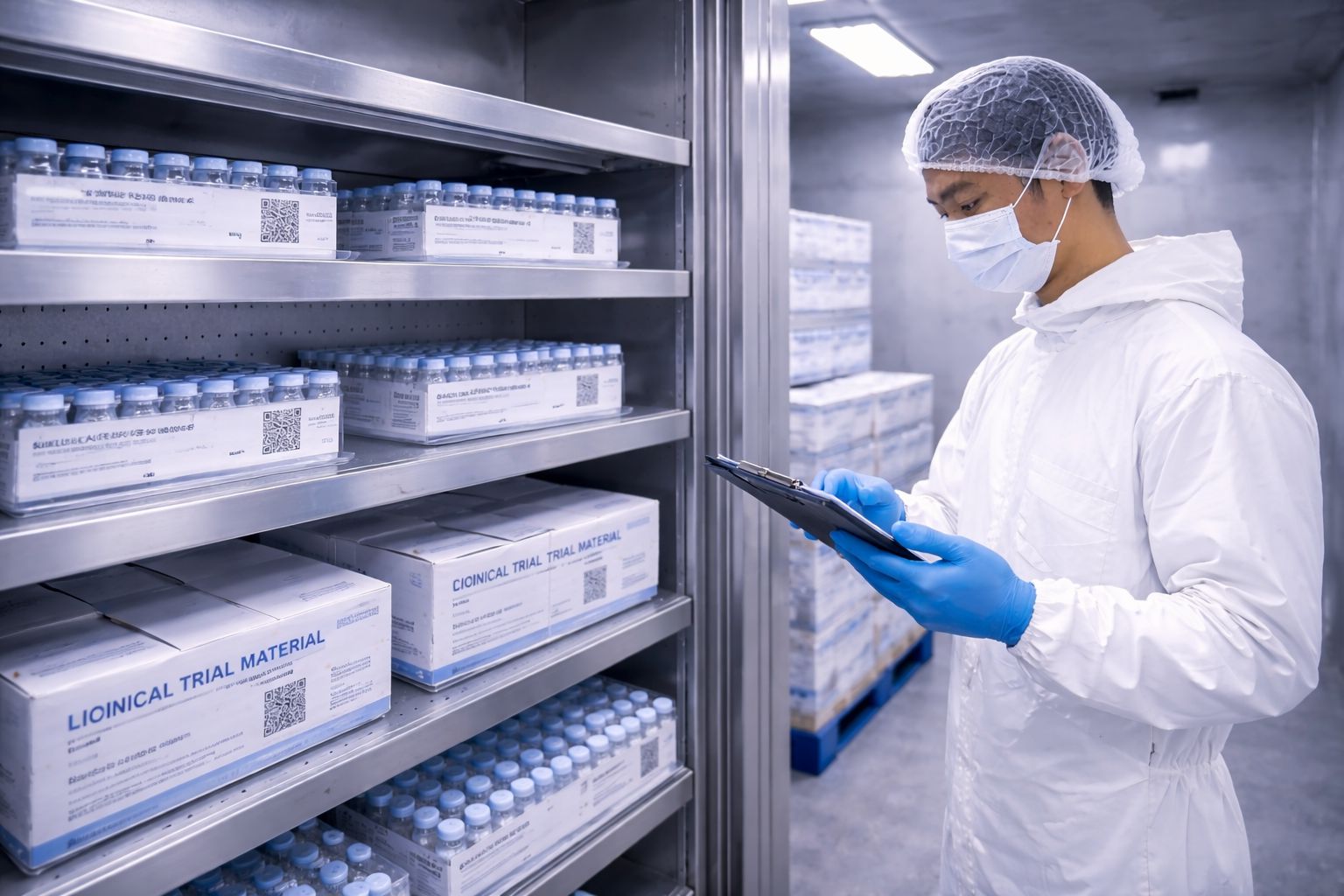
Clinical trials sit at one of the most tightly controlled stages of pharmaceutical development, where investigational drugs are tested under conditions that leave no room for deviation. Clinical trial materials (CTMs), including investigational drugs, placebos and biological samples, need to be stored with precision, security and full traceability throughout.
Clinical trial storage demands a higher level of control than standard pharmaceutical storage. Batch sizes are smaller, formulations are often experimental rather than commercially proven, and regulatory oversight sits at a different level entirely, which means a single storage failure can compromise an entire study rather than just a shipment. This makes cold room design a decisive factor in trial integrity and compliance.
This article looks at how cold room systems support clinical trial material storage, covering precision control, segregation and traceability, with real-world examples throughout.
Maintaining Precise Environmental Control
Clinical trial materials are often highly sensitive to environmental change. Even a minor temperature fluctuation can compromise data integrity and put trial outcomes in question, not just the product itself.
Most CTMs need storage within 2°C to 8°C, though some biologics and advanced therapies require frozen or ultra-low conditions down to -80°C.
Key environmental requirements:
- Stable temperature control within narrow tolerances
- Uniform airflow distribution to prevent hotspots
- Minimal temperature fluctuation during access
Cold rooms built for clinical trials rely on advanced refrigeration and insulation working together to hold consistent conditions at all times, not just under normal operating load.
Essential design features:
- High-performance insulated panels that reduce heat transfer
- Precision cooling systems with tight control ranges
- Air circulation systems for even temperature distribution
- Temperature mapping and validation to confirm compliance before materials go in
Case example: A contract research organisation (CRO) upgraded its cold room with enhanced airflow and precision cooling systems. Storage conditions for investigational drugs stayed stable, which protected data integrity through the full trial process.
Segregation of Trial Materials
Clinical trials typically run multiple study groups, dosage variations and control samples at once. Proper segregation is what prevents mix-ups that could otherwise invalidate results.
Cold room design needs to support clear separation of materials by:
- Study protocol
- Batch or lot number
- Dosage group, such as placebo versus active drug
- Trial phase or location
Key segregation strategies:
Dedicated storage zones. Separate sections for different studies or trial groups, so materials never cross paths by accident.
Clearly labelled shelving systems. Ensure fast, accurate identification without staff needing to cross-check documentation each time.
Restricted access areas. Limit handling to authorised personnel only, cutting the risk of accidental contamination or mishandling.
Quarantine zones for non-released materials. Isolate items pending approval or investigation until their status is confirmed.
Case study: A pharmaceutical research facility implemented a zoned cold room system across multiple clinical trials. Assigning dedicated storage areas to each study cut handling errors and kept tracking accurate across every trial running at once.
Supporting Traceability and Documentation
Traceability isn’t optional in clinical trials. Every movement and every storage condition needs a record, since regulatory authorities require full visibility into how materials were handled from start to finish.
Cold room design needs to enable:
- Batch-level tracking of all materials
- Accurate recording of storage conditions
- Audit-ready documentation for inspections
Key traceability features:
- Barcode or RFID tracking systems
- Digital inventory management platforms
- Continuous temperature monitoring and data logging
- Secure access control with activity tracking
Case example: A clinical trial site integrated RFID tracking within its cold room system. Material movement stayed visible in real time, which gave the facility complete traceability during regulatory audits without gaps in the record.
Ensuring Compliance with Regulatory Standards
Clinical trial storage needs to meet Good Clinical Practice (GCP), Good Manufacturing Practice (GMP) and Good Distribution Practice (GDP) requirements, with oversight from bodies such as the Health Sciences Authority (HSA) in Singapore.
Cold room design should support compliance by providing:
- Validated temperature control systems
- Continuous monitoring and alert systems
- Secure storage environments
- Complete documentation and audit trails
Compliance-focused features:
- Real-time monitoring with automated alerts
- Backup refrigeration and power systems
- Hygienic construction materials for easy cleaning
- Controlled access to sensitive materials
Case study: A pharmaceutical company implemented a cold room system with automated monitoring and backup systems. During a regulatory inspection, the facility demonstrated full compliance with GCP requirements, which kept its clinical trial data reliable and defensible.
Managing Limited and High-Value Inventory
Clinical trial materials are often produced in limited quantities, and the value tied up in a single batch can be significant. Loss or damage doesn’t just cost money, it can delay an entire trial phase.
Cold room design should prioritise:
- Efficient use of storage space
- Secure handling of high-value materials
- Minimised risk of product loss
Key design considerations:
- Compact, organised shelving systems
- Clear labelling for quick identification
- Controlled access that prevents unauthorised handling
- Backup systems that protect against equipment failure
Example: A biotech company designed a compact cold room specifically for clinical trial materials, with optimised shelving and strict access control. Storage space stayed efficient without sacrificing security or traceability.
Flexible Design for Evolving Trial Needs
Clinical trials shift constantly, with protocols changing, storage requirements varying, and new product types entering the pipeline mid-study. Cold room systems need enough flexibility to absorb that without disrupting active trials.
Flexible design features:
- Modular cold room panels for easy reconfiguration
- Multi-temperature zones for different materials
- Adjustable shelving systems
- Integration points for ultra-low freezers used in advanced therapies
Case study: A research facility expanded its clinical trial operations to include biologics requiring ultra-low storage. The modular cold room design let the facility integrate new equipment without disrupting trials already underway.
Future-Proofing Clinical Trial Storage
Pharmaceutical research keeps advancing, and cold room systems need to be ready for what’s coming next, including gene and cell-based treatments that carry storage requirements standard trials never needed.
Future-ready features:
- IoT-enabled monitoring systems
- Predictive maintenance technologies
- Energy-efficient refrigeration systems
- Integration with digital trial management platforms
These capabilities keep cold rooms adaptable enough to support the next generation of clinical trials without a full infrastructure rebuild.
Conclusion
Clinical trial material storage leaves no margin for error. Cold room design determines whether environmental stability holds, traceability stays complete, and regulatory requirements get met at every stage of a study, not just at the audit.
Kiat Lay Coldroom Specialist has designed and maintained pharmaceutical-grade cold rooms in Singapore since 1982, with direct experience supporting CROs and research facilities through the precision, segregation and traceability demands of clinical trial storage. Speak with Kiat Lay about designing a cold room built for your clinical trial storage requirements.
Frequently Asked Questions
What temperature should clinical trial materials be stored at?
Most clinical trial materials require storage between 2°C and 8°C, though certain biologics and advanced therapies need frozen or ultra-low conditions down to -80°C depending on the formulation.
Why does clinical trial storage need stricter segregation than standard pharmaceutical storage?
Clinical trials run multiple study groups, dosage variations and control samples simultaneously, so segregation by protocol, batch, dosage group and trial phase is essential to prevent mix-ups that could invalidate results.
What regulatory standards apply to clinical trial cold room storage?
Clinical trial storage needs to meet Good Clinical Practice (GCP), Good Manufacturing Practice (GMP) and Good Distribution Practice (GDP) requirements, with oversight from the Health Sciences Authority (HSA) in Singapore.
How is traceability maintained for clinical trial materials in cold storage?
Traceability relies on barcode or RFID tracking, digital inventory management, continuous temperature data logging and secure access control with activity tracking, giving regulators full visibility during audits.
Can a clinical trial cold room support multiple studies at once?
Yes. Dedicated storage zones, clearly labelled shelving and restricted access areas allow a single cold room facility to run multiple studies simultaneously without cross-contamination or mix-ups.
What happens if clinical trial materials lose temperature stability during storage?
A temperature excursion can compromise data integrity and put the reliability of trial results in question, which is why continuous monitoring, automated alerts and backup refrigeration systems are essential design features.