


Cold Room Design for End-to-End Pharmaceutical Cold Chain Integrity
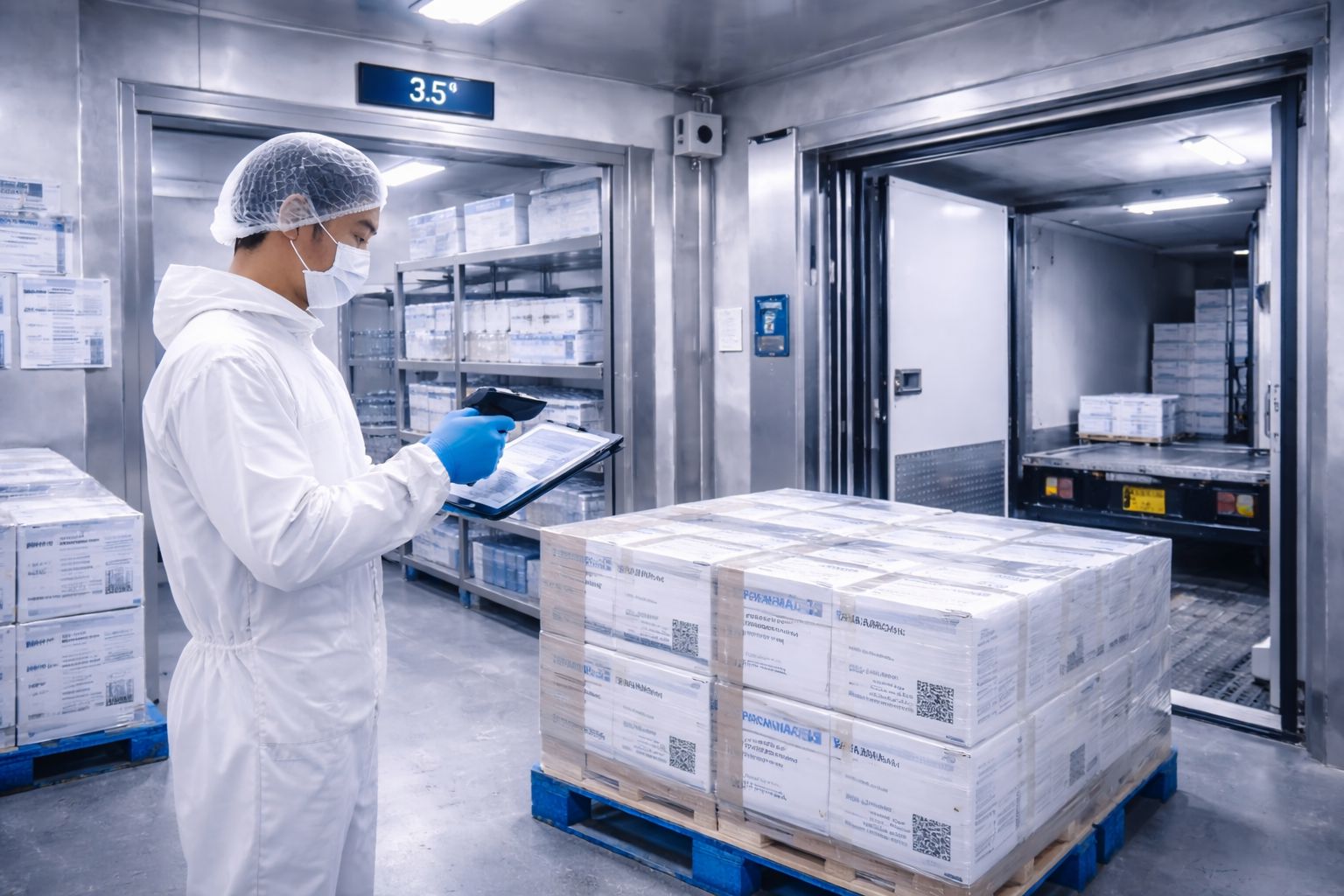
In pharmaceutical operations, product integrity doesn’t hold at just one stage. It has to survive manufacturing, storage, transport and final distribution as a single continuous process, with strict environmental conditions preserved at every handoff.
This is what’s known as end-to-end cold chain integrity, and the cold room sits at the centre of it.
Cold rooms aren’t just storage space. They function as control points, each one responsible for keeping the product within validated conditions before it moves to the next stage of the chain. This article looks at how cold room design supports full cold chain integrity, covering continuity, risk management and system integration, with real-world examples throughout.
Ensuring Seamless Temperature Continuity
Pharmaceutical products, vaccines, biologics and specialty drugs in particular, need strict temperature ranges, typically 2°C to 8°C, with some requiring frozen or ultra-low environments down to -80°C.
One of the biggest risks in the cold chain shows up at transfer points, not inside the storage room itself:
- Receiving goods from manufacturers
- Moving products between storage zones
- Dispatching items for distribution
Cold room design needs to hold continuous temperature control through every one of these handoffs, not just while the product sits still.
Key design features:
Ante-chambers (buffer zones). Transitional spaces that reduce temperature shock when products move in and out of the main cold room.
Dock-integrated cold rooms. Storage areas placed directly beside loading bays, cutting exposure time during transfer to a minimum.
High-speed doors and air curtains. Reduce how much warm air gets in during frequent access, particularly at busy transfer points.
Temperature-stable staging areas. Dedicated zones for short-term holding before dispatch, so products never sit in ambient conditions while waiting.
Case example: A pharmaceutical distribution hub integrated its cold room directly with its loading dock through an ante-chamber system. Temperature fluctuations during loading dropped, and products stayed within safe limits through the entire transfer process.
Integrating Cold Rooms with Cold Chain Logistics
A cold room is only one piece of a much larger cold chain ecosystem. Holding end-to-end integrity means the cold room has to connect cleanly with transportation, inventory systems and monitoring technology, not operate as an isolated unit.
Key integration elements:
Pre-conditioned storage for transport. Products get stored at conditions that already match transport requirements, avoiding temperature shock at the point of pickup.
Synchronised temperature settings. Cold rooms and refrigerated vehicles run within aligned temperature ranges, so there’s no gap between storage and transit conditions.
Digital data integration. Temperature data from the cold room links with transport monitoring systems, giving full visibility across the handoff.
Standardised handling protocols. Consistent procedures carry through from storage into transport, removing guesswork at the transition point.
Case study: A vaccine logistics provider synced its cold room monitoring data with its refrigerated delivery vehicles. This gave the team real-time visibility across the entire supply chain, which kept compliance continuous and cut risk at every handoff.
Minimising Risk Through Redundancy and Monitoring
Cold chain integrity depends on staying ahead of failure, not reacting after the fact. Even a short disruption in temperature control can wipe out an entire batch of product.
Key risk management features:
- Redundant refrigeration systems, with backup units that keep cooling running if the primary system fails
- Emergency power supply (UPS or generators) that prevents downtime during outages
- Real-time monitoring systems that track temperature and humidity continuously
- Automated alerts and escalation protocols that trigger immediate corrective action
Case example: A pharmaceutical warehouse installed a cold room with dual refrigeration units and backup power. When one system failed without warning, the backup unit held stable conditions, which prevented product loss and kept operations running without interruption.
Supporting Traceability Across the Cold Chain
Traceability isn’t optional for cold chain integrity, and it’s a direct regulatory requirement. Cold room design needs to enable accurate tracking of product movement and storage conditions at every stage.
Key traceability features:
- Batch-level storage zones that organise product by batch or lot number
- Barcode or RFID tracking systems for real-time inventory updates and fewer manual errors
- Data logging and audit trails that produce detailed records on demand
- Dedicated quarantine areas for products awaiting inspection or investigation
Case study: A pharmaceutical distributor implemented RFID tracking within its cold room system. When a recall came through, the team tracked product movement in real time, which kept disruption to operations minimal.
Designing for Compliance and Global Standards
End-to-end cold chain integrity has to meet strict regulatory standards, including Good Distribution Practice (GDP) and Good Manufacturing Practice (GMP), along with oversight from bodies such as the Health Sciences Authority (HSA) in Singapore.
Cold room design should support compliance by ensuring:
- Validated temperature control
- Continuous monitoring and documentation
- Secure and controlled access
- Hygienic, contamination-free environments
Key compliance features:
- Temperature mapping and validation to confirm consistent conditions across every storage area
- Non-porous insulated panels that support hygiene and easy cleaning
- Secure access control systems that limit entry to authorised personnel
- Audit-ready monitoring systems that produce complete records for inspection
Example: A global pharmaceutical company upgraded its cold storage facilities to meet international GDP standards. By integrating monitoring systems and tightening documentation, the company strengthened compliance and its global distribution capabilities in the same move.
Future-Proofing Cold Chain Infrastructure
Pharmaceutical supply chains keep getting more complex, and cold room systems need to evolve alongside them to support new technologies, products and operational demands.
Future-ready design features:
- IoT-enabled monitoring systems that provide real-time insight and predictive maintenance
- Modular cold room construction that allows easy expansion and reconfiguration
- Energy-efficient technologies that reduce operating costs and support sustainability targets
- Integration with digital supply chain platforms for full visibility across storage and distribution networks
Case study: A biotech company implemented a smart cold room system with IoT integration and predictive analytics. The facility caught potential issues before they turned into failures, which improved reliability and brought maintenance costs down.
Conclusion
End-to-end cold chain integrity determines whether a pharmaceutical product stays safe, effective and compliant from the moment it leaves manufacturing to the moment it reaches a patient. Cold rooms sit at the centre of that process, acting as the control points that hold stability, enable traceability and support clean transitions across the supply chain.
Kiat Lay cold room builder has built and maintained pharmaceutical-grade cold rooms in Singapore since 1982, working across storage, staging, dispatch and integration with transport to protect cold chain integrity from end to end. Talk to Kiat Lay about designing a cold room built to hold your cold chain together at every stage.
Frequently Asked Questions
What is end-to-end pharmaceutical cold chain integrity?
End-to-end cold chain integrity means maintaining validated temperature conditions continuously across manufacturing, storage, staging, dispatch and transport, so a pharmaceutical product never leaves its required range at any transfer point.
Where do most cold chain temperature breaches happen?
Most breaches happen at transfer points rather than inside the storage room itself, including receiving goods, moving product between zones, and dispatching items for delivery.
How does redundancy protect cold chain integrity?
Redundant refrigeration systems and backup power supply keep a cold room running if the primary system fails, preventing the kind of temperature excursion that can destroy an entire batch of product.
What regulatory standards apply to pharmaceutical cold chain design in Singapore?
Pharmaceutical cold chain facilities need to meet Good Distribution Practice (GDP) and Good Manufacturing Practice (GMP) requirements, with oversight from the Health Sciences Authority (HSA).
How does a cold room integrate with refrigerated transport?
Integration involves synchronising temperature settings between the cold room and transport vehicles, pre-conditioning products before pickup, and linking temperature monitoring data across both systems for full visibility.
Can cold chain infrastructure scale as a pharmaceutical business grows?
Yes. Modular cold room construction and IoT-enabled monitoring allow facilities to expand storage capacity and add new monitoring capabilities without rebuilding existing infrastructure.