


Cold Room Design for Pharmaceutical Quarantine Storage Areas
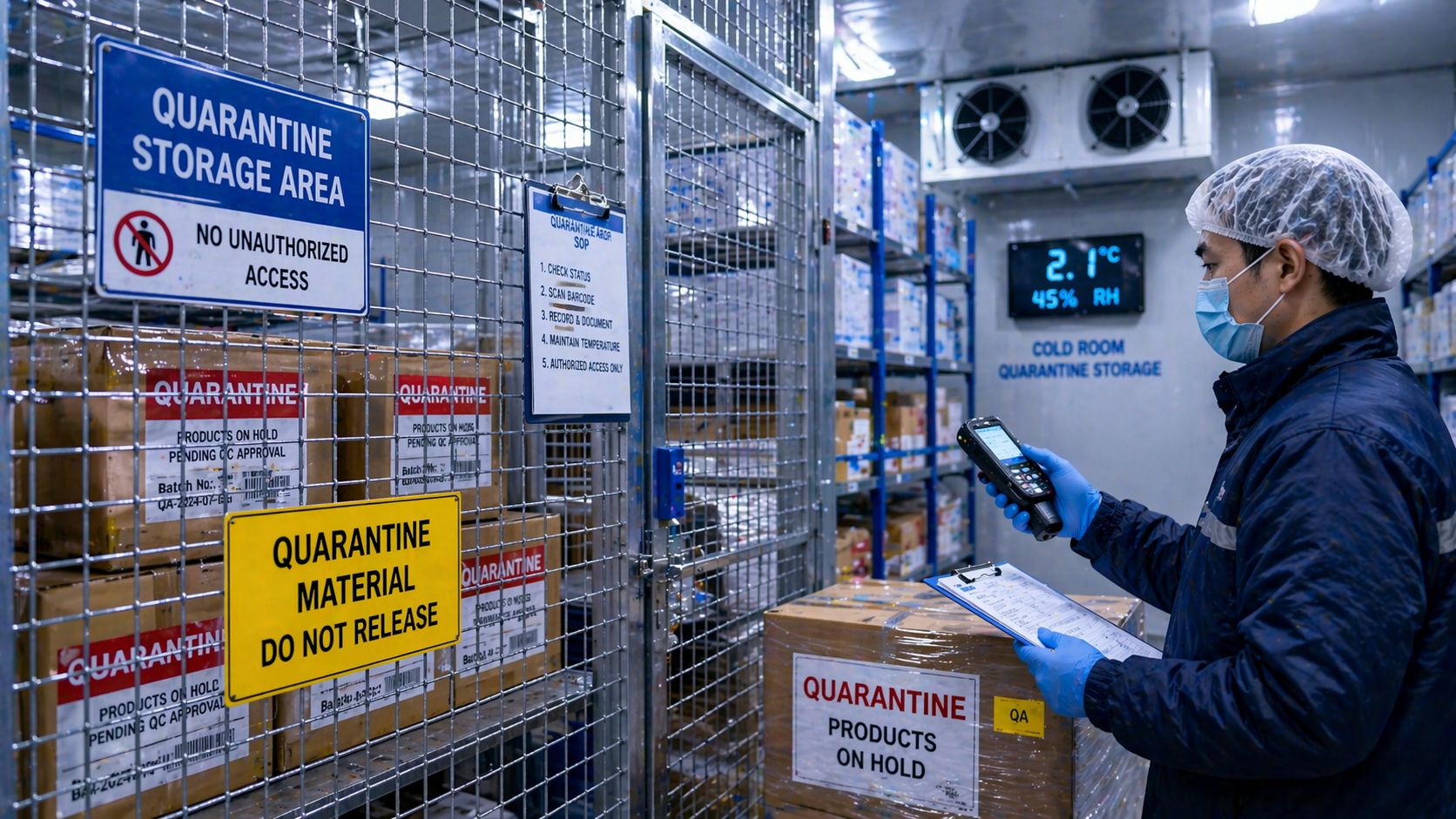
Not every pharmaceutical product moves straight from manufacturing to distribution. Many items need to pass quality checks, regulatory verification or investigation first, and during that window they sit in quarantine storage, a controlled environment where products stay isolated until their status is confirmed one way or the other.
Quarantine storage exists to stop compromised or unapproved products from reaching the supply chain. A quarantine zone that isn’t physically and visually distinct from approved stock is really just a labelling suggestion, not a control, which is why temperature-sensitive pharmaceuticals need a cold room that delivers both environmental control and genuine segregation, not one without the other.
This article looks at how cold room systems support pharmaceutical quarantine storage, covering segregation, compliance and traceability, with real-world examples throughout.
The Role of Quarantine Storage in Pharmaceuticals
Quarantine storage holds products that are:
- Awaiting quality control (QC) approval
- Under investigation for deviations
- Pending regulatory clearance
- Suspected of damage or contamination
These products still need to sit within their required temperature range, typically 2°C to 8°C or frozen, even while their status remains unresolved.
Cold room design makes quarantine storage both secure and controlled, closing off the errors that could otherwise let a compromised product slip back into approved inventory.
Ensuring Strict Segregation of Quarantine Products
Complete separation from approved goods is the single most important function of quarantine storage. Any mix-up here doesn’t just cause confusion, it can trigger serious compliance violations and real safety risks.
Cold room systems need to include:
- Dedicated quarantine zones, clearly marked and physically separated
- Partitioned storage areas or enclosed sections
- Clear labelling systems indicating product status, such as “QUARANTINE” or “HOLD”
- Restricted access controls limited to authorised personnel only
Visual and physical separation:
- Colour-coded shelving or containers
- Locked cages or enclosed racks
- Signage that prevents accidental handling
Case example: A pharmaceutical manufacturer implemented a partitioned cold room with clearly labelled quarantine zones. Products awaiting approval stayed securely isolated, which cut the risk of accidental release.
Maintaining Temperature Integrity During Quarantine
A product doesn’t get a temperature pass just because its status is uncertain. It still needs to hold within its specified range through the entire quarantine period to preserve its integrity for eventual release.
Cold room design needs to provide:
- Stable, consistent temperature control
- Uniform airflow to eliminate hotspots
- Continuous monitoring and alert systems
Key design features:
- High-performance insulated panels
- Precision refrigeration systems
- Real-time temperature monitoring
- Backup power and cooling systems
Case study: A pharmaceutical distributor upgraded its quarantine cold room with enhanced monitoring systems. Products stayed within safe temperature ranges while awaiting inspection, which reduced product loss and improved compliance outcomes.
Supporting Controlled Access and Security
Quarantine areas need tight control to prevent unauthorised access or accidental product movement, since a product handled incorrectly during quarantine can undermine the whole point of isolating it.
Cold room design needs to incorporate:
- Access control systems, such as keycards or biometric entry
- Restricted entry limited to trained personnel only
- Activity logs that track movement and handling
- Secure storage units for high-risk products
Example: A biotech company implemented access-controlled quarantine zones within its cold room. Only authorised QC personnel could enter, which kept handling and documentation properly aligned.
Enabling Traceability and Documentation
Traceability matters throughout the quarantine period, since products often need to be tracked at every point of their evaluation, not just at entry and exit.
Cold room systems need to support:
- Batch-level tracking of quarantined products
- Documentation of storage conditions and handling history
- Clear identification of product status and movement
Key traceability features:
- Barcode or RFID tracking systems
- Integration with inventory management platforms
- Digital records for audit readiness
- Real-time monitoring and data logging
Case example: A pharmaceutical company implemented RFID tracking within its quarantine cold room. Full visibility of product status followed, which kept documentation accurate during audits.
Supporting Quality Control and Inspection Processes
Quarantine storage and quality control activities are closely tied together, and cold room design needs to make inspection and testing straightforward rather than a separate logistical exercise.
Design considerations:
Proximity to QC laboratories Reduces handling time and exposure for products moving between quarantine and inspection.
Dedicated inspection areas Allow evaluation without disrupting storage conditions elsewhere in the cold room.
Clear workflow pathways Ensure smooth movement between storage and inspection stages without cross-traffic.
Example: A pharmaceutical facility integrated its quarantine cold room with an adjacent QC area. Workflow efficiency improved, and delays in product evaluation dropped as a direct result.
Ensuring Compliance with Regulatory Standards
Quarantine storage needs to meet Good Manufacturing Practice (GMP) and Good Distribution Practice (GDP) requirements, with oversight from bodies such as the Health Sciences Authority (HSA) in Singapore.
Cold room design should support compliance by enabling:
- Accurate documentation of storage conditions
- Clear segregation and labelling of products
- Secure, controlled environments
- Audit-ready systems and records
Compliance features:
- Continuous monitoring with automated alerts
- Data logging for temperature and access records
- Hygienic construction materials
- Standard operating procedures (SOPs) integration
Case study: A pharmaceutical distributor implemented a compliance-focused cold room system for quarantine storage. During regulatory inspections, the facility demonstrated full adherence to GMP requirements without corrective action.
Optimising Workflow Efficiency in Quarantine Areas
Isolation is the priority in quarantine storage, but that doesn’t mean workflow efficiency takes a back seat. Poor layout still causes delays in product release or disposal that ripple through the rest of the operation.
Efficiency strategies:
- Clearly defined storage zones by status
- Easy access for authorised personnel
- Logical layout for product movement
- Integration with inventory and QC systems
Example: A pharmaceutical warehouse redesigned its quarantine cold room layout to improve accessibility and workflow. Processing time for QC approvals dropped, and overall efficiency improved.
Designing for Flexibility and Future Needs
Pharmaceutical operations keep evolving, with new products and regulatory requirements emerging regularly. Quarantine cold room systems need to adapt without a rebuild every time requirements shift.
Flexible design features:
- Modular cold room construction
- Adjustable shelving and partitioning
- Scalable systems for increased capacity
- Integration with advanced monitoring technologies
Conclusion
Pharmaceutical quarantine cold room storage acts as a critical safeguard, making sure only approved products ever reach the market. Cold room design determines whether that safeguard actually holds, through environmental control, strict segregation and full regulatory compliance.
Kiat Lay Coldroom Specialist has designed and maintained pharmaceutical-grade cold rooms in Singapore since 1982, with direct experience building segregated, access-controlled quarantine environments for pharmaceutical operators. Speak with Kiat Lay about designing a cold room built for your quarantine storage requirements.
Frequently Asked Questions
What is quarantine storage in pharmaceutical cold chain management?
Quarantine storage isolates products awaiting quality control approval, regulatory clearance, or investigation, keeping them physically separated from approved inventory while still maintaining required temperature conditions.
Do quarantined pharmaceutical products still need temperature control?
Yes. Products in quarantine typically need to stay within the same 2°C to 8°C range as approved stock, since temperature loss can compromise a product even before its status is confirmed.
How is segregation maintained in a pharmaceutical quarantine cold room?
Segregation relies on dedicated, clearly labelled zones, physical partitioning or enclosed sections, colour-coded shelving, and restricted access limited to authorised personnel only.
What access controls are used in quarantine cold room storage?
Quarantine areas commonly use keycard or biometric access control, restricted entry for trained personnel, and activity logs that track every instance of movement and handling.
How does quarantine cold room design support GMP compliance?
GMP-compliant quarantine storage requires accurate documentation of storage conditions, clear segregation and labelling, secure controlled environments, and audit-ready monitoring systems.
Can a quarantine cold room be positioned near a QC laboratory?
Yes. Placing the quarantine cold room close to QC facilities reduces handling time and exposure during inspection, which speeds up evaluation without disrupting storage conditions.