


Cold Room Design for Pharmaceutical Bulk Storage and Distribution Hubs
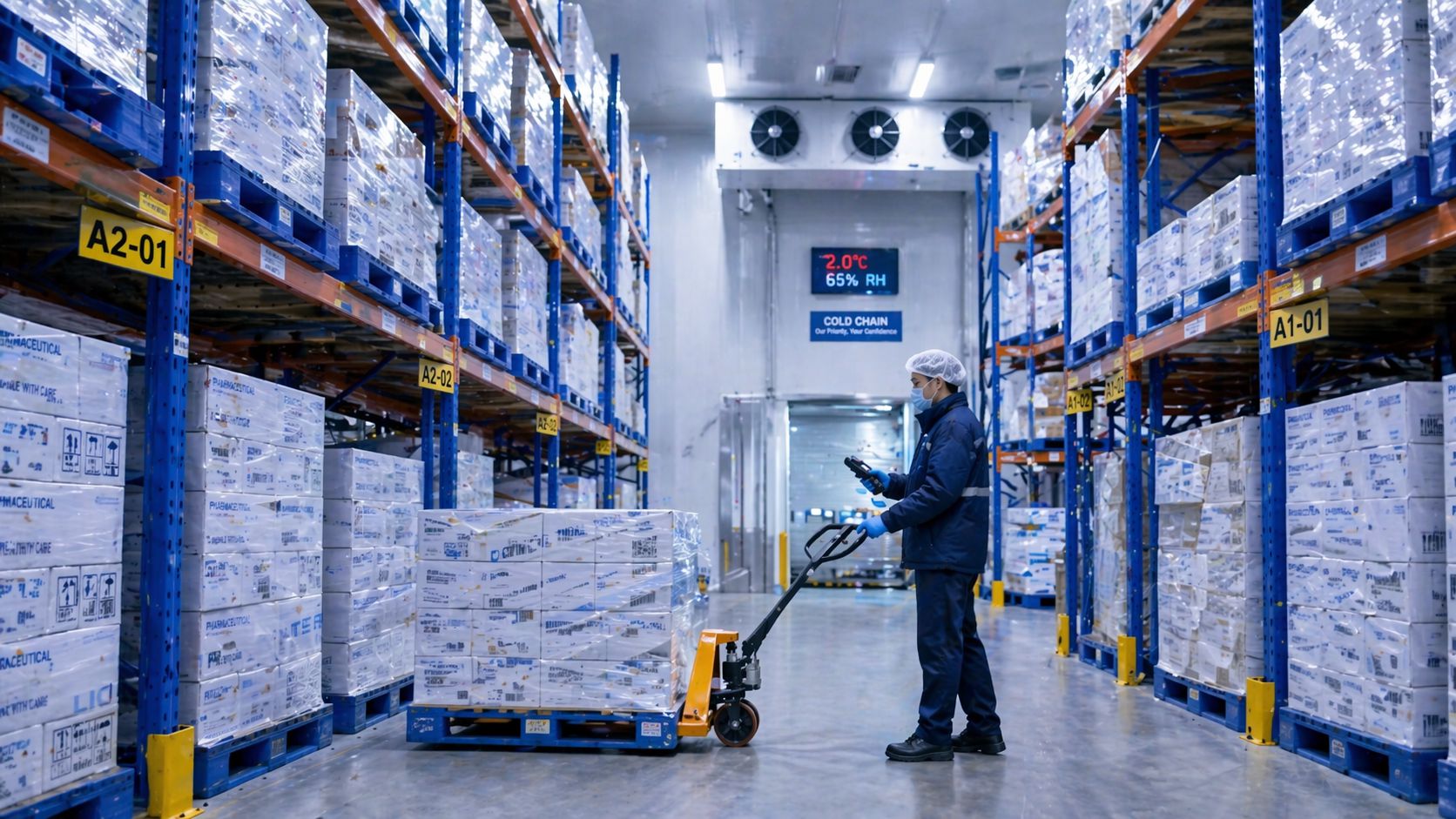
As pharmaceutical supply chains scale to meet global demand, centralized bulk storage and distribution hubs have become a fixture of the industry rather than the exception. These facilities move large volumes of temperature-sensitive products, vaccines, biologics and specialty drugs among them, all requiring strict environmental control at a scale most standard storage rooms were never built for.
At this volume, a design flaw that would go unnoticed in a small storage room gets multiplied across thousands of units, which is why the cold room in a bulk distribution hub needs to be engineered for high-capacity operations and full cold chain integration, not adapted from a smaller facility’s blueprint.
This article looks at how cold room systems support pharmaceutical bulk storage and distribution, covering scalability, operational efficiency and compliance, with real-world examples throughout.
Managing High-Volume Pharmaceutical Storage
Bulk storage facilities need to hold large quantities of pharmaceutical products while maintaining strict temperature conditions, typically 2°C to 8°C, or lower for specialised products.
Cold room design needs to ensure that:
- Temperature remains stable across large storage areas, not just near the sensor
- Airflow is evenly distributed to prevent hotspots at scale
- Storage capacity gets maximised without sacrificing accessibility
Key design features:
High-density racking systems. Maximise vertical and horizontal storage space without compromising airflow.
Advanced air circulation systems. Ensure consistent temperature across every zone, even in a much larger footprint.
High-performance insulation panels. Reduce heat transfer and improve energy efficiency across a large-scale build.
Zoned storage layouts. Separate products by type, batch or destination, keeping large inventories organised rather than just large.
Case example: A pharmaceutical distributor expanded operations by implementing a large-scale cold room with high-density racking and optimised airflow. The facility stored significantly more product while holding consistent temperature conditions throughout.
Supporting Efficient Distribution Workflows
Bulk storage hubs aren’t just about holding inventory. They need to move product out fast and accurately to multiple destinations, often on tight delivery windows.
Cold room design needs to enable smooth workflows for:
- Receiving incoming goods
- Storing products efficiently
- Picking and packing orders
- Dispatching shipments
Workflow optimisation strategies:
Dedicated receiving and dispatch zones. Separate areas that avoid congestion between inbound and outbound activity.
Clear movement pathways. Improve efficiency and cut handling time across a much larger operational footprint.
Zoning by distribution priority. Fast-moving items sit closer to dispatch areas, reducing travel distance for the products that leave most often.
Integration with staging areas. Ensure a seamless transition from storage to transport without an extra handling step.
Case study: A regional pharmaceutical hub redesigned its cold room layout with dedicated zones for receiving, storage and dispatch. Workflow efficiency improved and order processing time dropped noticeably.
Maintaining Temperature Stability During High Activity
Bulk storage facilities run at a different activity level than standard storage, with frequent door openings and constant product movement that standard cold room design wasn’t built to absorb.
Key solutions:
- High-speed insulated doors that minimise air exchange during heavy traffic
- Air curtains or strip curtains that retain cold air during transitions
- Ante-chambers (buffer zones) for controlled transitions between zones
- Strategic placement of high-activity zones away from sensitive storage areas
Example: A logistics provider installed high-speed doors and buffer zones in its bulk storage cold room. Temperature fluctuations dropped significantly, and overall system efficiency improved as a direct result.
Ensuring Compliance with Regulatory Standards
Bulk pharmaceutical storage facilities need to meet Good Distribution Practice (GDP) and Good Manufacturing Practice (GMP) requirements, with oversight from bodies such as the Health Sciences Authority (HSA) in Singapore.
Cold room design should support compliance by enabling:
- Continuous temperature monitoring
- Accurate data logging and reporting
- Controlled access to sensitive areas
- Hygienic, contamination-free environments
Compliance features:
- Real-time monitoring systems with automated alerts
- Data logging platforms for audit readiness
- Non-porous materials for easy cleaning
- Secure access control systems
Case example: A pharmaceutical distribution centre implemented a cold room system with integrated monitoring and documentation tools. During regulatory audits, the facility demonstrated full compliance, keeping operations running without interruption.
Enhancing Traceability and Inventory Management
With large volumes of product moving through a bulk storage hub, traceability stops being a nice-to-have and becomes the only way to maintain control over accurate distribution.
Cold room design needs to support:
- Batch-level tracking and organisation
- FIFO (First-In, First-Out) inventory rotation
- Barcode or RFID tracking technologies
- Dedicated zones for different product statuses
Case study: A pharmaceutical distributor introduced RFID tracking within its cold room system. Real-time inventory visibility followed, along with a measurable improvement in order fulfilment accuracy.
Designing for Scalability and Future Growth
Pharmaceutical demand fluctuates due to market shifts, public health needs or new product launches, and cold room systems need to absorb that fluctuation without a rebuild every time volume spikes.
Scalable design features:
- Modular cold room construction for easy expansion
- Flexible racking systems that adapt to different products
- Scalable refrigeration systems that support increased capacity
- Space planning that accounts for future infrastructure upgrades
Example: A pharmaceutical company expanded its distribution hub by upgrading to a modular cold room system. Storage capacity increased without disrupting existing operations during the transition.
Integrating Cold Rooms with Cold Chain Logistics
Bulk storage hubs act as key nodes in the pharmaceutical cold chain, which means the cold room needs to connect cleanly with transportation and logistics processes rather than functioning as an isolated storage block.
Integration features:
- Direct access to refrigerated loading docks
- Synchronised temperature settings with transport vehicles
- Pre-conditioning of products before dispatch
- Standardised handling procedures across storage and transport teams
Case study: A global pharmaceutical distributor integrated its cold room system with refrigerated transport operations. Transitions between storage and delivery ran smoothly, and product integrity held throughout the supply chain.
Improving Energy Efficiency in Large-Scale Cold Rooms
Operating a large cold room is energy-intensive by nature, which makes efficient design essential for controlling costs without compromising performance.
Energy-efficient solutions:
- High-performance insulation materials
- Energy-efficient refrigeration systems
- Smart monitoring for optimised performance
- LED lighting with low heat output
Example: A distribution hub implemented energy-efficient cold room technologies, cutting operational costs while maintaining high performance across the full facility.
Conclusion
Pharmaceutical bulk storage and distribution hubs need cold room systems built for scale, not scaled-up versions of standard storage design. Managing high volumes, supporting fast workflows, holding regulatory compliance and planning for future growth all depend on getting that foundational design right from the outset.
Kiat Lay Coldroom Specialist has designed and maintained pharmaceutical-grade cold rooms in Singapore since 1982, with direct experience building large-scale, high-capacity storage and distribution facilities for pharmaceutical operators. Speak with Kiat Lay about designing a cold room built for your bulk storage and distribution requirements.
Frequently Asked Questions
What makes cold room design different for bulk pharmaceutical storage compared to standard storage?
Bulk storage cold rooms need high-density racking, advanced air circulation across a much larger footprint, and zoned layouts to handle large volumes without sacrificing temperature stability or accessibility.
What temperature range applies to pharmaceutical bulk storage?
Most pharmaceutical bulk storage requires 2°C to 8°C, though certain specialised products need lower or ultra-low conditions depending on the formulation.
How does cold room design support fast distribution from a bulk storage hub?
Dedicated receiving and dispatch zones, clear movement pathways, and zoning by distribution priority all reduce handling time and support faster order processing at scale.
Can a bulk pharmaceutical cold room be expanded as demand grows?
Yes. Modular cold room construction, flexible racking systems and scalable refrigeration allow facilities to increase storage capacity without disrupting existing operations.
How does a bulk storage cold room integrate with refrigerated transport?
Integration involves direct access to refrigerated loading docks, synchronised temperature settings between the cold room and vehicles, and pre-conditioning products before dispatch.
What regulatory standards apply to pharmaceutical bulk storage facilities?
Bulk pharmaceutical storage needs to meet Good Distribution Practice (GDP) and Good Manufacturing Practice (GMP) requirements, with oversight from the Health Sciences Authority (HSA) in Singapore.