


Cold Room Design for Temperature-Sensitive Vaccine Distribution
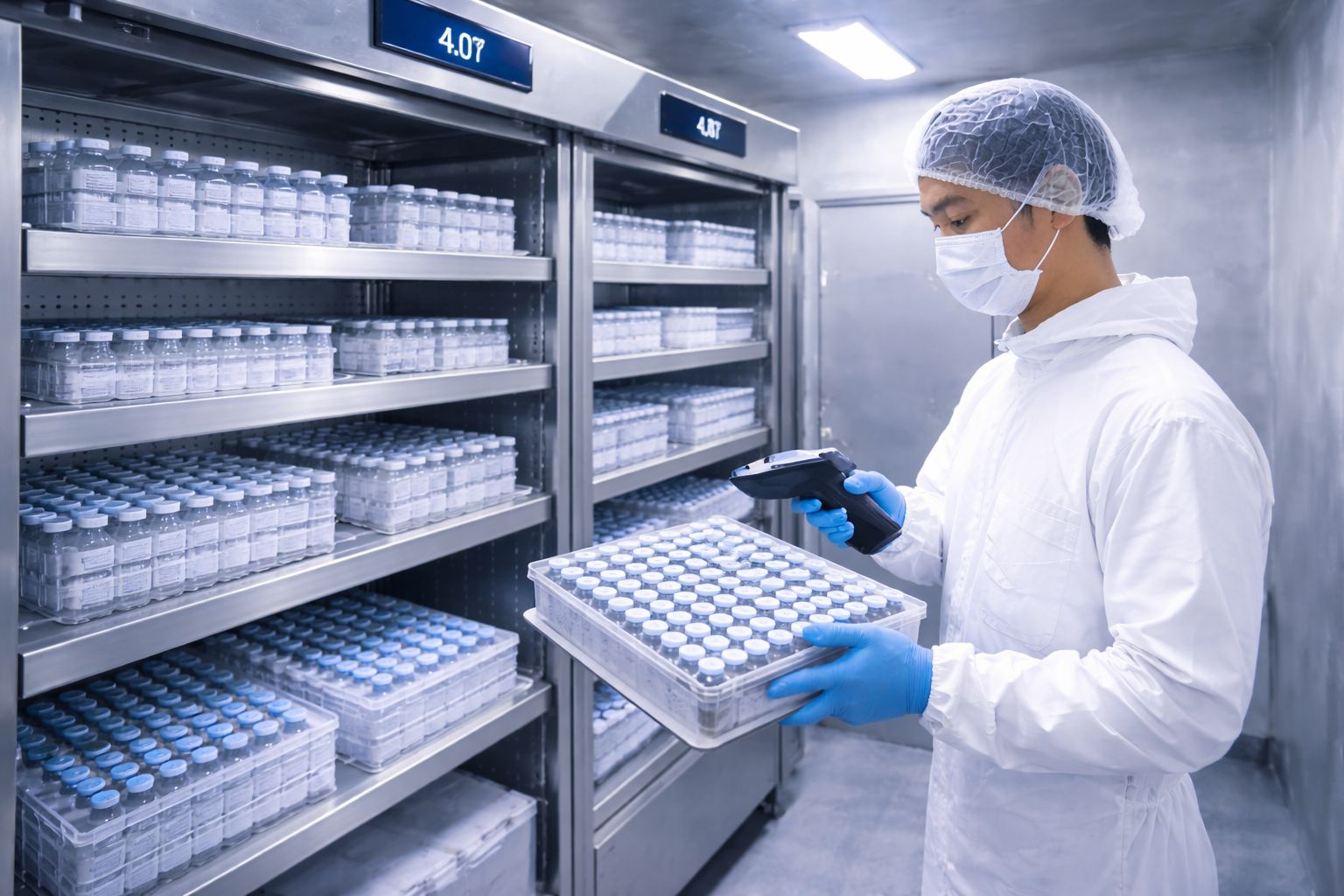
Vaccines rank among the most temperature-sensitive pharmaceutical products handled anywhere in the supply chain. From the point of manufacture through to final administration, even a brief lapse in temperature control can strip a vaccine of its potency, resulting in financial loss and, in worse cases, a direct public health risk.
As global demand for vaccines rises, particularly during large-scale immunisation drives, pharmaceutical companies and logistics providers need cold room systems built specifically around vaccine distribution, not adapted from general pharmaceutical storage.
This article looks at how cold room design supports temperature-sensitive vaccine storage, covering stability, rapid distribution workflows and compliance-driven systems, with real-world examples throughout.
Maintaining Strict Temperature Stability
Vaccines typically need storage within a narrow band of 2°C to 8°C, though certain mRNA-based formulations require ultra-low conditions down to -70°C or colder. Holding that stability is what determines whether a vaccine remains effective through its full shelf life.
Cold rooms designed for vaccine storage need to provide:
- Precise temperature control systems
- Uniform airflow distribution
- Minimal temperature fluctuation during door access
Unlike general-purpose storage, vaccine cold rooms are engineered to hold consistent conditions in every corner of the space, not just near the sensor, which prevents hotspots or gradients that compromise product integrity.
Key design features:
- High-performance insulated panels that minimise heat transfer
- Advanced refrigeration systems with tight temperature tolerances
- Air circulation systems for even cooling distribution
- Temperature mapping and validation to confirm uniform conditions before use
Case example: During a nationwide vaccination rollout, a pharmaceutical distributor installed a cold room system with enhanced airflow and insulation. Temperatures held consistent across every storage zone, which prevented spoilage and kept distribution on schedule.
Supporting High-Turnover Distribution Workflows
Vaccine distribution hubs often run under pressure, especially during public health campaigns. Cold rooms need to support fast-moving inventory without sacrificing temperature stability.
Frequent door openings and rapid handling introduce warm air into the space, which raises the risk of fluctuation with every access point.
Workflow-optimised design strategies:
Dedicated picking zones Frequently accessed vaccines sit near entry points, cutting down door-open time.
Ante-chambers (buffer zones) Transitional spaces absorb the impact of external temperature before it reaches the main storage area.
High-speed doors Rapid-closing doors limit exposure to warm air during entry and exit.
Clear zoning for distribution stages Separate areas for incoming, outgoing and quarantine stock keep operations organised and reduce handling errors.
Case study: A regional vaccine distribution centre introduced a dual-zone cold room, with a front-facing picking area and a deeper bulk storage zone behind it. Access time dropped and the facility processed higher volumes during peak demand without added strain.
Ensuring Compliance with Cold Chain Regulations
Vaccine storage in Singapore falls under Good Distribution Practice (GDP) and international cold chain guidelines, along with oversight from the Health Sciences Authority (HSA). Cold room systems have to meet these standards continuously, not just at the point of inspection.
Key compliance requirements:
- Continuous temperature monitoring and logging
- Alarm systems for temperature deviations
- Backup refrigeration and power systems
- Validated storage conditions with supporting documentation
Cold rooms need to produce audit-ready records that prove consistent storage conditions at every point in the supply chain, not just estimates or spot checks.
Monitoring and control systems:
- IoT-enabled sensors for real-time tracking
- Automated alerts for temperature excursions
- Cloud-based data logging for fast reporting
- Redundant sensors that catch failures a single sensor would miss
Case example: A healthcare logistics provider ran a cold room system with real-time monitoring and automated alerts. When a temperature deviation hit during off-hours, the system triggered an immediate response, preventing vaccine loss and keeping the facility within regulatory bounds.
Managing Ultra-Low Temperature Requirements
Most vaccines sit comfortably in the 2°C to 8°C range, but certain advanced formulations, mRNA-based vaccines in particular, need ultra-low storage as cold as -70°C to -80°C.
Cold room design has to account for this range from the outset, especially in facilities handling multiple vaccine types side by side.
Key features for ultra-low storage:
- Integration with ultra-low freezers (-70°C to -80°C)
- Hybrid cold room systems combining standard and ultra-low zones
- Enhanced insulation and sealing to hold extreme temperatures
- Specialised handling protocols that limit exposure time
Case study: During the rollout of mRNA vaccines, a pharmaceutical facility integrated ultra-low freezers directly into its cold room environment. Handling and storage ran seamlessly, and the facility held strict temperature requirements throughout distribution.
Enhancing Traceability and Inventory Management
Traceability in vaccine distribution isn’t optional. It’s tied directly to both compliance and how efficiently a facility moves product. Cold room design needs to support accurate tracking at every stage.
Best practices:
- Batch-based storage zones for fast identification
- Barcode or RFID tracking for real-time inventory updates
- FIFO (First-In, First-Out) rotation to prevent expired stock
- Dedicated quarantine areas for non-released or returned vaccines
These measures mean vaccines get located, verified and dispatched quickly, cutting delays and reducing the chance of error.
Example: A vaccine distribution hub implemented RFID tracking integrated with its cold room layout. Staff monitored inventory levels in real time, which reduced errors and improved distribution accuracy across the board.
Future-Proofing Vaccine Cold Room Systems
Vaccine technology keeps evolving, and cold room systems need to be built for what’s coming, not just what’s needed today. Future vaccines may demand different storage conditions, handling protocols or distribution models entirely.
Future-ready design features:
- Modular cold room construction for easy expansion
- Scalable refrigeration systems
- Integration with digital supply chain platforms
- Energy-efficient technologies that lower long-term running costs
Facilities that build in this flexibility now avoid major infrastructure overhauls later.
Conclusion
Temperature-sensitive vaccine distribution leaves no margin for error. Cold room design determines whether a facility maintains product integrity, keeps pace with high-volume operations and stays within regulatory bounds under GDP and HSA oversight.
Kiat Lay Coldroom Specialist has designed and maintained pharmaceutical-grade cold rooms in Singapore since 1982, with direct experience supporting vaccine cold chain operations from standard 2°C to 8°C storage through to ultra-low mRNA requirements. Speak with Kiat Lay today to build a cold room designed around your vaccine distribution needs.
Frequently Asked Questions
What temperature should a vaccine cold room maintain?
Most vaccines require storage between 2°C and 8°C. Certain mRNA-based vaccines need ultra-low storage as cold as -70°C to -80°C, which requires integration with dedicated ultra-low freezers.
What is the difference between a standard vaccine cold room and ultra-low storage?
Standard vaccine cold rooms hold the 2°C to 8°C range using conventional refrigeration. Ultra-low storage requires specialised freezers, enhanced insulation and sealing systems capable of sustaining -70°C or colder for mRNA and similarly sensitive formulations.
How does cold room design support GDP compliance for vaccine distribution?
A GDP-compliant cold room needs continuous temperature monitoring, automated deviation alerts, backup power and refrigeration, and validated storage documentation that can be produced during a regulatory audit.
Can one cold room handle both standard and ultra-low temperature vaccines?
Yes. Hybrid cold room systems combine standard 2°C to 8°C zones with integrated ultra-low freezer units, allowing a single facility to manage multiple vaccine types without separate infrastructure.
What happens if a vaccine cold room’s temperature deviates during off-hours?
Facilities with IoT-enabled sensors and automated alert systems get notified immediately of any excursion, allowing a rapid response before the deviation affects vaccine potency.
How often should a vaccine cold room be validated?
Temperature mapping and validation should occur when the cold room is first commissioned, after any significant equipment change, and at regular intervals defined by the facility’s quality system, typically at least once a year.