


Cold Room Design for Value-Added Logistics Services
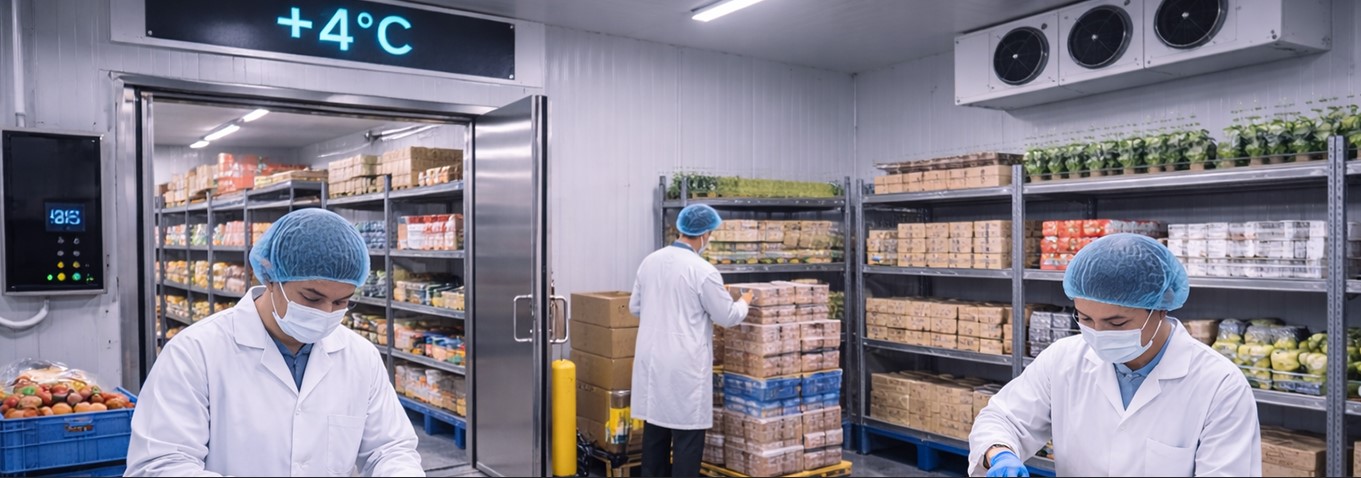
As supply chains become more complex and customer expectations rise, logistics providers are no longer focused solely on storage and transportation. Increasingly, warehouses and distribution centres are expected to offer value-added logistics (VAL) services such as labelling, repacking, kitting, and light assembly while products remain under strict temperature control.
For industries such as food & beverage, pharmaceuticals, and speciality perishables, these value-added activities must be carried out within cold room environments to preserve product quality and regulatory compliance. This makes cold room design a critical enabler of operational efficiency, compliance, and service reliability.
In Singapore’s highly regulated and space-constrained logistics landscape, well-designed cold rooms allow logistics operators to deliver value-added services without compromising temperature integrity or workflow efficiency.
Businesses that invest in purpose-built cold room solutions can improve operational throughput, minimise spoilage risks, and support evolving customer requirements more effectively.
Why Cold Room Design Matters for Value-Added Logistics
Modern logistics operations increasingly rely on value-added services to remain competitive. However, performing these activities inside temperature-sensitive environments introduces operational and compliance challenges that standard cold storage facilities may not be equipped to handle.
A properly designed cold room supports:
- Consistent temperature control during active operations
- Faster turnaround for repacking and labelling
- Improved compliance with food safety and pharmaceutical standards
- Reduced product handling and contamination risks
- Better workflow efficiency and labour productivity
For logistics providers in Singapore, cold room design is no longer only about storage capacity. It is now closely linked to service quality, operational flexibility, and long-term scalability.
Supporting Labelling and Repacking in Cold Rooms
Labelling and repacking are among the most common value-added logistics activities performed within cold rooms. These processes may include applying country-specific labels, relabelling for retail distribution, breaking bulk cartons into smaller units, or assembling promotional packs.
To support these tasks effectively, cold rooms must be designed with dedicated work zones rather than functioning purely as passive storage spaces.
Key Design Considerations
- Temperature-controlled workstations integrated within the cold room
- Adequate lighting levels for accurate labelling and inspection
- Sufficient aisle width to accommodate trolleys, pallet jacks, and operators
- Smooth, hygienic wall and floor finishes to support cleaning and GMP standards
Rather than moving products in and out of cold storage for labelling, integrated cold room work areas reduce temperature excursions and handling risks.
Example
A Singapore-based chilled food distributor upgraded its cold room to include enclosed repacking bays maintained at +4°C. By performing labelling and portioning inside the cold room, the company reduced product exposure to ambient temperatures and improved shelf-life consistency for retail clients.
Maintaining Temperature During Light Processing
Light processing activities such as sorting, grading, portioning, or assembling mixed cartons pose a significant challenge in cold environments. Every additional minute a product spends outside its required temperature range increases the risk of spoilage, condensation, or compliance breaches.
Cold room design must therefore focus on temperature stability during active operations, not just static storage.
Effective Temperature Control Strategies
- Airflow optimisation to minimise hot spots near work areas
- Use of high-speed or insulated strip curtains to reduce cold air loss
- Zoned temperature control for different processing activities
- Selection of refrigeration systems capable of handling frequent door openings and heat loads from personnel and equipment
For value-added logistics, refrigeration systems must be sized not only for storage loads, but also for operational heat gain from people, lighting, and equipment.
Case Example
A pharmaceutical logistics provider operating a secondary packaging line within a 2–8°C cold room experienced frequent temperature fluctuations during peak processing hours. After upgrading to a system with better airflow distribution and adding air curtains at access points, temperature deviations were significantly reduced, supporting GDP compliance.
Compliance Considerations in Cold Room Construction
Value-added logistics operations often fall under stricter regulatory scrutiny than simple storage. Depending on the product type, cold rooms may need to comply with:
- SS 620 / SS 661 food safety standards
- Good Distribution Practice (GDP) for pharmaceuticals
- HACCP and hygiene requirements
- Workplace safety and ergonomic guidelines
Cold room construction must therefore account for both regulatory compliance and operational practicality.
Important Construction Features
- Food-grade insulated panels with antimicrobial coatings
- Cove flooring to eliminate dirt traps
- Proper drainage design for wash-down areas
- Sensor placement that reflects actual working conditions
- Integration with environmental monitoring systems
Additionally, layouts must support controlled workflows, ensuring raw, in-process, and finished goods are clearly segregated to prevent cross-contamination.
Example
A logistics hub supporting imported dairy products redesigned its cold room layout to separate inbound inspection, repacking, and outbound staging zones. This improved audit outcomes while allowing staff to perform value-added tasks without disrupting core cold chain operations.
Designing Cold Rooms for Operational Efficiency
In value-added logistics, productivity is closely tied to layout design. Poorly planned cold rooms can lead to congestion, unnecessary movement, and longer processing times, especially when multiple activities occur simultaneously.
Features of an Efficient Cold Room Layout
- Clear one-way product flow from receiving to dispatch
- Dedicated staging areas for repacked or labelled goods
- Multiple access points to reduce cross-traffic
- Proximity between cold rooms and loading bays
Walk-in chillers used for value-added operations should be sized to accommodate both storage and active handling, with sufficient headroom and structural strength for shelving and work surfaces.
Well-planned layouts also reduce labour fatigue, improve picking efficiency, and help logistics providers manage higher throughput during peak demand periods.
Balancing Human Comfort and Cold Chain Integrity
Unlike traditional cold storage, value-added logistics requires staff to spend extended periods working inside cold rooms. This introduces new considerations around worker comfort, safety, and productivity.
Human-Centric Cold Room Design Features
- Anti-slip flooring to reduce accident risks
- Ergonomically designed workstations
- Strategic placement of rest areas outside cold rooms
- Reduced exposure time through efficient layouts
A well-designed cold room allows staff to complete tasks efficiently without prolonged exposure while still maintaining strict temperature control.
Providing a safer and more comfortable working environment can also improve employee productivity, reduce operational errors, and support workforce retention.
Supporting Scalability and Future Services
As logistics providers expand their service offerings, cold rooms must be designed with future flexibility in mind. Value-added services often evolve from basic labelling to more complex kitting or customised packaging.
Modular cold room designs, adjustable shelving systems, and scalable refrigeration capacity allow operators to adapt without major reconstruction.
Case Example
A third-party logistics provider in Singapore initially designed its cold room for basic repacking. As client demand grew, the modular layout allowed the operator to add new work zones and monitoring systems, enabling higher-value services without disrupting ongoing operations.
How Smart Cold Room Design Supports Long-Term Logistics Growth
Cold room infrastructure directly impacts a logistics provider’s ability to scale operations, maintain compliance, and offer premium services to customers. Facilities designed with flexibility and operational efficiency in mind are better equipped to adapt to changing market demands.
As Singapore continues strengthening its position as a regional cold chain hub, logistics businesses that invest in advanced cold room solutions will be better positioned to support industries requiring strict temperature-controlled handling.
FAQs About Cold Room Design for Value-Added Logistics
What are value-added logistics services in cold rooms?
Value-added logistics services in cold rooms include activities such as labelling, repacking, sorting, kitting, portioning, and light assembly performed within temperature-controlled environments. These services help maintain product quality while supporting distribution and retail requirements.
Why is cold room design important for logistics operations?
Cold room design helps maintain temperature stability, improve workflow efficiency, support regulatory compliance, and reduce spoilage risks during handling and processing activities.
What temperature is typically used for cold room repacking operations?
The required temperature depends on the product type. Chilled food products are commonly handled at around +2°C to +4°C, while pharmaceutical cold rooms may operate within a 2–8°C range.
How can cold rooms reduce temperature fluctuations during operations?
Cold rooms can reduce temperature fluctuations through airflow optimisation, insulated strip curtains, high-speed doors, zoned cooling systems, and refrigeration systems designed for operational heat loads.
What industries require value-added logistics inside cold rooms?
Industries such as food and beverage, pharmaceuticals, seafood, dairy, frozen products, and speciality perishables commonly require value-added logistics services within cold storage environments.
What compliance standards apply to cold room logistics operations in Singapore?
Depending on the industry, cold rooms may need to comply with standards such as SS 620, SS 661, HACCP, and Good Distribution Practice (GDP) guidelines for pharmaceuticals.
Can existing cold rooms be upgraded for value-added logistics services?
Yes. Existing cold rooms can often be retrofitted with dedicated work zones, improved airflow systems, upgraded refrigeration capacity, and enhanced monitoring systems to support value-added operations.
Conclusion
Cold room design plays a critical role in enabling value-added logistics services while preserving product integrity, compliance, and operational efficiency. From labelling and repacking to light processing and staging, every activity introduces thermal, operational, and regulatory challenges that must be addressed at the design stage.
For logistics operators in Singapore, investing in purpose-built cold room solutions ensures they can meet evolving customer demands, pass regulatory audits, and maintain a reliable cold chain even as services become more complex.
By partnering with experienced cold room specialists like Kiat Lay, businesses can design cold storage environments that go beyond storage while supporting value creation at every stage of the logistics process.
Looking for Reliable Cold Room Solutions in Singapore?
Kiat Lay specialises in customised cold room design and cold storage solutions tailored for logistics, food processing, pharmaceutical, and value-added operations. Whether you require repacking zones, temperature-controlled workspaces, or scalable cold storage infrastructure, our team can help you build a solution that supports efficiency, compliance, and long-term growth.
Contact Kiat Lay today to discuss your cold room requirements and optimise your cold chain operations.