


Cold Room Storage Strategies for Temperature-Sensitive Injectables
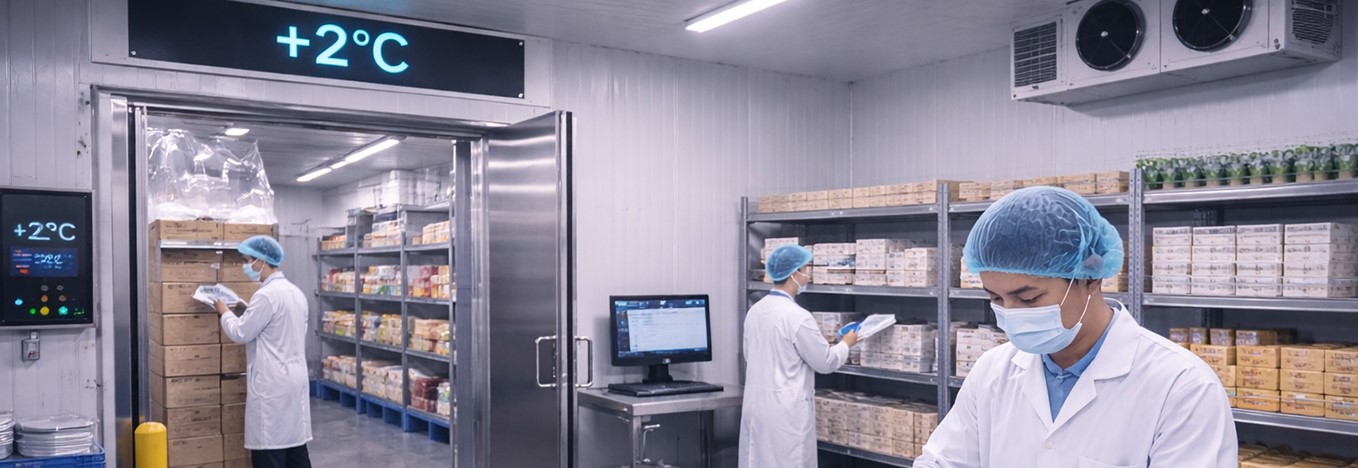
Temperature-sensitive injectables such as biologics, vaccines, monoclonal antibodies, and advanced therapeutic products represent some of the most delicate and high-value items moving through today’s pharmaceutical cold chains. These products often require precise temperature control throughout their lifecycle, and even brief excursions during handling can compromise efficacy, endanger patient safety, or trigger regulatory non-compliance.
In pharmaceutical warehouses, distribution hubs, and healthcare facilities, cold room storage must be designed not just to maintain temperature setpoints, but also to protect products from operational temperature risks during everyday handling activities.
This article explores key cold room storage strategies for temperature-sensitive injectables, focusing on:
- Preventing temperature excursions during handling
- Cold room design for frequent door openings
- Monitoring practices in pharmaceutical cold rooms
For pharmaceutical operators in Singapore, effective cold room design is essential for maintaining compliance, protecting high-value inventory, and ensuring safe product delivery throughout the supply chain.
Why Temperature Control Matters for Injectable Products
Injectable pharmaceuticals are highly sensitive to environmental conditions. Exposure to temperatures outside validated ranges can lead to reduced potency, shortened shelf life, or irreversible product degradation.
Unlike conventional pharmaceutical products, biologics and vaccines often contain complex active ingredients that cannot tolerate repeated temperature fluctuations. This makes cold room storage one of the most critical components of pharmaceutical logistics and healthcare operations.
Proper cold room strategies help organisations:
- Protect product efficacy and patient safety
- Maintain GDP and GMP compliance
- Reduce product wastage and financial loss
- Improve audit readiness and traceability
- Support reliable cold chain distribution
Preventing Temperature Excursions During Handling
Temperature excursions are among the greatest risks for injectable products outside of manufacturing. Excursions can occur during:
- Product retrieval and staging
- Stock rotation activities
- Quality sampling
- Transport between cold rooms and loading docks
An effective cold room strategy minimises the frequency and duration of excursions by controlling environmental exposure at every touchpoint.
1. Strategic Workstation Placement
Cold room design should position high-frequency handling areas near perimeter walls or adjacent to staging zones. This reduces the distance and time injectables are exposed to warmer ambient air during removal or reshelving.
For example, a clinical distribution centre in Singapore redesigned its freezer room layout so that pick-face shelves for order staging were positioned near insulated vestibule areas. These semi-buffer spaces provided short, temperature-controlled holding before final packaging, which reduced door-open time by nearly 30% during routine order fulfilment.
2. Use of Controlled Access Air Curtains and Vestibules
Every time a cold room door opens, warm air enters and cold air escapes, creating conditions that may trigger temperature excursions. Double-door vestibules or air curtain systems create a transitional buffer that:
- Reduces direct temperature exchange
- Allows staff to open one door at a time
- Improves overall thermal recovery
A biopharma storage facility handling investigational injectables implemented insulated vestibules and rapid air curtains at key access points. During peak periods, even with frequent handling, internal temperatures remained stable while temperature excursions dropped to near zero.
3. Standardised Handling Protocols
People are often the most unpredictable variable in cold chain systems. Establishing clear SOPs for:
- Speed of retrieval
- Door opening sequences
- Product staging methods
…helps minimise temperature risks and improve handling consistency.
In a regional vaccine distribution hub, staff were trained to move products in sealed batches and use staging racks just outside primary freezer aisles. This approach reduced unnecessary door interactions and strengthened environmental control.
Cold Room Design for Frequent Door Openings
Cold rooms supporting hospitals, clinical trial hubs, and pharmaceutical distribution centres often experience constant access throughout the day. Facilities handling temperature-sensitive injectables must therefore be engineered specifically for high-frequency operations.
1. Rapid-Action Doors and Sectional Panels
Standard insulated doors can be slow to close and more susceptible to air exchange. Rapid-action folding or sliding doors significantly reduce open times and support higher handling efficiency.
A major injectable drug distributor equipped key freezer aisles with rapid-action doors, reducing exposed air exchange by more than 40% compared to traditional swing doors.
Fast-closing doors also help reduce refrigeration strain, lower energy consumption, and improve overall temperature recovery times.
Check out our cold room door repair & maintenance services designed for high-traffic cold storage environments and temperature-sensitive facilities.
2. Zoned Refrigeration and Airflow Management
Cold rooms are dynamic airflow systems rather than simple storage boxes. When doors open frequently, airflow design becomes critical to:
- Minimise stratification
- Promote rapid temperature recovery
- Maintain even cooling across all rack levels
Designers often use airflow modelling to optimise evaporator placement and return duct positioning, ensuring stable environmental conditions after access events.
In one example, a Singapore-based clinical logistics provider reconfigured its airflow system to direct conditioned air toward entry zones during peak operating hours. This reduced temperature fluctuations despite frequent access activity.
3. Multiple Access Points for Workflow Efficiency
Larger cold rooms benefit from multiple controlled access points aligned with operational workflows. This helps distribute foot traffic, minimise congestion, and reduce prolonged door-open durations.
For instance, a pharmaceutical warehouse serving multiple healthcare facilities installed separate access points for inbound receipt, outbound staging, and operational staff movement. Controlled workflow segregation improved temperature stability and operational efficiency.
Monitoring Practices in Pharmaceutical Cold Rooms
Even with strong design and operational controls, continuous monitoring remains essential for protecting temperature-sensitive injectables. Monitoring systems help operators detect deviations early while supporting compliance and audit readiness.
1. Redundant Sensors and Multiple Data Points
Cold rooms should be equipped with multiple sensors positioned across different rack levels and operational zones. Redundant monitoring ensures localised temperature deviations can be detected before inventory is affected.
A clinical trial pharmacy installed distributed temperature sensors across storage racks, providing live dashboards and historical trend analysis for quality assurance teams.
2. Automated Alerts and Escalation Protocols
Automated alerts via SMS, email, or facility management systems allow rapid response to environmental deviations.
When paired with escalation procedures and on-call personnel, automated monitoring can prevent product loss during equipment failures or after-hours incidents.
In one case, a pharmaceutical distribution centre’s monitoring system detected a gradual temperature increase caused by a failing evaporator fan. Remote alerts triggered immediate maintenance intervention, preventing significant inventory losses.
3. Integration with Quality Management Systems
Temperature logs form part of the documentation required for GMP and GDP compliance. Integrating monitoring systems with quality management platforms helps organisations:
- Maintain audit trails
- Support deviation investigations
- Improve traceability for release decisions
- Reduce manual reporting workloads
A biotech logistics operator provided quality assurance teams with secure access to real-time temperature dashboards, improving review efficiency and compliance reporting.
4. Calibration and Validation
Monitoring systems must be calibrated regularly to ensure long-term accuracy and reliability.
Cold rooms storing temperature-sensitive injectables commonly undergo:
- Installation Qualification (IQ)
- Operational Qualification (OQ)
- Performance Qualification (PQ)
These validation processes confirm that cold room systems consistently perform within required specifications for regulated pharmaceutical storage.
Case Summary: Protecting Injectable Integrity Under High Demand
A Singapore hospital pharmacy managing inpatient and outpatient injectable inventory experienced increasing temperature variability due to frequent cold room access during ward replenishment activities.
By redesigning the freezer room with:
- Rapid-access doors
- Airflow-optimised refrigeration systems
- Distributed staging racks
- Redundant temperature sensors with automated alerts
…the facility significantly improved temperature stability while maintaining efficient operations during peak periods.
Temperature excursions fell below 0.5% of daily access events, while staff reported smoother workflows during compliance audits and operational reviews.
Best Practices for Pharmaceutical Cold Room Storage
Organisations handling injectable pharmaceuticals should prioritise the following cold room strategies:
- Implement controlled workflow layouts
- Reduce unnecessary door openings
- Use vestibules and air curtains
- Install redundant monitoring systems
- Perform regular calibration and validation
- Train staff on handling SOPs and temperature awareness
- Design refrigeration systems for operational heat loads
These measures help maintain product integrity while supporting operational reliability and regulatory compliance.
FAQs About Cold Room Storage for Injectables
What temperature is required for injectable pharmaceutical storage?
Most injectable pharmaceuticals are stored between 2°C and 8°C, although some biologics and advanced therapies may require ultra-low temperatures depending on manufacturer specifications.
Why are temperature excursions dangerous for injectables?
Temperature excursions can reduce product potency, compromise stability, and make injectable medications unsafe or ineffective for patient use.
How do cold rooms minimise temperature fluctuations during handling?
Cold rooms minimise fluctuations through airflow management, rapid-action doors, insulated vestibules, controlled workflows, and strategically positioned staging areas.
What monitoring systems are used in pharmaceutical cold rooms?
Pharmaceutical cold rooms commonly use distributed temperature sensors, automated alarms, cloud-based monitoring systems, and integrated quality management platforms.
What is GDP compliance in pharmaceutical cold storage?
Good Distribution Practice (GDP) guidelines ensure pharmaceutical products are stored, transported, and handled under controlled conditions to maintain quality and safety.
How often should pharmaceutical cold rooms be validated?
Validation frequency depends on regulatory requirements and internal quality procedures, but cold rooms are typically requalified periodically and after major system changes or repairs.
What features are important in a pharmaceutical freezer room?
Key features include stable refrigeration systems, rapid-access doors, airflow optimisation, insulated panels, environmental monitoring systems, and validated temperature controls.
Build Reliable Cold Room Solutions for Pharmaceutical Storage with Kiat Lay
Kiat Lay cold room specialist designs and builds cold room systems tailored for pharmaceutical logistics, healthcare facilities, biologics storage, and temperature-sensitive injectable products. From airflow optimisation and monitoring integration to GDP-compliant cold room construction, our solutions are built to support product safety, operational efficiency, and regulatory compliance.
Conclusion
Cold room storage strategies for temperature-sensitive injectables must account for real operational pressures, including frequent handling, dynamic access patterns, and strict regulatory expectations.
While reliable refrigeration hardware remains essential, thoughtful cold room design involving airflow engineering, access planning, handling workflows, and integrated monitoring systems is what separates reactive facilities from resilient pharmaceutical cold chain environments.
Investing in purpose-built cold room solutions helps protect injectable product quality, maintain patient safety, and strengthen operational confidence across healthcare and pharmaceutical supply chains.
For logistics operators, healthcare facilities, and pharmaceutical distributors, partnering with experienced cold room specialists like Kiat Lay ensures freezer room solutions are designed to meet both technical requirements and practical operational demands.
Contact Kiat Lay today to discuss your pharmaceutical cold room requirements and strengthen your cold chain infrastructure.