


Cold Room Layout Strategies for Split-Case Picking Operations
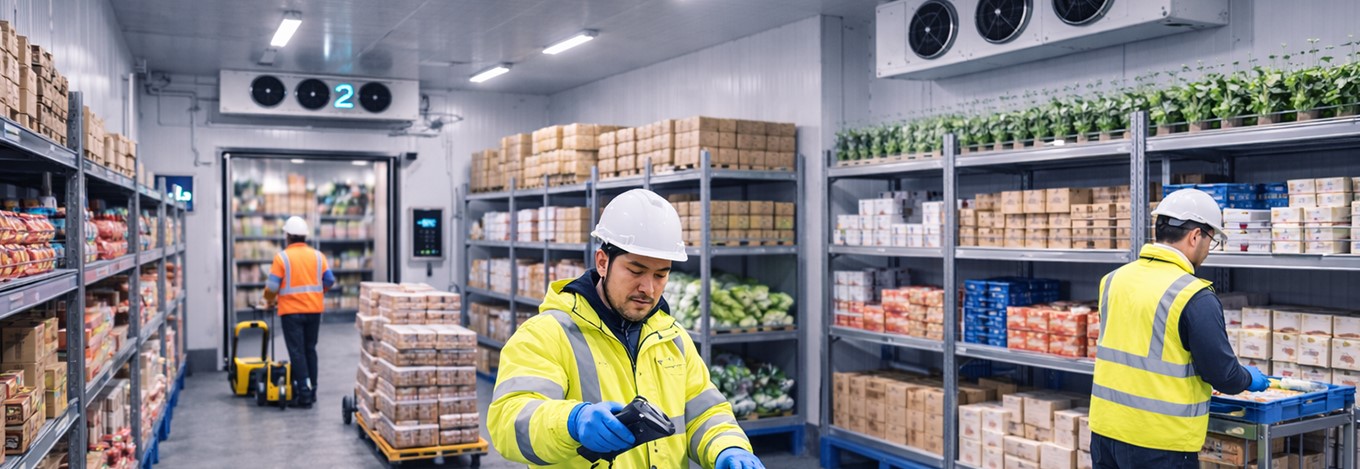
In modern cold chain logistics, split-case picking, selecting individual cartons or cases from larger pallets, is a core activity for retail distribution, e-commerce fulfilment, and foodservice supply.
Unlike full-pallet picking, split-case operations require frequent access to inventory under controlled temperatures. This creates challenges such as congestion, inefficient workflows, and temperature fluctuations due to repeated door usage.
This guide explains how to design cold room layouts for split-case picking, focusing on zoning, congestion control, access optimisation, and workflow efficiency.
What Is Split-Case Picking in Cold Storage?
Split-case picking refers to the process of selecting individual cartons or partial cases from bulk pallet storage instead of moving entire pallets. It is commonly used in high-mix, high-frequency order environments such as grocery distribution, foodservice supply, and e-commerce fulfilment.
In cold rooms, split-case picking requires careful layout planning to balance speed, accessibility, and temperature control while maintaining product quality.
Supporting Carton and Pallet Picking Within One Cold Room
Cold storage facilities increasingly combine pallet storage and carton picking within a single cold room footprint.
Zoning the Cold Room
A well-designed layout separates the space into functional zones:
- Bulk pallet storage for high-volume inventory
- Carton pick faces for fast-moving items
- Staging and packing areas near exits
- Receiving and restocking zones
Zoning reduces congestion and improves safety by separating forklift and picker movements.
Case Example: Multi-Channel Food Distributor
A cold storage operator in Johor Bahru redesigned its 500 m² walk-in chiller with pallet racking at the rear and pick shelving near dispatch doors. Popular SKUs were placed in forward pick zones.
This reduced picker travel by 30 percent and improved fulfilment speed during peak demand.
Pick Path Optimisation
High-demand items should be placed closer to packing zones using a structured layout:
- Frequently picked items at waist height
- Lower-demand SKUs on higher or lower racks
- Heavy cartons stored closer to the floor
This improves efficiency and reduces worker fatigue.
Reducing Congestion During Peak Picking Hours
Peak periods can lead to operational slowdowns and temperature instability.
Wide Aisles and Multiple Access Points
Cold rooms should include:
- Wider aisles in high-traffic zones
- Multiple entry and exit points
- Separate paths for inbound and outbound flows
This reduces bottlenecks and improves safety.
Case Example: Urban Grocery Fulfilment Centre
A same-day grocery facility introduced dual access doors on opposite sides of its chiller. One door was used for restocking and the other for picking.
Door-open time decreased by 15 seconds per event, improving temperature stability.
Staging and Pre-Pick Areas
Efficient layouts include staging zones:
- External staging areas for order consolidation
- Internal buffer racks near exits for temporary holding
This reduces time spent inside cold environments.
Time-Based Picking Schedules
Facilities can manage congestion through scheduling:
- Assign pick windows for different order types
- Stagger picker access to reduce crowding
A Singapore distributor used staggered picking sessions to improve throughput and reduce congestion.
Walk-In Chiller Access Optimisation
Door Selection and Placement
Cold room doors should match operational needs:
- High-speed insulated doors to reduce air loss
- Strip curtains for additional insulation
- Sliding doors for space efficiency
Doors placed near pick zones reduce unnecessary travel.
Case Insight: Door Placement Improvement
A seafood logistics provider repositioned its freezer room door to a central access point. Picker travel distance reduced by 25 percent, improving efficiency.
Temperature Buffer Zones
Vestibules or airlocks help stabilise temperatures by limiting direct exposure to ambient air during frequent access.
These buffer zones reduce energy loss and improve consistency.
Technology Integration for Efficiency and Control
Digital Pick Paths and Inventory Tracking
Modern cold rooms integrate with warehouse systems:
- RF scanners and voice picking systems
- Real-time inventory tracking
- Optimised pick routes
These tools improve accuracy and reduce picking time.
Temperature Monitoring and Alerts
Cold rooms should include:
- Continuous temperature logging
- Automated alerts for deviations
- Door activity tracking
These systems support quality control and compliance.
Case Example: Multi-Client Logistics Hub
A 3PL facility introduced zoned layouts, multiple pick doors, and digital picking systems within its cold room.
Results included:
- 20 percent increase in pick productivity
- Improved temperature consistency
- Reduced congestion during peak operations
Best Practices for Split-Case Cold Room Layouts
- Separate pallet storage and pick zones
This reduces interference between forklifts and pickers. - Position fast-moving SKUs near dispatch
Shorter travel distances improve picking speed. - Design for multiple access points
Reduces congestion and improves workflow. - Use buffer zones and fast doors
Maintains temperature stability during frequent access. - Integrate digital systems
Enhances accuracy, traceability, and efficiency.
Conclusion
Split-case picking in cold rooms requires a layout that balances speed, accessibility, and temperature control.
By applying structured zoning, improving access design, and integrating technology, facilities can increase productivity while maintaining product quality.
Frequently Asked Questions
What is split-case picking in cold storage?
It is the process of picking individual cartons or partial cases from palletised stock within a temperature-controlled environment.
Why is zoning important in cold room layouts?
Zoning separates pallet storage, picking areas, and staging zones, reducing congestion and improving workflow efficiency.
How can cold room congestion be reduced?
By using wider aisles, multiple access doors, staging areas, and staggered picking schedules.
What type of doors are best for split-case operations?
High-speed insulated doors with strip curtains help reduce temperature loss and improve access efficiency.
How do buffer zones improve cold room performance?
They act as transition areas that reduce cold air loss during frequent entry and exit.
What technology supports split-case picking?
Warehouse management systems, RF scanners, and voice picking systems improve accuracy and efficiency.
Optimising your cold room for split-case picking?
Speak with Kiat Lay, a coldroom builder in Singapore to design a layout that improves efficiency, reduces congestion, and maintains temperature control.