


Cold Room Storage Planning for Pharmaceutical Contract Manufacturers
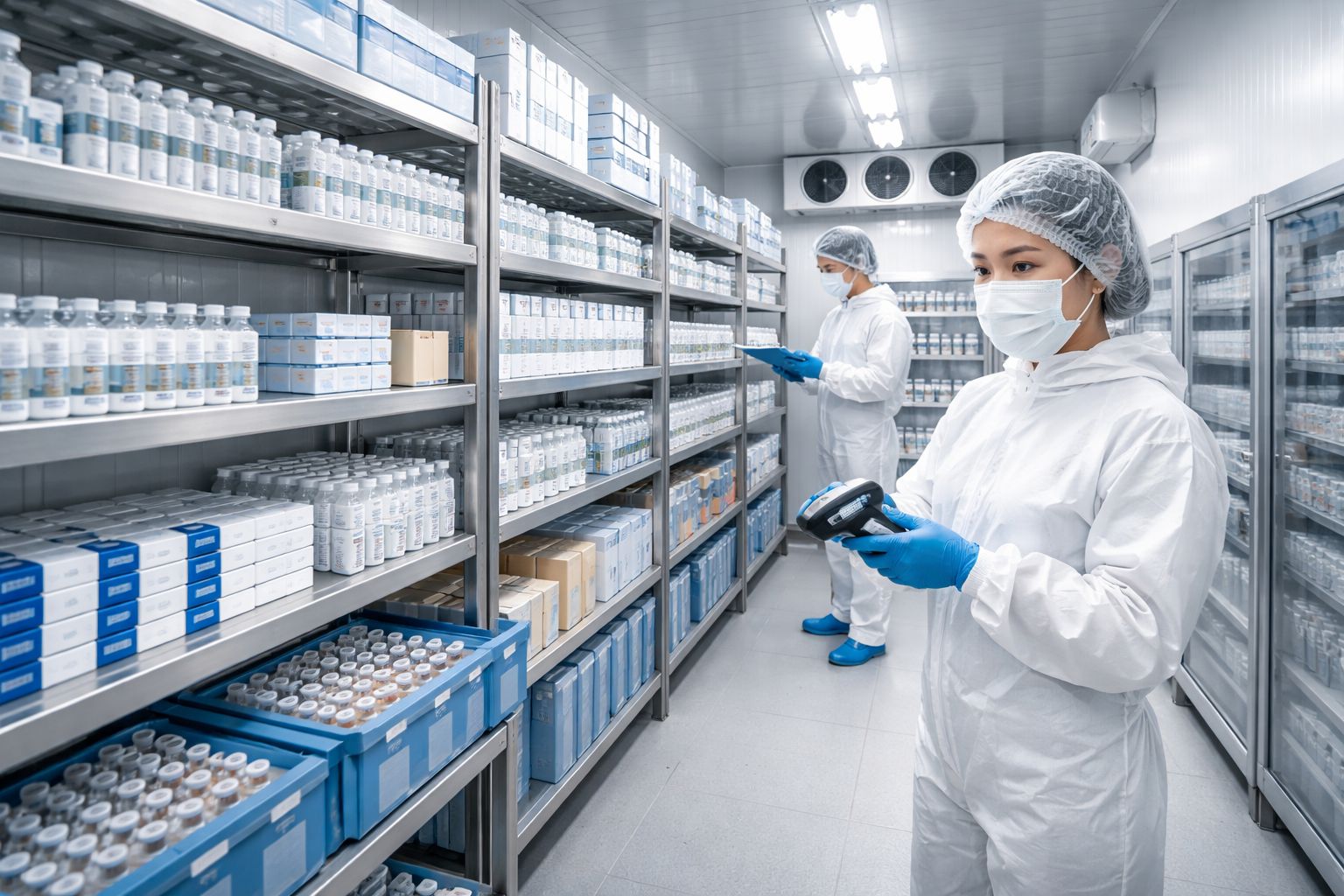
Pharmaceutical contract manufacturers operate in one of the most demanding environments in temperature-controlled logistics. Unlike single-product facilities, they often manage multiple clients, diverse formulations, different batch sizes and strict regulatory expectations within the same infrastructure.
At the centre of these operations is a carefully planned cold room system. A pharmaceutical cold room is not just a storage area. It is a controlled environment that protects product efficacy, supports GMP and GDP compliance, and gives manufacturers the flexibility to manage changing production demands without compromising safety.
This article explains how cold room storage planning supports pharmaceutical contract manufacturers, with a focus on:
- Multi-client storage segregation
- Flexible cold room design for variable production volumes
- Compliance-focused layouts for audit readiness
- Monitoring, validation and redundancy planning
Why Cold Room Storage Planning Matters in Contract Manufacturing
Pharmaceutical contract manufacturers must balance operational efficiency with strict product control. A single facility may need to store vaccines, biologics, raw materials, intermediates and finished medicines for different clients at the same time.
This creates several planning challenges:
- Preventing product mix-ups across clients and batches
- Maintaining validated temperature ranges
- Supporting traceability from receipt to dispatch
- Managing quarantine, released and rejected stock
- Preparing for client audits and regulatory inspections
- Scaling storage capacity when production volumes change
Poorly planned cold room storage can lead to temperature excursions, workflow bottlenecks, documentation gaps and compliance risk. For pharmaceutical manufacturers, these issues can directly affect product integrity, patient safety and business continuity.
Supporting Multi-Client Pharmaceutical Operations
Contract manufacturers typically handle products from several pharmaceutical companies simultaneously. These may include vaccines, biologics, raw materials, excipients, clinical trial materials and finished drugs.
Each product type may come with its own storage condition, handling requirement and documentation process. Cold room design must therefore support clear physical, operational and digital separation.
Key Challenges in Multi-Client Storage
Common challenges include:
- Risk of product mix-ups between clients
- Different temperature requirements within one facility
- Strict batch-level traceability
- Controlled access for authorised personnel
- Separate handling for quarantine, released and rejected products
- High expectations during client and regulatory audits
To manage these risks, pharmaceutical cold rooms should be planned around controlled zoning, reliable monitoring and clear material flow.
Zoning and Segregation Strategies
A well-designed pharmaceutical cold room layout may include:
- Dedicated storage zones for each client, product type or batch status
- Separate quarantine areas for incoming, returned or pending-release products
- Clearly labelled shelving, pallet positions and racking systems
- Access-controlled areas for sensitive or high-value products
- Unidirectional workflows to reduce handling errors
- Integrated inventory systems that support batch and location traceability
These design elements help manufacturers maintain accountability at every stage, from goods receipt to quality release and outbound dispatch.
Practical Layout Scenario: Multi-Client Vaccine Storage
A contract manufacturer storing vaccines for multiple clients may divide its cold room into clearly defined areas:
- Zone A: Client-specific vaccine storage at 2°C to 8°C
- Zone B: Raw materials and excipients
- Zone C: Quarantine storage pending quality approval
- Zone D: Rejected or non-conforming stock awaiting disposition
Each zone can be supported by controlled access, calibrated sensors and independent monitoring points. This reduces the risk of product confusion, improves audit visibility and helps quality teams verify storage conditions quickly.
Flexible Cold Room Design for Variable Production Volumes
Contract manufacturing demand can change quickly. Production volumes may rise due to new client contracts, seasonal demand, public health needs or changes in batch scheduling.
For this reason, cold room storage should not be designed only for current capacity. It should be planned with future expansion, reconfiguration and operational resilience in mind.
Modular and Scalable Cold Room Construction
Modular cold room systems allow manufacturers to adapt their storage infrastructure over time. Depending on facility requirements, modular design can support:
- Expansion of storage capacity
- Reconfiguration of internal zones
- Addition of new temperature-controlled compartments
- Separation of high-priority or high-risk products
- Faster adaptation when production needs change
For pharmaceutical contract manufacturers, this flexibility is valuable because client requirements can vary widely. A facility may need more chilled storage one quarter and more frozen storage the next.
Multi-Temperature Storage Capabilities
Different pharmaceutical products require different conditions. Common cold storage ranges include:
- 2°C to 8°C for refrigerated medicines and many vaccines
- -20°C or lower for frozen pharmaceutical products
- Ultra-low temperature storage for selected biologics or specialised materials
A multi-zone cold room layout allows manufacturers to manage different product requirements within the same facility while maintaining control and traceability.
The key is not simply adding more storage space. The goal is to create a controlled system where each temperature zone is validated, monitored and operationally practical.
Practical Planning Scenario: Rapid Capacity Scale-Up
During a sudden increase in demand for temperature-sensitive products, a manufacturer may need to expand storage capacity within a short period.
A modular cold room design can support this by allowing:
- Additional insulated panels to extend storage space
- Temporary dedicated zones for urgent client stock
- Additional refrigeration capacity where required
- Backup cooling support to reduce downtime risk
- Revised product flows without disrupting existing operations
This type of planning helps manufacturers respond to demand changes while maintaining compliance and protecting product quality.
Compliance-Focused Cold Room Storage Layouts
In pharmaceutical manufacturing, compliance must be built into the cold room from the start. Cold room storage should support Good Manufacturing Practice and Good Distribution Practice requirements through validated temperature control, traceable records and hygienic construction.
Key Compliance Requirements for Pharmaceutical Cold Rooms
A pharmaceutical cold room should include:
1. Precise Temperature Control
Storage conditions must remain within validated temperature ranges. For many medicines, this may mean maintaining a consistent 2°C to 8°C environment.
2. Continuous Monitoring and Logging
Temperature should be monitored continuously using calibrated sensors and data loggers. Alerts should notify responsible personnel when conditions move outside approved limits.
3. Uniform Temperature Distribution
Cold rooms must be designed to minimise hotspots and cold spots. Airflow, shelving layout, door openings and product loading patterns all affect temperature consistency.
4. Hygienic and Durable Construction
Surfaces should be easy to clean, non-porous and suitable for controlled pharmaceutical environments. Proper sealing, insulation and flooring also help prevent contamination risks.
5. Backup and Redundancy Systems
Backup power, standby refrigeration and alarm escalation procedures help reduce the risk of temperature excursions during equipment failure or power disruption.
6. Controlled Access and Documentation
Access control, SOPs and inventory records help ensure that only authorised personnel handle sensitive products. This supports both security and audit readiness.
Temperature Mapping and Validation
Temperature mapping is a critical step in pharmaceutical cold room qualification. It confirms whether the cold room can maintain the required conditions across all storage areas under defined operating conditions.
Temperature mapping helps identify:
- Hotspots and cold spots
- Sensor placement requirements
- Impact of door openings
- Airflow restrictions caused by racking or loading patterns
- Performance during normal and stressed conditions
After mapping, the cold room can be qualified and monitored according to approved procedures. This gives quality teams evidence that the storage environment is controlled, repeatable and suitable for pharmaceutical products.
Audit-Ready Cold Room Operations
A cold room may be technically capable of maintaining temperature, but audit readiness also depends on how the system is operated and documented.
An audit-ready pharmaceutical cold room should support:
- Real-time temperature visibility
- Calibrated monitoring devices
- Documented alarm response procedures
- Clear stock status identification
- Batch-level traceability
- Preventive maintenance records
- Access logs where required
- Deviation reporting and corrective actions
For contract manufacturers, audit readiness is especially important because both regulators and clients may review the same facility. A well-planned cold room helps teams demonstrate control clearly and confidently.
Digital Monitoring and Predictive Maintenance
Modern pharmaceutical cold rooms increasingly rely on digital systems to improve visibility and reduce operational risk.
These systems may include:
- Cloud-based temperature dashboards
- Automated alerts for deviations
- Remote monitoring for after-hours response
- Digital audit trails
- Sensor redundancy for data verification
- Maintenance alerts based on equipment performance
Predictive maintenance is especially valuable in pharmaceutical cold storage because it helps identify early signs of equipment stress before failure occurs. This supports business continuity and reduces the risk of costly product loss.
Why It Matters
Cold room storage planning directly affects the performance of pharmaceutical contract manufacturing operations.
A well-designed system supports:
- Product safety and efficacy
- Regulatory compliance
- Client confidence
- Audit readiness
- Operational efficiency
- Scalable growth
- Reduced downtime risk
- Stronger temperature control across multiple product types
For contract manufacturers, cold room infrastructure must do more than keep products cold. It must support the discipline, traceability and reliability expected in pharmaceutical operations.
How Kiat Lay Supports Pharmaceutical Cold Room Planning
Kiat Lay works with businesses that require reliable, purpose-built cold room systems for controlled storage and industrial operations.
For pharmaceutical contract manufacturers, this means planning cold room infrastructure around real operational needs, including:
- Storage capacity and product flow
- Temperature range requirements
- Segregation and zoning
- Energy-efficient refrigeration design
- Monitoring and control requirements
- Expansion planning
- Maintenance access and long-term reliability
With the right cold room partner, pharmaceutical manufacturers can build storage systems that support compliance today while remaining adaptable for future production demands.
Planning a pharmaceutical cold room for multi-client manufacturing? Speak to Kiat Lay to design a reliable, compliance-ready cold room system built around your storage requirements, workflows and long-term operational needs.
FAQs About Cold Room Storage for Pharmaceutical Contract Manufacturers
What is cold room storage planning for pharmaceutical contract manufacturers?
Cold room storage planning is the process of designing a controlled storage environment for pharmaceutical products, raw materials and finished goods. For contract manufacturers, it includes zoning, segregation, temperature control, monitoring, validation and compliance planning across multiple clients and product types.
Why is segregation important in pharmaceutical cold rooms?
Segregation helps prevent product mix-ups, cross-contamination and unauthorised handling. It is especially important for contract manufacturers because they often manage products from several clients within the same facility.
What temperature range is commonly used for pharmaceutical cold rooms?
Many pharmaceutical products require refrigerated storage between 2°C and 8°C. Some products may require frozen storage at -20°C or lower, while specialised biologics may need ultra-low temperature storage.
How does temperature mapping support pharmaceutical compliance?
Temperature mapping verifies that all areas of the cold room can maintain the required storage conditions. It helps identify hotspots, cold spots, sensor locations and airflow issues before the cold room is used for regulated pharmaceutical storage.
What should a pharmaceutical cold room include for audit readiness?
An audit-ready pharmaceutical cold room should include validated temperature control, continuous monitoring, calibrated sensors, alarm procedures, clear product segregation, traceable inventory records and documented maintenance practices.
Can pharmaceutical cold rooms be expanded later?
Yes. Modular cold room design allows storage capacity to be expanded or reconfigured when production volumes change. This is useful for contract manufacturers that need to respond to new client requirements or shifting demand.
Why are backup systems important for pharmaceutical cold storage?
Backup systems help prevent temperature excursions during power failures or equipment breakdowns. This protects product integrity, reduces financial risk and supports business continuity.
How can digital monitoring improve pharmaceutical cold room operations?
Digital monitoring provides real-time visibility of temperature conditions, alerts teams to deviations and creates records that support compliance. It can also support preventive maintenance by identifying equipment performance issues early.