


Cold Storage for FMCG Logistics: Planning Efficient Cold Room Storage
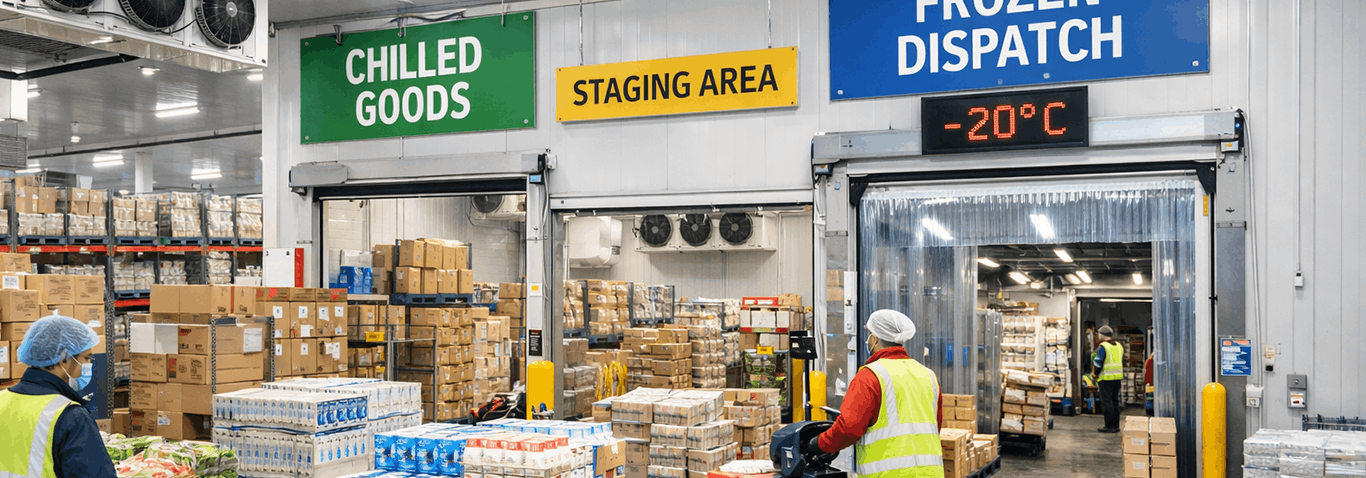
In the world of fast-moving consumer goods (FMCG), logistics operations must meet relentless cycles of demand, dispatch, and replenishment while ensuring that perishable products remain within strict temperature ranges.
From chilled dairy and fresh produce to frozen ready-to-eat meals, FMCG cold chains require reliable infrastructure, efficient storage design, and strong temperature management.
Well-planned cold storage for FMCG logistics allows warehouse operators to maintain product integrity, support rapid stock rotation, and sustain high dispatch volumes without compromising temperature stability.
For warehouse planners and logistics managers, designing cold room storage that supports rapid stock rotation, enables frequent dispatch cycles, and maintains temperature stability during peak operations is essential.
This guide explains how strategic planning, airflow management, racking layouts, and operational zoning improve cold storage performance in FMCG logistics environments.
Supporting Rapid Stock Rotation in Cold Storage for FMCG Logistics
Rapid stock rotation is essential in cold storage for FMCG logistics, particularly for products with short shelf lives.
Without efficient rotation systems, inventory may expire before distribution, leading to financial losses, increased waste, and supply disruptions.
1. Design Cold Rooms to Support FIFO Inventory Management
A properly designed cold room must support FIFO (First In, First Out) inventory practices so older stock is distributed before newer inventory.
When cold room layouts restrict pallet access or create congestion, warehouse teams may unintentionally select newer products first.
Effective FIFO rack planning typically includes:
- Push-back or flow-through racking systems that automatically move older pallets forward
- Clearly labelled rack zones and aisles to reduce picking errors
- Direct-access pallet positions near dispatch areas for high-turnover goods
Case Example: Push-Back Racks in an FMCG Coldroom
A leading beverage distributor in Malaysia installed push-back racking in their walk-in chillers so that pallets moved forward automatically as stock was removed. This ensured that the oldest pallets were always accessed first, even during rapid demand cycles. As a result, stock expiry losses fell by 35% in just one quarter.
2. Separate Fast-Moving and Slow-Moving Inventory
In cold storage for FMCG logistics, not every product moves at the same speed.
Strategic zoning improves efficiency and reduces internal traffic.
Typical zoning strategies include:
- High-turnover products stored close to dispatch doors
- Medium-turnover items placed in mid-range storage zones
- Seasonal or slower-moving inventory stored deeper within the cold room
This approach reduces travel distance for warehouse staff and limits the number of door openings, which helps maintain stable internal temperatures.
Cold Room Layout Planning for High Dispatch FMCG Operations
Cold rooms serving FMCG distribution centres must support continuous product movement, especially during peak dispatch periods.
An efficient layout within cold storage for FMCG logistics ensures smooth product flow from receiving to outbound loading.
1. Create Dedicated Logistics Zones
Well-designed cold storage facilities divide operations into clear zones:
- Inbound receiving zones for incoming deliveries
- Staging areas for order preparation
- Primary storage zones for rotating inventory
- Outbound dispatch lanes connected to loading docks
Clear zoning prevents congestion, improves workflow efficiency, and helps maintain temperature stability.
Example: Dispatch Lane Design in Singapore
A major FMCG cold storage hub in Singapore redesigned its walk-in chiller layout to include dedicated dispatch lanes equipped with fast-action doors.
These doors closed quickly after each access event, reducing warm air infiltration during high dispatch periods.
The new configuration allowed warehouse teams to complete multiple dispatch cycles while maintaining consistent cold room temperatures.
2. Implement Pull-Through Cold Room Designs
Many modern cold storage facilities use dual-access pull-through layouts.
Inventory enters the cold room through a receiving point and exits through a dispatch point on the opposite side.
This reduces unnecessary cross-traffic and improves operational flow.
In an Indonesian dairy distribution warehouse, a pass-through layout enabled forklift operators to move pallets directly from receiving to staging to dispatch.
This design reduced product handling time by 18 percent.
3. Provide Staging and Buffer Areas Near Loading Bays
Buffer areas positioned near loading docks help prepare multiple orders before truck arrival.
These staging spaces may exist inside the cold room or within a semi-chilled buffer zone.
Benefits include:
- Reduced forklift traffic within storage aisles
- Fewer cold room door openings
- Faster outbound truck loading cycles
A Singapore cold storage operator introduced chilled staging bays beside loading docks.
The facility improved dispatch efficiency while maintaining stable internal chiller temperatures during peak operations.
Maintaining Temperature Stability in Cold Storage for FMCG Logistics
Frequent door openings and heavy internal traffic can disrupt cold room temperature stability.
Maintaining consistent environmental conditions is essential to protect product quality and prevent spoilage.
1. Use Zoned Cooling and Dynamic Airflow Systems
Cold rooms designed for cold storage for FMCG logistics often include zoned cooling infrastructure.
This design allows different areas of the facility to maintain independent temperature control.
Common solutions include:
- Multiple evaporators serving different cold room sections
- High-velocity circulation fans in high-traffic corridors
- Directed airflow ducts that prevent warm air pockets
Case Example: Zoned Cooling in an FMCG Distribution Facility
An FMCG distribution centre installed several evaporators across separate cooling zones.
During high dispatch activity in outbound areas, the remaining sections of the cold room maintained stable temperatures due to isolated cooling circuits.
This design ensured consistent product conditions throughout the facility.
2. Install Fast-Action Doors and Thermal Barriers
Access points are the primary source of temperature loss in cold storage facilities.
Solutions that reduce air exchange include:
- Fast-action insulated doors
- PVC strip curtains
- Thermal airlocks or vestibules
These features reduce warm air infiltration when forklifts or personnel enter and exit the cold room.
In a Kuala Lumpur logistics hub, installing rapid doors and strip curtains reduced temperature spikes by nearly 50 percent during peak operations.
3. Implement Smart Temperature Monitoring Systems
Real-time monitoring technology strengthens cold chain reliability.
Smart sensors allow warehouse managers to:
- Detect temperature deviations immediately
- Monitor humidity and airflow conditions
- Receive alerts when doors remain open too long
Modern cold storage for FMCG logistics often integrates IoT monitoring systems with warehouse management software.
One logistics provider deployed automated alerts that notified engineers when temperatures approached risk levels.
The system reduced product spoilage incidents by 40 percent.
Real Examples of FMCG Cold Storage Planning
Dairy Distribution Centre
A dairy logistics operator redesigned its cold room layout with:
- FIFO racking closest to dispatch doors
- Dedicated staging racks near receiving points
- High-velocity airflow fans for uniform cooling
The new design improved dispatch speed and maintained stable temperatures during peak demand.
Frozen Foods Hub in Singapore
A frozen food logistics facility serving air and sea freight operations implemented:
- Fast-action insulated access doors
- Dual freezer zones with independent refrigeration systems
- Strategic SKU placement near outbound lanes
The layout improved shipment turnaround times while maintaining strict temperature compliance.
Ready Meal Distribution Network
A ready-meal logistics provider supporting e-commerce deliveries implemented:
- Short-term chiller staging bays
- Automated doors with motion sensors
- IoT temperature monitoring integrated with WMS
Spoilage rates dropped by 28 percent and order fulfilment accuracy improved.
Why Proper Cold Storage for FMCG Logistics Matters
Effective cold storage for FMCG logistics protects product quality, reduces waste, and supports high distribution volumes.
When cold rooms are designed with efficient workflows, temperature stability, and smart monitoring systems, logistics providers can:
- Improve dispatch throughput
- Minimise spoilage and product loss
- Maintain regulatory compliance
- Increase supply chain reliability
Conclusion: Design Efficient Cold Storage for FMCG Logistics
Cold room planning plays a critical role in modern FMCG logistics.
Facilities that integrate FIFO storage systems, efficient zoning, staging buffers, and smart temperature management achieve stronger operational performance and product protection.
Well-designed cold storage for FMCG logistics helps businesses maintain rapid distribution cycles while safeguarding temperature-sensitive goods.
As demand for fresh, chilled, and frozen FMCG products continues to grow, investing in efficient cold room design becomes essential for long-term logistics success.
Contact Kiat Lay Coldroom today to discuss a tailored cold storage solution for your FMCG logistics facility.
FAQs: Cold Storage for FMCG Logistics
1. What is cold storage for FMCG logistics?
Cold storage for FMCG logistics refers to temperature-controlled facilities designed to store and distribute fast-moving consumer goods such as dairy, frozen food, fresh produce, and ready-to-eat meals while maintaining strict temperature conditions.
2. Why is FIFO important in FMCG cold storage?
FIFO ensures that older inventory is dispatched before newer stock. This reduces product expiry, prevents waste, and maintains product freshness within FMCG supply chains.
3. How can cold rooms maintain temperature during high dispatch periods?
Cold rooms maintain temperature stability through:
- Zoned cooling systems
- Fast-action insulated doors
- PVC strip curtains
- Smart monitoring systems
These solutions minimise temperature fluctuations during frequent access events.
4. What racking systems work best for FMCG cold storage?
Common racking solutions include:
- Push-back racking
- Flow-through pallet racking
- Selective pallet racking
These systems support fast picking and FIFO inventory rotation.