


Freezer Room Construction for Centralised Meat and Seafood Processing
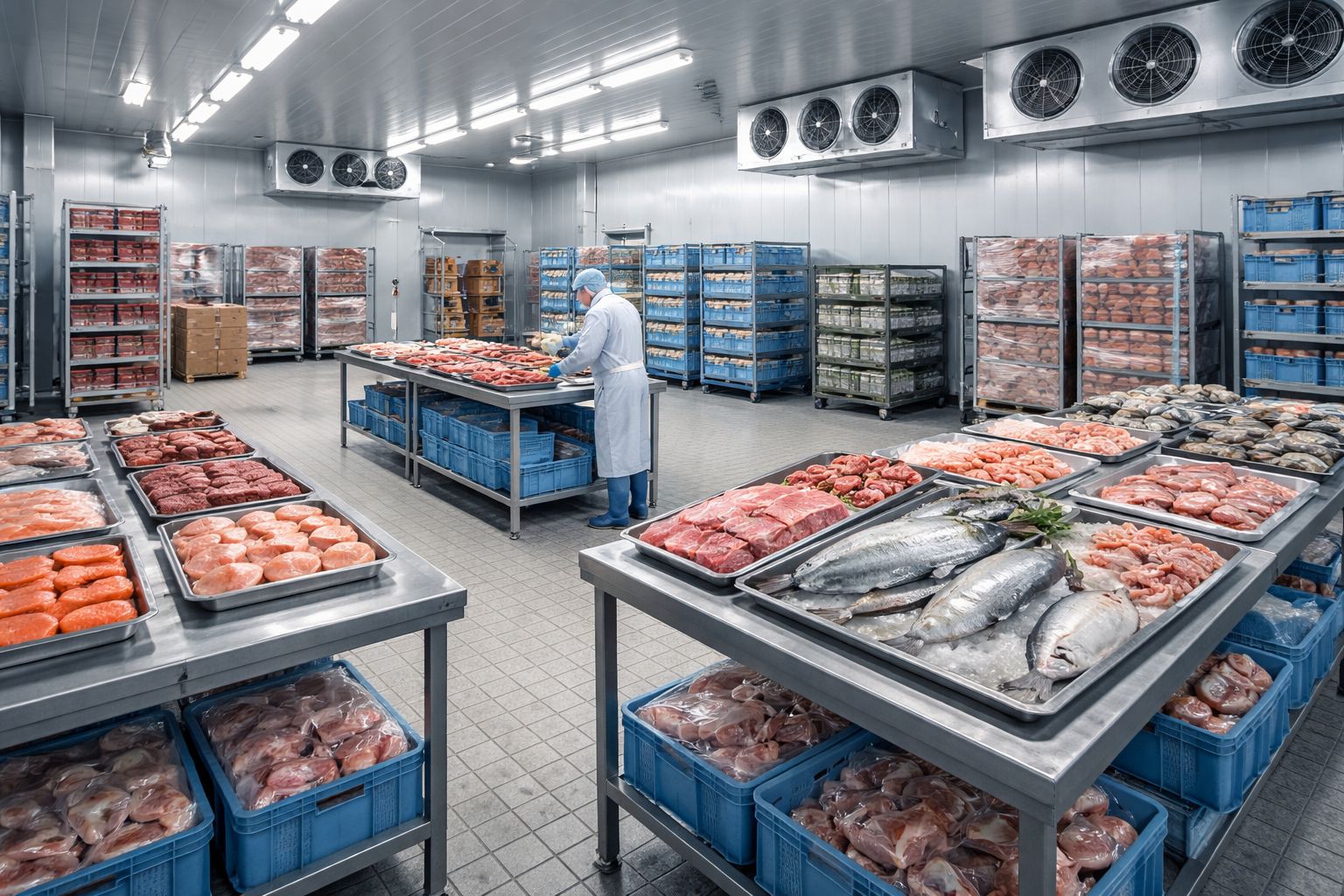
Centralised meat and seafood processing facilities rely on freezer rooms to protect product quality, food safety and operational continuity. In high-volume environments, freezer room construction is not only about achieving low temperatures. It must support clear product flow, hygienic handling, contamination control and consistent cold chain performance from receiving to dispatch.
For businesses handling raw proteins such as poultry, beef, fish, shellfish and frozen seafood, the freezer room becomes a critical part of the processing system. Poor layout, unsuitable materials or unstable temperatures can lead to product loss, audit issues, higher operating costs and avoidable downtime.
This article explains the key considerations in freezer room construction for centralised meat and seafood processing, including zoning, hygiene-focused design, freshness preservation and long-term operational planning.
What Is Freezer Room Construction for Meat and Seafood Processing?
Freezer room construction for meat and seafood processing refers to the design and build of temperature-controlled rooms used to store, freeze, handle or support the processing of raw and finished protein products.
A properly designed freezer room should support:
- Safe separation of raw, semi-processed and finished products
- Stable frozen storage at -18°C or lower
- Hygienic cleaning and wash-down routines
- Efficient movement of goods, staff and equipment
- Reliable temperature monitoring and alarm systems
- Compliance with food safety and operational requirements
For centralised facilities, the freezer room should be planned as part of the wider processing workflow, not as a standalone storage area.
Dedicated Freezer Room Zoning for Raw Proteins
Zoning is one of the most important design principles in meat and seafood processing. Each product stage should have a clearly defined area to reduce cross-contamination risk and maintain smoother operations.
A typical facility may include:
- Receiving area
- Pre-chill room
- Processing or portioning room
- Blast freezing area
- Frozen storage room
- Packing and dispatch area
This structured flow helps products move in one direction, from intake to freezing and distribution. It also limits unnecessary handling and reduces the risk of raw products crossing into finished goods areas.
Why Zoning Matters in Freezer Room Design
Raw proteins can carry higher microbiological risks than many other food products. Without proper zoning, facilities may face:
- Cross-contact between raw and processed items
- Temperature fluctuations from frequent door openings
- Slower handling during peak production periods
- Higher cleaning complexity
- Greater risk during hygiene audits
For meat and seafood processors, zoning also helps teams separate product categories such as poultry, red meat, fish and shellfish where required. This is especially useful when allergen control, odour management or product segregation is part of the operational requirement.
Example: Centralised Seafood Processing Facility
A seafood distributor handling fresh fish and shellfish adopted a linear cold room layout:
- Receiving dock
- Pre-chill room at 0°C to 4°C
- Controlled processing room at 12°C to 15°C
- Blast freezer at -18°C or lower
- Frozen storage room
- Dispatch zone
By designing the facility around a one-way workflow, the operator reduced unnecessary movement between zones, improved traceability and maintained tighter temperature control during production peaks.
Hygiene-Focused Cold Room Construction Practices
In meat and seafood processing, hygiene must be built into the freezer room from the start. A cold room that is difficult to clean can create long-term operational problems, even if the refrigeration system performs well.
Freezer room construction should support daily sanitation, wash-down cleaning and inspection without creating hidden areas where moisture, residue or bacteria can accumulate.
Key Hygiene Design Elements
1. Food-Grade Insulated Panels
Cold rooms are commonly constructed using insulated sandwich panels with durable, non-porous surfaces. For meat and seafood environments, panel finishes should be selected for corrosion resistance, cleanability and suitability for low-temperature conditions.
Where frequent wash-down is required, food-grade coated steel or stainless steel finishes may be considered based on the operating conditions and budget.
2. Seamless and Washable Surfaces
Walls, ceilings and floors should have minimal joints, sealed connections and easy-to-clean surfaces. Coved corners can help prevent dirt accumulation and make cleaning more effective.
This is particularly important in areas where fluids, scales, blood, brine or seafood residue may be present.
3. Proper Drainage Systems
Freezer room and processing room floors should be designed with suitable falls to prevent water pooling during cleaning.
Drainage planning must consider hygiene, safety and thermal performance. Poor drainage can create slip hazards, odour issues and bacterial growth. In low-temperature areas, standing water can also freeze and affect operations.
4. Anti-Slip and Durable Flooring
Meat and seafood facilities often experience wet floors, trolley movement and heavy equipment use. Flooring should be durable, anti-slip and compatible with cleaning chemicals.
Epoxy flooring, polyurethane systems or other food-safe floor finishes may be used depending on traffic volume, temperature range and cleaning intensity.
5. Controlled Access and Door Planning
Door placement affects both hygiene and temperature stability. High-traffic freezer rooms may require insulated doors, strip curtains, rapid doors or air curtains to reduce temperature loss.
Well-planned access points help prevent unnecessary door openings and support cleaner movement between zones.
Example: Meat Processing Plant Upgrade
A mid-sized meat processor upgraded its cold room system with:
- Stainless steel wall cladding
- Anti-slip epoxy flooring
- Rounded internal corners
- Dedicated wash-down drainage
- Better separation between raw and packed goods
The upgrade reduced cleaning time, improved audit readiness and helped the team maintain more consistent hygiene standards during daily operations.
Maintaining Freshness During Portioning and Preparation
Freezer room construction also affects product freshness during cutting, portioning, weighing, packing and staging. These activities often expose meat and seafood to warmer air, which can shorten shelf life if the environment is not controlled.
Temperature control during preparation helps slow bacterial growth, reduce moisture loss and maintain product texture.
Recommended Temperature Ranges
Common temperature ranges include:
- Chilled processing rooms: 0°C to 4°C for high-sensitivity chilled products
- Controlled processing rooms: 10°C to 15°C, depending on product type and process duration
- Frozen storage rooms: -18°C or lower
- Blast freezing areas: designed to bring product temperature down quickly and evenly
Humidity control may also be required to reduce dehydration while avoiding condensation on surfaces, packaging and products.
Integrated Processing Cold Rooms
Some centralised facilities integrate processing activities into temperature-controlled rooms. This allows cutting, sorting, portioning and weighing to take place without breaking the cold chain.
A typical workflow inside an integrated processing cold room may include:
- Product inspection
- Sorting by grade or product type
- Cutting and portioning
- Weighing and classification
- Packing or staging
- Immediate chilling, freezing or transfer to frozen storage
This approach is especially useful for facilities with tight dispatch timelines, high product turnover or strict freshness requirements.
Example: Poultry Processing Facility
A poultry processor introduced an integrated cold processing room operating at 10°C to 12°C. By moving portioning activities into a controlled environment, the company reduced product temperature fluctuations, improved consistency and lowered freshness-related complaints.
Smart Freezer Room Construction for High-Volume Operations
A successful freezer room for centralised meat and seafood processing should combine engineering precision with operational practicality.
Key construction considerations include:
- Strategic zoning for raw, semi-processed and finished products
- Food-grade insulated panels and cleanable internal finishes
- Durable flooring designed for wet, cold and high-traffic environments
- Reliable refrigeration sizing based on load, door openings and product movement
- Accurate temperature and humidity control
- Digital monitoring, alarms and reporting
- Workflow planning to reduce handling time
- Scalable design for future production growth
The best freezer room design is one that supports day-to-day operations without creating unnecessary friction for production, cleaning or maintenance teams.
Why Freezer Room Construction Matters for Food Businesses
For meat and seafood businesses, freezer room performance has a direct impact on commercial outcomes.
A well-designed freezer room can help improve:
- Product quality and shelf life
- Food safety performance
- Audit readiness
- Staff productivity
- Energy efficiency
- Inventory control
- Brand reliability
- Long-term facility scalability
Small design issues can become costly once production begins. Poor airflow, weak zoning, difficult cleaning access or undersized refrigeration can affect output, increase energy use and expose the business to avoidable risk.
Choosing the Right Freezer Room Contractor
When selecting a freezer room construction partner, food businesses should look beyond installation cost. The right contractor should understand cold chain performance, operational workflow, hygiene requirements and long-term serviceability.
Before starting a project, consider whether your contractor can support:
- Site assessment and layout planning
- Product flow and zoning design
- Panel, flooring and door specification
- Refrigeration load calculation
- Temperature monitoring and alarm integration
- Maintenance access planning
- Compliance-focused documentation
- Future expansion requirements
For centralised meat and seafood processing, the freezer room should be built as a business-critical asset, not a basic storage enclosure.
Build a Freezer Room That Protects Product Quality and Operations
Freezer room construction is a critical part of centralised meat and seafood processing. The right design protects product quality, strengthens hygiene control and supports smoother operations from receiving to distribution.
Kiat Lay, a cold room builder in Singapore designs and constructs cold rooms and freezer rooms for businesses that depend on reliable temperature-controlled operations. From zoning and insulated panels to refrigeration performance and long-term maintenance access, our team helps you build cold storage systems that support safety, efficiency and business continuity.
Speak to Kiat Lay to plan a freezer room construction solution for your meat or seafood processing facility.
FAQs About Freezer Room Construction for Meat and Seafood Processing
1. What temperature should a freezer room be for meat and seafood?
Frozen meat and seafood are typically stored at -18°C or lower. Some operations may require lower temperatures depending on product type, freezing speed, storage duration and export requirements.
2. Why is zoning important in meat and seafood freezer rooms?
Zoning separates raw products, semi-processed items and finished goods. This reduces cross-contamination risk, supports hygiene control and helps products move more efficiently from receiving to processing, freezing and dispatch.
3. What materials are suitable for meat and seafood cold rooms?
Food-grade insulated panels, corrosion-resistant finishes, sealed joints, coved corners and anti-slip flooring are commonly used. Materials should be easy to clean, durable and suitable for cold, wet and high-traffic conditions.
4. How does freezer room design affect product freshness?
Good freezer room design controls temperature, airflow and humidity. This helps reduce temperature abuse, moisture loss and product deterioration during storage, portioning and preparation.
5. Do meat and seafood facilities need blast freezers?
Blast freezers are useful when products need to be frozen quickly and evenly. They help preserve texture, reduce ice crystal formation and support faster processing before products move into frozen storage.
6. How can freezer rooms support food safety audits?
Freezer rooms support audits through proper zoning, cleanable surfaces, reliable temperature records, alarm systems, clear access control and documented maintenance routines.
7. What should businesses consider before building a freezer room?
Businesses should assess product type, storage volume, processing workflow, temperature range, cleaning requirements, door traffic, energy use and future expansion plans before construction begins.