


Freezer Room Construction for Vaccine Bulk Storage Facilities
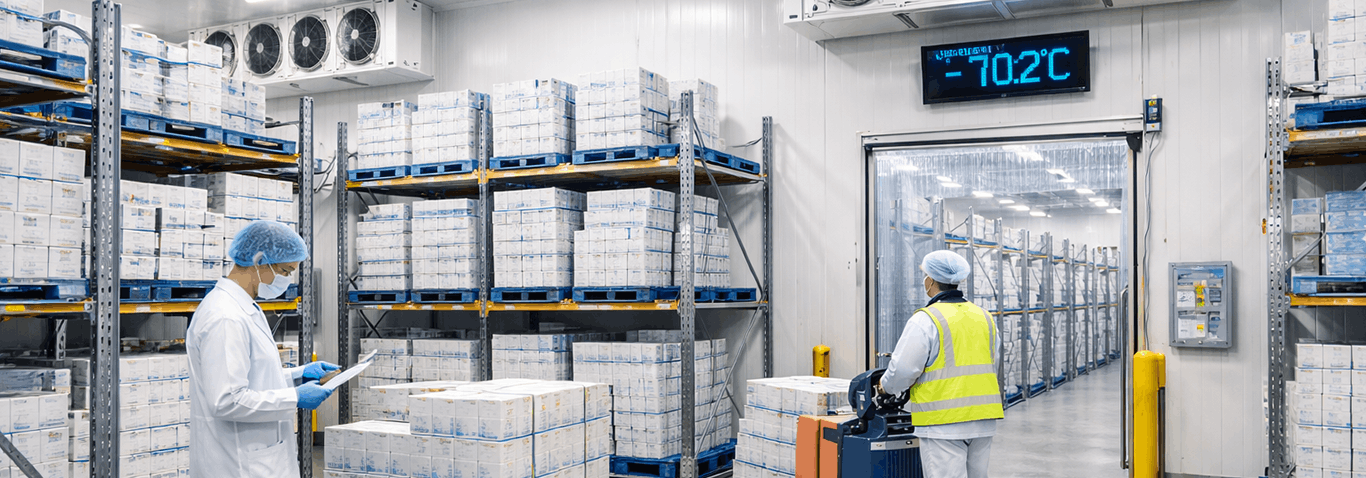
The global distribution of vaccines has placed increasing pressure on cold chain infrastructure, especially for bulk storage at ultra-low temperatures. From national immunisation programmes to pharmaceutical manufacturers and regional distribution hubs, freezer rooms must be designed to maintain strict temperature control, system reliability, and long-term performance.
In Singapore’s regulated pharmaceutical environment, freezer room construction for vaccine bulk storage goes far beyond basic refrigeration. It involves precise engineering, validated performance, and a design approach that supports Good Distribution Practice (GDP) and Good Manufacturing Practice (GMP) requirements.
This article covers how freezer rooms are built to handle ultra-low temperature conditions, ensure system redundancy, and maintain vaccine integrity over time.
Managing Ultra-Low Temperature Requirements for Vaccines
Many modern vaccines, including mRNA-based formulations, require storage between –40°C and –80°C. Even short periods outside these ranges can affect potency and lead to product loss.
Purpose-Built Freezer Room Design
Ultra-low temperature freezer rooms differ significantly from standard cold rooms. Key requirements include:
- High-performance insulation panels with greater thickness and low thermal conductivity
- Vapour-tight construction to prevent moisture ingress and ice formation
- Specialised refrigeration systems using cascade or multi-stage compressors
- Tight construction tolerances to reduce thermal bridging
Panel joints, floor-wall junctions, and ceiling penetrations are common weak points. Poor detailing can lead to frost build-up, energy inefficiency, and long-term structural issues.
Temperature Uniformity at Scale
Bulk storage often involves dense pallet configurations and extended storage periods. Airflow design must ensure:
- Consistent temperature across all storage areas
- No hot or cold spots in corners, under racking, or near ceilings
- Controlled air movement to avoid product or packaging damage
Evaporator placement, airflow direction, and racking layout all play a role in maintaining uniform conditions.
Example:
A pharmaceutical logistics facility in Singapore upgraded its –70°C bulk vaccine freezer by adjusting evaporator positioning and airflow paths. Temperature mapping after the upgrade showed variance reduced from ±3°C to ±1°C, improving compliance margins.
Redundancy Planning in Freezer Room Systems
In vaccine storage, system reliability is critical. Redundancy must be built into the design from the start.
N+1 Refrigeration Redundancy
Freezer rooms typically include N+1 or N+2 redundancy, where:
- Multiple refrigeration units can support the full load independently
- Load sharing occurs during normal operation
- Backup systems take over automatically if a component fails
This ensures temperature stability is maintained at all times.
Power and Control Redundancy
Electrical systems also require backup planning:
- Dual power supply feeds
- Backup generators sized for full load
- Uninterruptible Power Supply (UPS) for controls and monitoring
Redundant sensors and controllers help prevent false readings and improve system reliability.
Alarm and Monitoring Systems
Continuous monitoring allows early detection of issues. Systems typically include:
- 24/7 temperature tracking
- High and low temperature alarms
- SMS, email, or BMS alerts
These features support documentation and audit requirements.
Case Insight:
A regional vaccine storage hub implemented dual refrigeration circuits and independent monitoring systems. During a compressor failure at 2 a.m., the secondary system activated automatically, preventing any temperature deviation and avoiding a potential seven-figure product loss.
Cold Room Construction for Long-Term Temperature Stability
Vaccine storage facilities are built for continuous operation over many years. Long-term stability depends on both construction quality and material selection.
Structural Integrity at Ultra-Low Temperatures
At temperatures as low as –80°C, materials behave differently. Construction must account for:
- Cold-rated door systems with heated frames to prevent ice lock
- Reinforced flooring designed for heavy loads and thermal cycling
- Proper vapour barrier installation to prevent internal condensation
Poor construction can lead to issues such as panel damage, ice formation beneath floors, and higher maintenance costs.
Minimising Temperature Fluctuations
Daily operations introduce heat into the freezer room. To maintain stability:
- Airlocks or ante-rooms separate ambient areas from freezer zones
- High-speed insulated doors reduce exposure time
- Zoning separates frequently accessed stock from long-term storage
These measures reduce system strain and improve efficiency.
Validation and Qualification Readiness
Freezer room design must support:
- Installation Qualification (IQ)
- Operational Qualification (OQ)
- Performance Qualification (PQ)
Accessible layouts, smooth finishes, and proper sensor placement help streamline validation and requalification.
Supporting Compliance in Pharmaceutical Environments
In Singapore, vaccine storage facilities must meet HSA requirements and international GDP guidelines. Proper freezer room construction supports compliance by:
- Maintaining stable and documented temperature conditions
- Allowing accurate temperature mapping and monitoring
- Reducing the risk of deviations during audits
Design decisions made early in construction have a direct impact on long-term compliance and operational confidence.
Building Resilient Vaccine Freezer Rooms
Freezer room construction for vaccine bulk storage facilities requires careful planning and specialised expertise. Managing ultra-low temperatures, ensuring redundancy, and maintaining long-term stability are all essential.
Well-designed systems help protect product quality, reduce risk, and support uninterrupted supply chains.
Kiat Lay coldroom specialist delivers industrial cold room solutions tailored for pharmaceutical environments, helping facilities achieve reliable performance and meet strict regulatory requirements.
Planning a vaccine storage facility or upgrading your freezer room system? Speak to Kiat Lay to explore a solution designed for your operational and compliance needs.