


Industrial Cold Room Design for Centralised Pharmaceutical Warehouses
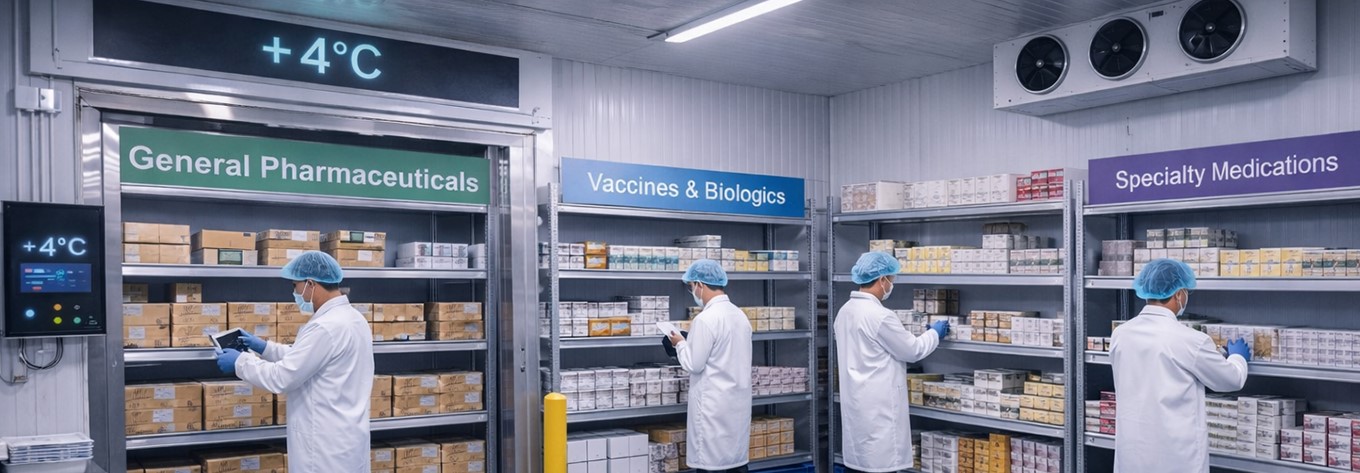
Centralised pharmaceutical warehouses play a critical role in modern healthcare supply chains. From vaccines and biologics to speciality medications and temperature-sensitive injectables, these facilities act as national or regional distribution hubs responsible for maintaining product efficacy, regulatory compliance, and delivery reliability.
At the centre of these operations is a carefully engineered industrial cold room system designed not only for storage, but also for operational efficiency, scalability, and long-term risk management.
As pharmaceutical distribution networks expand to support growing populations and stricter regulatory oversight, cold room design has become a strategic infrastructure investment for healthcare logistics providers.
Well-designed pharmaceutical cold rooms help organisations maintain product integrity, support nationwide distribution, reduce operational risks, and strengthen compliance with Good Distribution Practice (GDP) requirements.
Why Industrial Cold Room Design Matters in Pharmaceutical Logistics
Pharmaceutical warehouses operate in highly regulated environments where temperature control failures can result in product loss, compliance breaches, and disruptions to healthcare supply chains.
Unlike standard commercial cold storage, pharmaceutical cold rooms must support:
- Precise temperature stability
- Continuous environmental monitoring
- High-volume distribution workflows
- Secure storage for regulated products
- Future scalability for expanding healthcare demands
Cold room infrastructure therefore becomes a critical operational asset that directly impacts distribution reliability, audit readiness, and patient safety.
Supporting Nationwide Drug Distribution Networks
Centralised pharmaceutical warehouses often serve as the primary distribution point for hospitals, clinics, pharmacies, and laboratories across entire countries or regions. These facilities must handle large volumes of temperature-sensitive inventory while maintaining stable environmental conditions across all storage zones.
Key Features of Pharmaceutical Distribution Cold Rooms
Industrial cold rooms designed for pharmaceutical distribution centres commonly incorporate:
- High-capacity airflow systems for uniform temperature distribution
- Fast-recovery refrigeration units that stabilise temperatures quickly after door openings
- Integrated staging areas for order picking and dispatch
- Real-time monitoring systems for temperature, humidity, and door activity
For example, a pharmaceutical distributor supplying vaccines nationwide may process hundreds of outbound orders daily. Without proper airflow design, temperature gradients could develop between storage racks and loading areas, potentially affecting product stability.
A well-engineered cold room maintains consistent conditions regardless of storage density, handling frequency, or operational load.
Logistics Integration for Faster Distribution
Another important design consideration is logistics integration. Warehouses connected to transportation fleets require cold rooms positioned strategically near loading bays to reduce product exposure during dispatch activities.
Efficient loading workflows help shorten transfer times between cold storage and refrigerated vehicles, improving cold chain integrity throughout the delivery process.
Zoning Cold Room Storage by Product Category
Pharmaceutical products often have different storage requirements. Some medications require temperatures between +2°C and +8°C, while others may require controlled room temperature environments or sub-zero storage.
Centralised warehouses therefore rely on multi-zone cold room layouts to safely manage diverse product categories.
1. Temperature-Based Segmentation
Separating products according to temperature range prevents environmental cross-impact between storage areas.
For example:
- Vaccines requiring strict refrigeration are stored in dedicated cold rooms
- Biologics may require highly controlled low-temperature environments
- Certain specialty medications may require frozen storage conditions
2. Regulatory Classification Zones
Controlled substances, clinical trial drugs, and high-value injectables may require restricted-access areas with enhanced monitoring and security systems.
Dedicated storage zones also simplify compliance verification during audits and inspections.
3. High-Turnover vs Long-Term Storage
Fast-moving inventory is typically positioned closer to dispatch and staging areas, while reserve inventory is stored deeper within the warehouse.
This layout strategy helps:
- Reduce internal congestion
- Improve picking efficiency
- Minimise unnecessary door openings
- Maintain better temperature stability
Case Example
A regional pharmaceutical warehouse redesigned its cold room layout to separate biologics, standard medications, and specialty oncology drugs into dedicated zones.
The redesign improved picking accuracy, reduced handling errors, and streamlined regulatory inspections by making storage segregation easier to verify.
Scalable Cold Room Construction for Future Growth
Pharmaceutical storage requirements rarely remain static. Population growth, new drug launches, expanded healthcare programmes, and emergency preparedness initiatives can all increase demand for cold storage capacity.
Designing cold rooms with scalability in mind helps organisations avoid costly reconstruction in the future.
Features of Scalable Cold Room Systems
Modern scalable cold room systems often include:
- Modular insulated panel construction for future expansion
- Expandable refrigeration systems with additional compressor capacity
- Flexible racking configurations
- Future-ready monitoring and electrical infrastructure
For example, a pharmaceutical logistics company expecting growth in biologics distribution may initially install a mid-sized cold room while incorporating structural provisions for future expansion.
When storage demand increases, additional insulated panels and refrigeration modules can be integrated with minimal operational disruption.
Supporting Regulatory Changes
Scalable infrastructure also allows warehouses to adapt more easily to evolving regulatory requirements.
As GDP standards and traceability expectations become stricter, adaptable cold room systems allow operators to upgrade monitoring and compliance technology without major reconstruction work.
Structural Durability for Industrial Pharmaceutical Operations
Centralised pharmaceutical warehouses are high-traffic operational environments. Forklifts, pallet jacks, and automated guided vehicles place continuous stress on flooring systems, wall panels, and access doors.
Industrial cold rooms must therefore be built with long-term durability in mind.
Important Durability Features
- Reinforced insulated wall panels resistant to impact
- Heavy-duty flooring designed for loaded pallet traffic
- Anti-slip flooring surfaces for worker safety
- Industrial-grade door systems for frequent operational use
- Corrosion-resistant materials suitable for chilled environments
Durability directly impacts compliance and operational reliability. Damaged panels or compromised seals may lead to air leakage and unstable storage conditions.
Case Example
A pharmaceutical warehouse handling large vaccine shipments experienced repeated panel damage caused by forklift traffic. After upgrading to reinforced wall protection and heavy-duty door frames, maintenance costs decreased significantly while temperature stability improved due to reduced air leakage.
Smart Monitoring and Compliance Integration
Pharmaceutical cold rooms operate under strict regulatory frameworks such as Good Distribution Practice (GDP) guidelines.
Industrial cold room systems must therefore integrate advanced monitoring technologies that support audit readiness and operational traceability.
Common Pharmaceutical Cold Room Monitoring Systems
- Continuous temperature logging with automated alerts
- Remote monitoring dashboards for facility managers
- Backup power integration for refrigeration systems
- Alarm systems for door openings or equipment failures
- Data logging systems for audit documentation
These technologies help operators detect deviations quickly while maintaining complete environmental records for inspections and compliance reporting.
Example
A pharmaceutical distributor preparing for a regulatory audit retrieved historical temperature records directly from its monitoring platform to demonstrate uninterrupted compliance throughout the product storage lifecycle.
Workflow Efficiency in Centralised Pharmaceutical Facilities
Cold room design must support efficient warehouse operations, not just temperature control.
In pharmaceutical distribution centres, efficient product movement directly affects:
- Order fulfilment speed
- Picking accuracy
- Labour productivity
- Dispatch turnaround times
Design Features That Improve Workflow Efficiency
- Wide aisles for forklift movement
- Clearly labelled storage zones
- Dedicated picking stations within temperature-controlled areas
- Logical product placement based on order frequency
- Separate entry and exit pathways for smoother traffic flow
Efficient workflows allow pharmaceutical warehouses to manage higher distribution volumes without significantly increasing manpower or energy consumption.
This becomes especially important during vaccination campaigns, emergency healthcare responses, or seasonal demand surges.
Best Practices for Pharmaceutical Cold Room Design
Pharmaceutical warehouse operators can strengthen cold chain reliability by implementing the following cold room design strategies:
- Use modular cold room systems for future scalability
- Implement multi-zone storage layouts
- Integrate continuous environmental monitoring systems
- Optimise airflow for stable temperature distribution
- Design workflows that reduce unnecessary handling
- Install durable flooring and reinforced wall protection
- Position cold rooms strategically near loading operations
These measures help improve compliance, operational resilience, and long-term distribution efficiency.
FAQs About Industrial Cold Rooms for Pharmaceutical Warehouses
1. Why are industrial cold rooms important for pharmaceutical warehouses?
Industrial cold rooms help maintain temperature-controlled storage conditions required for vaccines, biologics, injectables, and other pharmaceutical products while supporting compliance with GDP standards.
2. What temperature ranges are commonly used in pharmaceutical cold rooms?
Many pharmaceutical cold rooms operate between +2°C and +8°C, although certain biologics and specialty products may require frozen or ultra-low temperature environments.
3. How do pharmaceutical warehouses maintain temperature stability?
Temperature stability is maintained through airflow management, fast-recovery refrigeration systems, insulated construction, controlled access workflows, and continuous environmental monitoring.
4. What is GDP compliance in pharmaceutical cold storage?
Good Distribution Practice (GDP) guidelines ensure pharmaceutical products are stored, transported, and handled under controlled environmental conditions to maintain product quality and patient safety.
5. Why is zoning important in pharmaceutical cold rooms?
Zoning separates products by temperature requirements, regulatory classification, and operational demand, helping reduce handling errors and improve compliance management.
6. Can industrial cold rooms be expanded in the future?
Yes. Modern modular cold room systems are designed for scalability, allowing operators to expand storage capacity and refrigeration infrastructure as business needs grow.
7. What monitoring systems are used in pharmaceutical cold rooms?
Pharmaceutical cold rooms commonly use automated temperature logging systems, remote monitoring platforms, alarm notifications, and backup power integration for compliance and risk management.
Build Scalable Pharmaceutical Cold Room Solutions
Kiat Lay provides industrial cold room solutions designed for pharmaceutical warehouses, healthcare logistics facilities, and temperature-sensitive storage operations. From GDP-compliant cold room construction to scalable refrigeration systems and integrated monitoring technology, our solutions are built to support compliance, efficiency, and future growth.
Conclusion
Industrial cold room design is a critical component of modern centralised pharmaceutical warehouses. Beyond maintaining low temperatures, these systems support nationwide drug distribution, precise product zoning, operational scalability, and regulatory compliance.
When designed with durability, workflow efficiency, and advanced monitoring systems in mind, industrial cold rooms become strategic assets that strengthen healthcare supply chains and protect pharmaceutical product integrity.
For pharmaceutical distributors, logistics providers, and healthcare operators, investing in a properly engineered cold room system supports long-term operational reliability, audit readiness, and patient safety.
Contact Kiat Lay today to discuss your pharmaceutical cold room requirements and strengthen your cold chain infrastructure. Kiat Lay also offers cold room rental in Singapore for temporary pharmaceutical storage, emergency capacity expansion, and healthcare logistics support.