


Walk-In Chiller Design for Consolidation and Deconsolidation Hubs
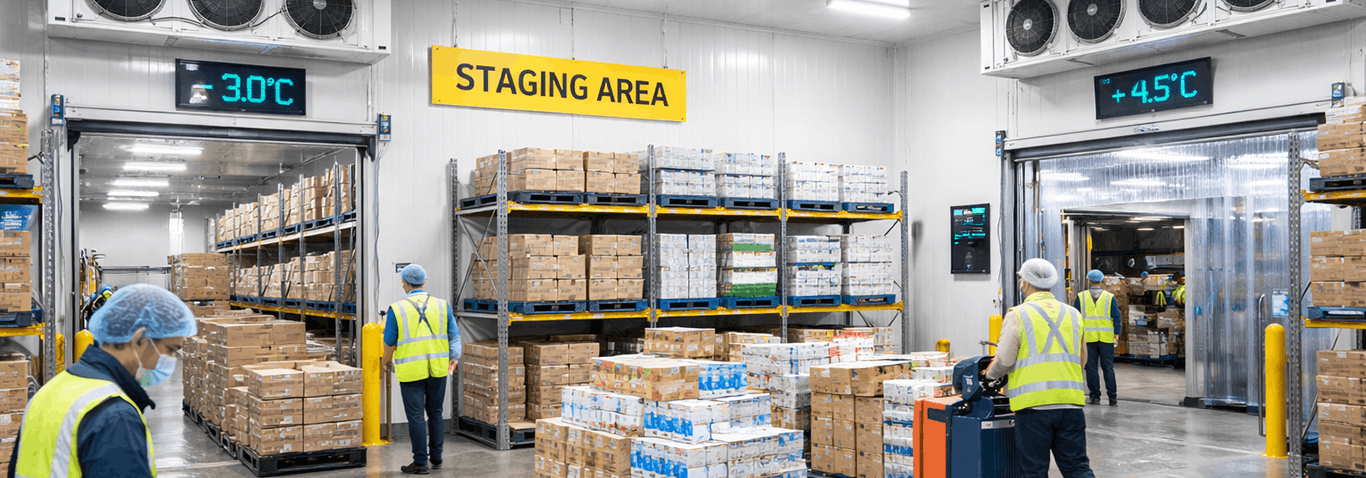
As regional logistics networks become more complex, consolidation and deconsolidation hubs play an important role in maintaining cold chain performance. These facilities handle large volumes of temperature-sensitive goods that arrive from different sources, are sorted, and then sent out to various destinations within tight timelines.
In this setting, walk-in chiller design needs to do more than maintain temperature. It must support fast movement of goods, reduce handling time, and keep conditions stable even with frequent access and mixed cargo.
For logistics operators in Singapore and the wider region, a well-designed walk-in chiller supports smoother operations and helps prevent costly temperature deviations.
This article looks at how walk-in chiller planning supports consolidation hubs, focusing on temperature control during handling, reducing dwell time, and designing for mixed-load environments.
Understanding Cold Chain Challenges in Consolidation Hubs
Unlike traditional cold storage facilities, consolidation hubs are fast-moving environments. Goods such as chilled food, pharmaceuticals, and specialty chemicals may only remain in storage briefly before being dispatched.
Common challenges include:
- Frequent door openings during peak operations
- Handling multiple product types at the same time
- Changing inbound and outbound schedules
- Limited time to correct temperature fluctuations
Without proper planning, these factors can affect product quality and increase operational risk.
Temperature Control During Freight Consolidation
Maintaining stable temperatures during consolidation is one of the main challenges. As goods are staged and moved, the chiller is exposed to warmer surrounding air.
Strategic Zoning Within Walk-In Chillers
Modern designs often include internal zoning:
- Inbound staging areas for newly received goods
- Short-term holding zones for outbound grouping
- Dispatch zones located near loading areas
Separating these functions helps limit the impact of frequent handling on overall temperature stability.
Airflow-Focused Coldroom Design
Airflow plays a key role in maintaining consistent conditions:
- Ceiling-mounted evaporators positioned for even air distribution
- Return air placement that removes heat quickly
- Layout planning that avoids blocked airflow from stacked pallets
A Singapore-based logistics hub handling chilled dairy products adjusted its airflow design by repositioning evaporators and controlling pallet heights. This reduced temperature variation by over 40 percent during peak operations.
Reducing Dwell Time in Walk-In Chillers
In consolidation hubs, shorter dwell time reduces exposure to temperature fluctuations.
Layout Planning for Faster Movement
Efficient layouts support quick handling:
- Clear forklift paths aligned with loading docks
- Direct routes from inbound to outbound areas
- Reduced cross-traffic between teams
This improves flow and keeps goods within controlled conditions.
Door Technology and Access Control
Frequent access is unavoidable, but its impact can be managed:
- High-speed insulated doors
- Strip curtains or air curtains at entry points
- Interlocked doors that prevent multiple openings
A logistics operator introduced rapid-roll doors and air curtains in its facility. This improved temperature recovery and allowed faster throughput during peak periods.
Coldroom Design for Mixed-Load Logistics Facilities
Consolidation hubs typically handle a mix of products with different requirements.
Managing Mixed Temperature Needs
Even within a standard chilled range, internal planning must consider:
- Products that are sensitive to short temperature changes
- Items requiring tighter control within the range
- Packaging that affects thermal stability
Design approaches include:
- Placing sensitive goods away from door areas
- Using insulated covers for vulnerable items
- Installing sensors across different zones
Preventing Cross-Contamination
Coldroom layouts should also support hygiene and separation:
- Dedicated zones for food and non-food cargo
- Separate areas for pharmaceuticals or medical products
- Surfaces designed for easy cleaning
A regional hub handling both fresh produce and pharmaceuticals introduced modular racking and zoned storage. This improved audit readiness while maintaining flexibility.
Designing for Operational Flexibility
Consolidation hubs need to adapt to changing cargo volumes and requirements.
Modular Cold Room Construction
Modular coldroom systems allow operators to:
- Adjust internal layouts as demand changes
- Expand storage capacity when needed
- Integrate new systems without major disruption
Integration with Warehouse Systems
Walk-in chillers should connect with warehouse and monitoring systems to provide:
- Real-time visibility of temperature conditions
- Faster response to changes during peak activity
- Better reporting for audits and clients
Case Example: High-Throughput Cold Chain Hub
A multi-client logistics operator in Singapore redesigned its walk-in chiller to support higher consolidation volumes for chilled FMCG products. The project included:
- Realigning the layout with dock flow
- Installing high-speed doors and improving airflow
- Creating flexible staging zones for different customers
After implementation, the facility achieved shorter dwell times, fewer temperature alerts, and higher throughput without increasing its chiller size.
Walk-In Chiller Design for Modern Logistics Hubs
Consolidation and deconsolidation hubs place high demands on walk-in chiller systems. Stable temperature control during handling, reduced dwell time, and the ability to manage mixed loads are all important for maintaining cold chain performance.
With the right layout, airflow planning, and flexible construction, walk-in chillers can support both efficiency and product protection in fast-moving logistics environments.
Kiat Lay, a cold room contractor in Singapore, provides industrial coldroom solutions designed for logistics operations, helping businesses improve performance and maintain reliable cold chain conditions.