


When Should Hotels Repair, Renovate or Replace an Existing Cold Room?
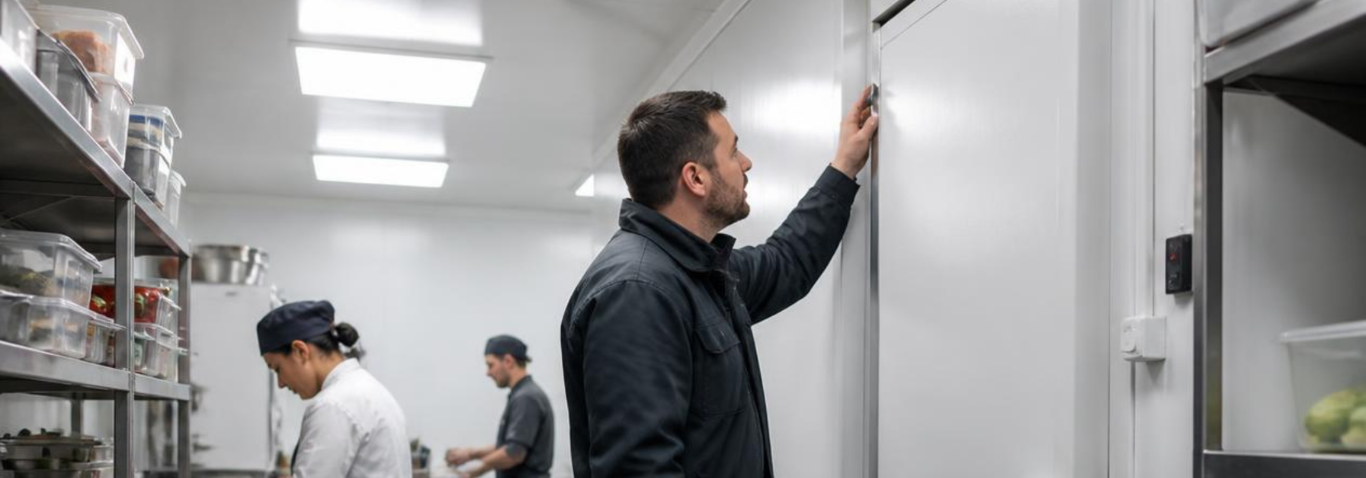
A hotel cold room can remain in operation for many years, but the needs of the property may change long before the room reaches the end of its useful life. A hotel may add restaurants, increase banquet activity, expand room service or simply handle more ingredients than it did when the cold room was first installed.
As the operation changes, an existing cold room may begin to show signs that its original design no longer matches current requirements. Temperature fluctuations, damaged insulation, recurring refrigeration faults or limited storage capacity can all create pressure on kitchen operations. For an existing hotel cold room, these same considerations can help determine whether the most practical solution is a repair, renovation or complete replacement.
Start With the Condition of the Existing Cold Room
Before deciding to replace a cold room, hotels should first assess the condition of the complete system. A refrigeration fault may be relatively straightforward to repair, while repeated failures combined with damaged insulation and deteriorating doors could indicate a wider problem.
The assessment should consider the refrigeration system, insulated panels, doors, flooring, drainage, temperature controls and internal storage arrangement. It should also consider how the room is currently being used and whether the hotel’s storage requirements have changed since the original installation. Looking at these factors together provides a better basis for deciding whether a targeted repair is sufficient or whether the room would benefit from a more substantial upgrade.
When Repair May Be the Better Option
Repair can make sense when the main structure of the cold room remains in good condition and the problem is limited to specific components. A hotel may experience a refrigeration fault, damaged door seal, malfunctioning thermostat or drainage issue without needing to replace the entire room.
Common repair requirements can include refrigeration components, refrigerant issues, electrical faults, temperature controls, door seals and other individual parts. Addressing these issues early can restore performance while avoiding unnecessary construction work.
Kiat Lay provides Cool Room Repair and Cold Room Maintenance Services covering preventive maintenance, emergency repairs, component replacement and system diagnostics. Regular servicing can help hotels identify developing issues before they affect storage conditions or require more extensive intervention. For hotels, repair can therefore remain a practical option when the existing cold room is fundamentally suitable for the property’s current operation.
When Renovation May Make More Sense
Renovation becomes more appropriate when the cold room is still usable but several aspects no longer support the hotel’s current operation. An older room may have damaged insulation, an inefficient internal arrangement or storage configuration that makes it difficult for kitchen staff to access ingredients. The refrigeration system may still function, but the overall room may no longer provide the efficiency or accessibility required by the hotel.
Renovation can address several of these issues without necessarily starting from scratch. Kiat Lay’s Custom Cold Room service includes renovation of existing cold rooms, replacement of old insulation, repairs to damaged areas and internal remodelling to make the space more workable. This can be particularly useful for hotels operating within existing buildings where constructing a completely new cold room could require more space or cause greater disruption.
Signs That an Existing Cold Room May Need More Than a Repair
Hotels can look at several operational signs when reviewing whether an existing cold room still meets their needs. Recurring temperature fluctuations, increasing energy consumption and repeated refrigeration faults may indicate that individual repairs are no longer addressing the underlying problem.
The physical condition of the room also matters. Condensation around panels or doors, damaged insulation, deteriorating joints and persistent frost or ice accumulation can all justify a more detailed assessment.
Storage capacity should be considered at the same time. A cold room may be functioning correctly from a refrigeration perspective but still be unsuitable if it has become too small for the hotel’s current inventory.
Repair, Renovate or Replace?
The decision should be based on the condition of the existing room as well as the hotel’s future requirements.
|
Situation |
Potential Approach |
Why |
|
One component has failed but the room is otherwise in good condition |
Repair |
Restores the affected system without major construction |
|
Insulation, doors or internal layout need improvement |
Renovate |
Addresses several limitations while retaining the existing room |
|
Capacity has become insufficient |
Expand or Replace |
Provides additional storage suited to current demand |
|
Repeated failures affect multiple systems |
Renovate or Replace |
A broader solution may be more practical than repeated repairs |
|
The hotel’s operation has changed significantly |
Redesign or Replace |
Allows the cold room to match the new workflow |
The table should not be treated as a fixed rule. The appropriate solution depends on the age and condition of the cold room, available space, operational requirements and expected future demand.
Capacity Should Be Reviewed Alongside Condition
A hotel may have a well-maintained cold room that has simply become too small for the property’s current operation. Adding more storage capacity can then be more important than repairing existing equipment.
Hotels should review inventory movement, peak service periods and the number of kitchen operations using the room. A property serving several restaurants or handling frequent banquet events may experience significant increases in inventory before busy service periods.
If the cold room repeatedly reaches capacity, the issue may be one of design and storage capacity rather than refrigeration failure alone. In such cases, a new or expanded cold room may provide a more suitable long term solution.
Layout Can Become a Problem Even When Equipment Still Works
An older cold room may continue maintaining temperature effectively while becoming increasingly difficult to use. Shelving may no longer suit the size of stored products, frequently used ingredients may be difficult to reach and storage areas may not reflect current kitchen workflow. These problems can increase staff movement and make busy service periods harder to manage.
Renovation provides an opportunity to review the internal arrangement while addressing other issues such as insulation or refrigeration. Kiat Lay’s custom cold room planning process considers factors including room dimensions, shelving, location, insulation and doors before installation begins. This approach can help ensure that an upgraded cold room supports how the hotel actually operates rather than simply replacing ageing equipment.
Maintenance History Can Help Guide the Decision
Hotels should also review their maintenance history before deciding whether to repair or replace a cold room. If the same component has required repeated repairs, or if temperature issues continue after several service visits, the underlying problem may be more extensive than originally expected.
Maintenance records can also show whether repair frequency and downtime are increasing. This information provides useful context when comparing the cost and disruption of continued repairs against renovation or replacement.
Regular maintenance can also help hotels identify these trends earlier. Kiat Lay recommends regular checks of major cold room components to identify problems before they develop into more expensive repairs.
Minimising Disruption During an Upgrade
Cold room work can affect hotel kitchen operations, so any renovation or replacement project needs to be planned around the property’s schedule. Hotels may have quieter periods that provide more suitable windows for construction, while temporary storage may need to be considered if existing inventory cannot remain inside the room during the work. The scope should also be clearly defined before construction begins so that refrigeration, insulation, doors, flooring and internal layout can be coordinated properly.
For properties with multiple cold rooms, work may also be phased so that not all refrigerated storage areas are taken offline at the same time. This can help maintain essential kitchen operations while improvements are being carried out.
Combining Repair, Renovation and New Cold Storage
The decision does not always have to be limited to one option. A hotel may repair the refrigeration system in one existing room while renovating another or adding a new cold room to support increased capacity.
Kiat Lay provides Walk In Cold Rooms for businesses requiring dedicated temperature controlled storage, while its custom cold room and maintenance services can support upgrades to existing facilities. Combining different solutions can allow a hotel to address immediate problems while planning for longer term storage requirements.
Choosing the Right Solution for the Hotel
There is no universal answer to whether a hotel should repair, renovate or replace its cold room. The decision depends on the condition of the existing system, storage capacity, kitchen workflow, building constraints and future requirements.
A targeted repair may be enough for a healthy cold room with one failing component. Renovation may be more appropriate where the structure remains usable but insulation, layout or equipment need improvement. Replacement becomes more attractive when the existing room can no longer support the hotel’s operational requirements efficiently.
Kiat Lay provides a one-stop cold room solution covering engineering, procurement, minor construction and renovation, allowing different aspects of a project to be coordinated through one contractor.
Conclusion
An aging hotel cold room should not automatically be replaced, but repeated repairs should not continue indefinitely without reviewing the wider condition of the system. Refrigeration performance, insulation, doors, storage capacity and kitchen workflow all need to be considered when deciding the appropriate next step.
For some hotels, a targeted repair can restore reliable operation. Others may benefit from renovation that improves insulation, internal layout and accessibility, while properties with significantly changed requirements may need a completely new cold room.
Contact Kiat Lay to discuss your existing hotel cold room or [request a consultation] to determine whether repair, renovation or replacement is the more practical solution for your property.