


Planning Cold Rooms Around Production Scheduling Instead of Storage Capacity
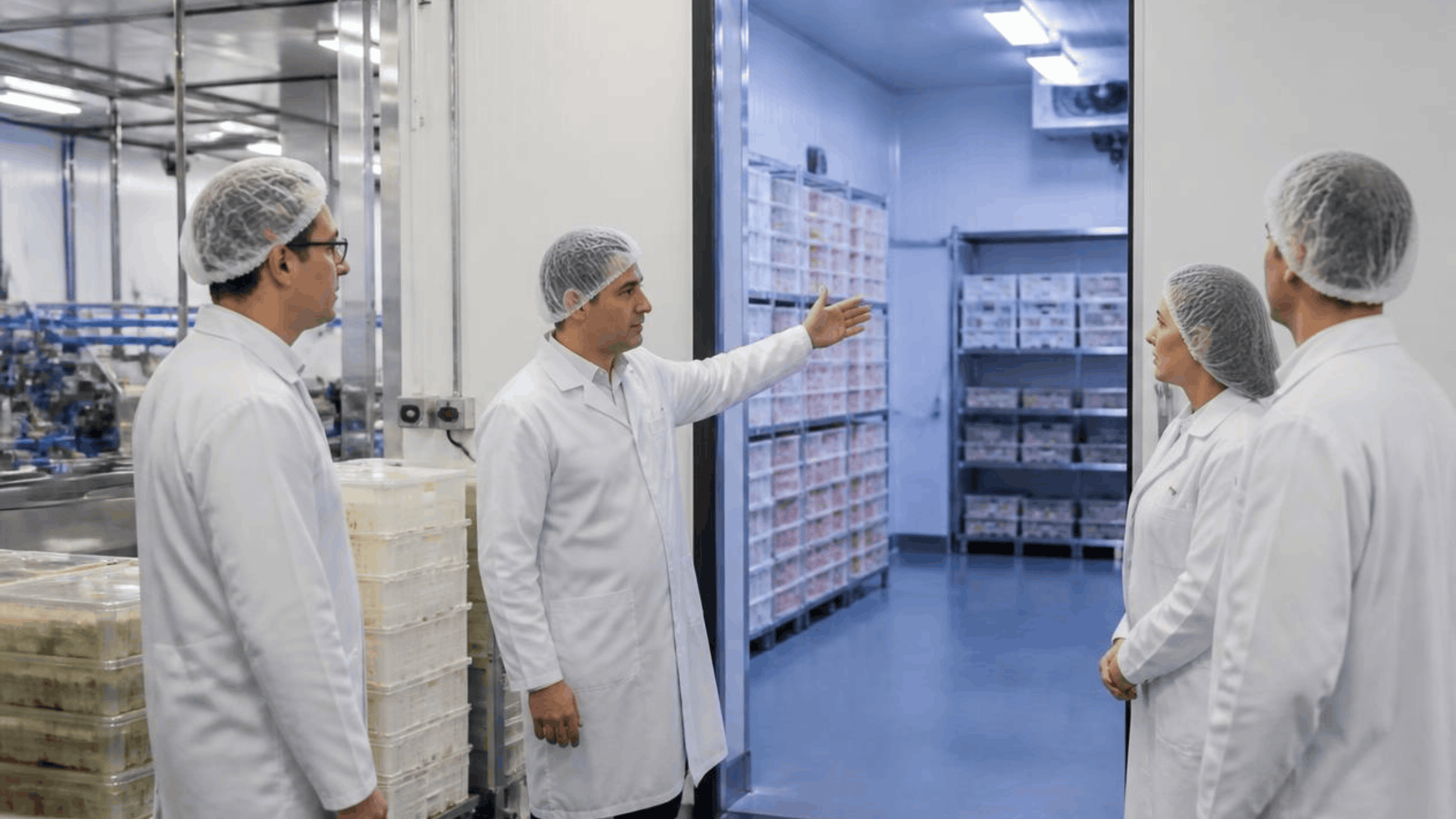
When planning a new cold room, many food manufacturers begin by estimating how much refrigerated storage they require. Questions about pallet positions, floor area and refrigeration capacity often dominate early project discussions because they appear to provide a straightforward way to determine the size of the facility. While storage capacity is certainly important, it rarely provides the complete picture. In practice, cold rooms operate as part of a much larger manufacturing process. Ingredients arrive according to delivery schedules, production lines operate at different speeds, packaging activities follow defined timelines and finished products are prepared for dispatch throughout the day. If refrigerated storage is planned without considering these operational activities, businesses may still experience workflow bottlenecks even when sufficient storage capacity is available.
An effective food production cold room design should therefore begin with production scheduling rather than storage calculations alone. Understanding when products enter and leave refrigerated storage often provides more valuable design information than simply measuring the volume of inventory that needs to be stored.
This planning approach becomes increasingly important as manufacturers introduce additional production lines, increase operating shifts or expand into new product categories. Refrigerated storage should support the rhythm of production rather than becoming a waiting area for products that cannot move efficiently through the facility.
Production Schedules Influence Cold Room Requirements
Every manufacturing facility operates according to its own production schedule. Some factories process large batches during a single daytime shift, while others maintain continuous production throughout the day and night. These operating patterns directly influence how refrigerated storage is used. A facility producing ready meals may require ingredients to be delivered early each morning before moving through preparation, cooking, cooling, packaging and refrigerated storage within the same day. Another manufacturer producing frozen products may hold finished goods for longer periods while waiting for export shipments. Although both businesses require refrigerated storage, their operational requirements are significantly different.
Designing both facilities around identical storage calculations would overlook the differences in product movement, inventory turnover and production timing. Reviewing production schedules before determining the cold room layout allows businesses to develop refrigeration systems that support their actual manufacturing processes rather than relying on generic storage assumptions.
Cold Rooms Should Support Continuous Product Flow
Efficient manufacturing depends on maintaining consistent movement between production stages. Whenever products remain waiting between processing, packaging and storage, operational efficiency begins to decline. Cold rooms should therefore be positioned and configured to minimise unnecessary handling throughout the production process. Frequently accessed ingredients should remain close to production areas, while finished goods storage should allow efficient transfer to dispatch operations without interrupting ongoing manufacturing activities.
Consider a manufacturer operating two packaging lines with different production capacities. If both lines depend on the same access point into refrigerated storage, congestion may occur even though the cold room itself has sufficient capacity. The challenge is not the amount of storage available but how products move between different operational stages.
Planning refrigerated storage around production scheduling allows manufacturers to reduce waiting time, improve labour productivity and maintain smoother manufacturing workflows.
Different Production Patterns Require Different Cold Room Strategies
Production schedules are rarely identical across food manufacturing facilities. Some businesses operate seasonal campaigns with significant increases in output, while others experience consistent demand throughout the year. Certain manufacturers produce multiple product categories within the same shift, whereas others dedicate individual production lines to specific products.
These differences influence how refrigerated storage should be planned. Facilities with frequent product changeovers may require flexible storage zones that support faster inventory movement. Manufacturers operating several production shifts may benefit from layouts that simplify replenishment activities while reducing congestion between outgoing and incoming inventory. Instead of applying the same cold room configuration to every project, businesses should evaluate how production scheduling affects storage demand at different times of the day. This operational perspective creates refrigeration facilities that continue supporting efficient manufacturing as production volumes increase.
Aligning Cold Room Capacity With Production Schedules
Once production schedules have been analysed, the next step is ensuring that refrigerated storage can support those activities without creating unnecessary delays. Rather than calculating storage requirements based solely on the maximum inventory volume, manufacturers should review how products enter and leave the cold room throughout the production cycle.
For example, ingredients delivered in the early morning may only remain in refrigerated storage for a few hours before entering production. Finished products, on the other hand, may stay in storage until quality inspections are completed or transport vehicles arrive for collection. These different storage durations influence the amount of refrigerated space required at different times of the day.
Understanding these operational patterns helps businesses avoid oversizing or undersizing their cold rooms. It also creates opportunities to improve product flow, allowing refrigerated storage to support production efficiency instead of becoming a temporary holding area between manufacturing stages.
Comparing Production Schedules With Cold Room Planning Priorities
Cold room planning should reflect how manufacturing activities are organised rather than applying the same storage approach to every facility.
|
Production Activity |
Cold Room Planning Consideration |
Operational Benefit |
|
Receiving raw materials |
Provide efficient access from receiving to refrigerated storage |
Reduces product handling and unloading time |
|
Daily production scheduling |
Position ingredients according to production sequence |
Improves workflow and reduces travel distance |
|
Packaging operations |
Allow smooth transfer from production to finished goods storage |
Prevents congestion between departments |
|
Quality inspection |
Allocate temporary refrigerated holding areas where required |
Supports product control without interrupting production |
|
Dispatch preparation |
Separate finished goods awaiting collection |
Improves inventory organisation and loading efficiency |
|
Future production expansion |
Maintain flexibility for additional production lines |
Reduces future redesign requirements |
Each manufacturing facility follows a different production schedule, so these planning considerations should always be adapted to operational requirements rather than copied from another project.
Recognising When Standard Cold Rooms Are No Longer Enough
Many food manufacturers begin with standard refrigerated storage because it satisfies their initial operational requirements. As the business grows, however, production processes often become more complex than the original cold room was designed to support.
Introducing additional production lines, expanding product ranges or increasing manufacturing shifts may result in greater product movement throughout the day. Staff may spend more time transferring inventory between departments, while temporary storage areas gradually become permanent parts of the production process.
These operational changes often indicate that the business has outgrown a standard cold room configuration. Instead of continually adapting existing storage areas, manufacturers should review whether a customised solution can better support current workflows and future operational objectives.
Recognising these changes early allows businesses to plan improvements before productivity and food safety are affected by increasingly inefficient storage arrangements.
Designing Cold Rooms Around Manufacturing Operations
Every food manufacturing facility operates differently. Production schedules, product characteristics and factory layouts all influence how refrigerated storage should be designed. For this reason, cold room planning should begin with operational requirements rather than relying on standard layouts or storage capacity calculations alone.
Kiat Lay provides Custom Cold Room solutions that are designed around each manufacturer’s production processes, helping businesses improve workflow, product handling and long term operational efficiency. For larger manufacturing facilities, Industrial Cold Rooms Storage Design For Multi Story Factories supports integrated refrigeration planning that aligns with production expansion, warehouse operations and future business growth.
Conclusion
An effective food production cold room design supports much more than refrigerated storage. By planning around production schedules instead of storage capacity alone, manufacturers can improve workflow, reduce unnecessary handling and develop facilities that remain efficient as manufacturing operations continue to expand.
Taking the time to understand how products move through each stage of production allows refrigerated storage to become an integrated part of the manufacturing process rather than a separate operational function. Contact Kiat Lay today to discuss your food manufacturing requirements or request a consultation to develop a customised cold room solution that supports your production schedules, operational objectives and future expansion plans.