


ASRS Warehouse System: What It Is and Why It Matters for Cold Storage in Singapore
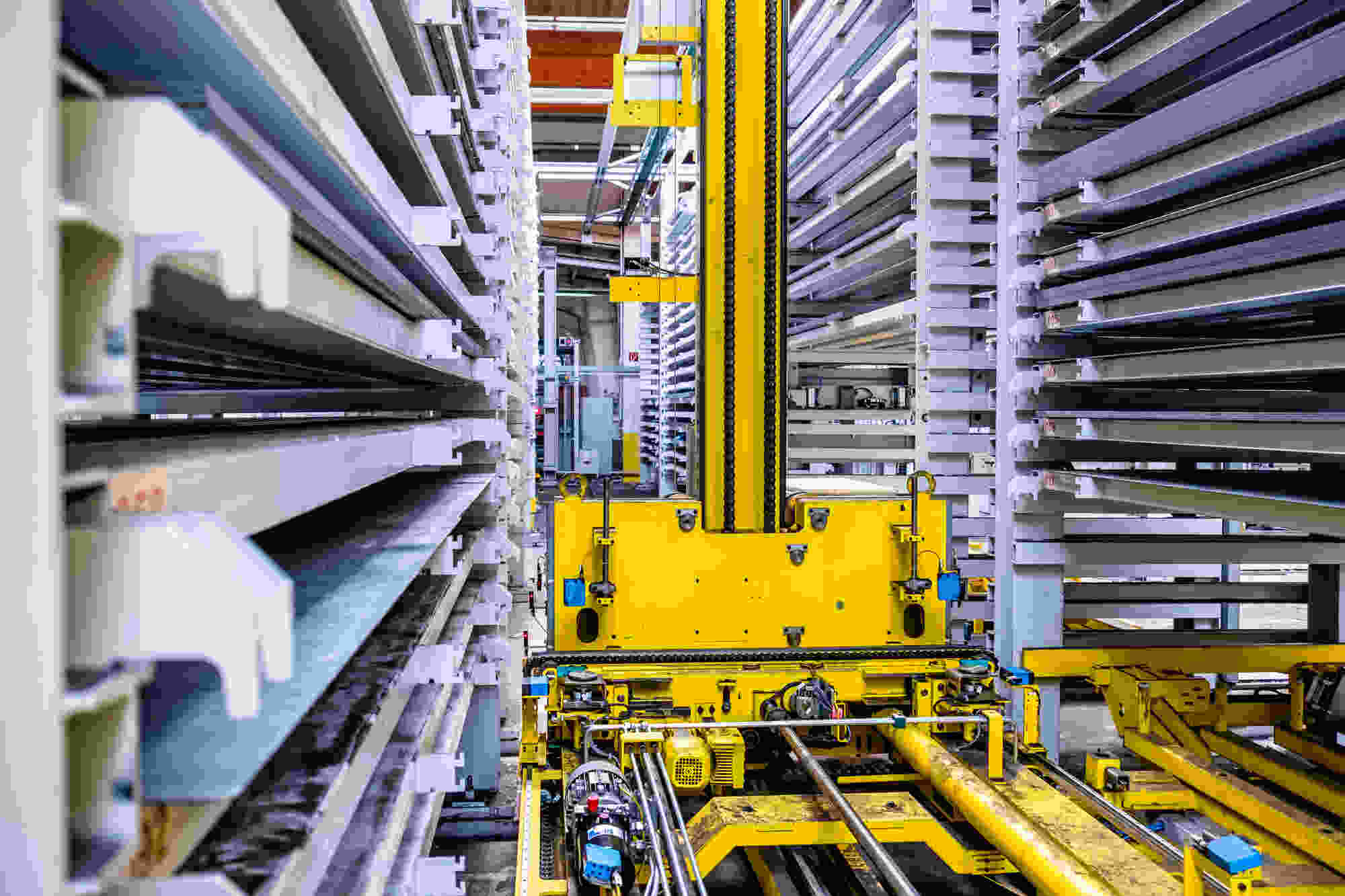
An ASRS warehouse system (automated storage and retrieval system) is a computer-controlled setup that uses cranes, shuttles, or robotic carriers to store and retrieve goods from high-density racking without manual intervention. In Singapore, ASRS warehouses are increasingly common in cold storage, food manufacturing, pharmaceutical logistics, and e-commerce fulfillment, where vertical space optimization and round-the-clock operations give businesses a measurable edge over traditional warehouse layouts.
This article explains how an ASRS warehouse system works, where it outperforms manual warehousing, and why the combination of ASRS and cold room infrastructure is especially effective in Singapore’s operating environment.
How an ASRS Warehouse System Works
At its core, an ASRS warehouse consists of three components: a racking structure, a carrier device, and a warehouse control system (WCS).
The racking structure holds inventory in defined storage locations, often reaching heights of 30 metres or more. The carrier device, which may be a stacker crane, shuttle robot, or vertical lift module, moves goods to and from these locations. The WCS acts as the brain of the operation: it assigns storage positions, directs the carrier, and maintains a real-time digital record of every item in the facility.
When an order is placed or stock needs replenishing, the system identifies the optimal retrieval path, dispatches the carrier, and delivers the goods to a picking station. The entire cycle, from request to delivery at the workstation, can take under 60 seconds depending on the system configuration.
There are several types of ASRS, each suited to different load profiles:
- Unit-load ASRS handles full pallets and heavy loads, commonly used in manufacturing and bulk storage.
- Mini-load ASRS manages smaller containers, totes, and cartons, suited for spare parts and high-SKU environments.
- Shuttle-based ASRS uses independent robotic shuttles on rails for high-speed retrieval across multiple levels.
- Cube-based ASRS (such as AutoStore) stacks bins in a dense grid with robots operating on top, offering the highest storage density per square metre.
- Vertical lift modules (VLMs) store trays in an enclosed column and deliver them to an operator window, ideal for smaller parts and tools.
The right type depends on your load size, throughput requirements, available ceiling height, and operating temperature.
Key Benefits of an ASRS Warehouse System
Higher Storage Density
An ASRS warehouse can use up to 85% of the available cubic space, compared to roughly 50% in a conventional warehouse with standard aisle widths (source: Material Handling Institute). Because automated carriers do not need the clearance that forklifts require, aisles can be narrower and racking can extend much higher. For businesses operating in Singapore, where industrial land is scarce and leases are tied to JTC plot ratios, maximising vertical storage is not just efficient but often necessary.
Faster Throughput
Automated cranes and shuttles move goods at consistent speeds without the slowdowns caused by shift changes, fatigue, or manual search time. High-performance ASRS installations can handle several hundred pallet movements per hour, and shuttle-based systems can scale throughput further by adding more carriers to the same racking structure.
Near-Perfect Inventory Accuracy
Every movement in an ASRS warehouse is logged digitally. Items are barcode-scanned or RFID-tagged at entry and tracked through every storage and retrieval event. This creates a real-time inventory record that virtually eliminates misplaced stock, phantom inventory, and manual counting errors. For industries with strict traceability requirements, such as food and pharmaceuticals, this level of accuracy supports compliance with SFA and HSA regulations.
Reduced Labour Dependency
An ASRS replaces much of the walking, searching, and heavy lifting that manual warehousing requires. Staff are redeployed to higher-value tasks such as quality inspection, exception handling, and system monitoring. In Singapore’s tight labour market, where warehouse operators face persistent manpower shortages, automation provides a way to maintain or increase output without proportionally increasing headcount.
Improved Workplace Safety
Removing workers from repetitive forklift operation, high-bay retrieval, and heavy manual handling significantly reduces the risk of workplace injuries. Under Singapore’s Workplace Safety and Health (WSH) Act, employers have a legal duty to minimise hazards. ASRS systems address this directly by keeping workers away from the most physically demanding and accident-prone warehouse tasks.
Energy Efficiency in Temperature-Controlled Environments
This benefit is often overlooked but is significant for cold room operations. An ASRS warehouse generates less internal heat than a manually operated one because it reduces the number of workers, forklifts, and door-opening cycles inside the refrigerated space. Fewer door openings means less warm, humid air enters the cold room, reducing the load on refrigeration compressors. In some configurations, ASRS cold rooms can operate with as little as one-third of the refrigeration capacity required in a non-automated cold room of equivalent volume.
ASRS vs Traditional Warehousing: A Comparison
|
Factor |
ASRS Warehouse |
Traditional Warehouse |
|
Storage density |
Up to 85% cube utilisation; narrow aisles, high-rise racking |
Around 50% cube utilisation; wide aisles for forklifts |
|
Throughput speed |
Hundreds of pallet movements per hour; 24/7 capable |
Limited by shift schedules, operator speed, and fatigue |
|
Inventory accuracy |
Near 100% with barcode/RFID tracking on every movement |
Subject to manual counting errors and misplacement |
|
Labour requirement |
Minimal operators; staff focus on monitoring and exceptions |
Large workforce for picking, packing, and material handling |
|
Upfront cost |
Higher initial investment (racking, carriers, WCS, installation) |
Lower setup cost with standard racking and forklifts |
|
Operating cost over time |
Lower per-unit cost at scale due to labour and error savings |
Higher per-unit cost as labour and error costs accumulate |
|
Cold storage suitability |
Excellent; reduces human exposure to extreme cold, fewer door openings |
Challenging; staff need frequent breaks, door traffic raises temps |
|
Scalability |
Modular systems allow capacity expansion without full redesign |
Expansion often requires additional floor space or a new facility |
|
Flexibility |
Can be reconfigured via software for new product lines or demand shifts |
Physical rearrangement is time-consuming and disruptive |
The right choice depends on your throughput volume, product profile, available space, and whether temperature-controlled storage is part of your operations. A thorough cost-benefit analysis that accounts for both upfront investment and long-term operating savings is essential before committing to either approach.
Why ASRS Is Especially Effective for Cold Storage in Singapore
Singapore’s tropical climate creates a unique challenge for cold storage operators. Ambient temperatures regularly exceed 30°C with high humidity, which means every time a cold room door opens, warm moist air rushes in. The refrigeration system must work harder to bring temperatures back down, consuming more energy and placing greater mechanical stress on compressors.
An ASRS warehouse addresses this problem at the source. Automated systems drastically reduce the number of times workers need to enter and exit the cold room, which in turn reduces the frequency of door openings. The result is more stable internal temperatures and lower energy bills.
There are additional advantages specific to cold environments:
Worker welfare. Cold rooms operate at temperatures as low as -35°C. Under Singapore’s WSH Act, employers must ensure that working conditions do not pose unreasonable health risks. Prolonged exposure to sub-zero temperatures can lead to cold stress, reduced dexterity, and slower reaction times. An ASRS keeps workers outside the freezing zone, allowing them to operate the system from a temperature-controlled workstation.
Vertical construction and land savings. Singapore’s limited industrial land, governed by JTC lease terms and plot ratio controls, makes horizontal warehouse expansion difficult and expensive. ASRS enables multi-storey cold room designs that store more goods on the same footprint. Taller, narrower cold rooms also have a smaller roof area exposed to external heat gain, which improves energy efficiency.
Heat compensation from machinery. ASRS equipment generates heat during operation. When a cold room is designed around an ASRS structure, the refrigeration system must account for this additional heat load. This is a technical challenge that requires precise thermal modelling during the design phase, not something that can be retrofitted easily.
Is an ASRS Warehouse System Right for Your Business?
An ASRS warehouse system is not the right fit for every operation. It involves a significant capital investment and requires careful planning around your facility layout, product profile, and throughput targets. Consider whether the following conditions apply to your business:
You handle high volumes of goods regularly. ASRS delivers the strongest ROI in facilities that process large quantities of stock daily. If your current warehouse struggles with bottlenecks during peak periods, automation can smooth out throughput.
You are running out of floor space. If expanding horizontally is not an option, whether due to land constraints, lease terms, or cost, vertical storage through ASRS may be the most practical path to additional capacity.
You operate temperature-controlled storage. The combination of reduced door openings, lower energy consumption, and improved worker welfare makes ASRS particularly compelling for cold room and freezer room operations.
You need tighter inventory control. If your current system relies on manual stock counts or struggles with misplaced goods, the real-time tracking built into ASRS can eliminate these issues.
You face labour shortages. Automation reduces your dependency on a large warehouse workforce, which is especially relevant in Singapore’s competitive labour market.
If several of these conditions apply, the long-term savings in labour, energy, space, and error reduction can deliver a strong return on the initial investment. Industry benchmarks suggest that many ASRS installations achieve ROI within two to five years, depending on system complexity and operational scale.
Get a Cold Room Built for Your ASRS System
Planning a cold room around an ASRS structure demands precision. The refrigeration design must deliver uniform temperature distribution across every level of the racking structure while compensating for the heat generated by automated machinery. Insulation, vapour barriers, and floor loading all need to be engineered for the specific ASRS configuration.
At Kiat Lay, we specialise in designing and building cold rooms around ASRS warehouse structures. Our process includes a detailed assessment of your temperature requirements, an evaluation of the ASRS structure dimensions and traffic patterns, and a refrigeration design that accounts for machinery heat output and inventory turnover. Learn more about our ASRS cold room solutions or read about how to integrate ASRS systems with cold rooms for maximum efficiency.
To discuss your project or request a quote, contact us at (65) 6793 3313 or enquiry@kiatlay.com.sg.
Frequently Asked Questions
What does ASRS stand for?
ASRS stands for automated storage and retrieval system. It refers to any computer-controlled system that automatically places goods into storage and retrieves them when needed, using cranes, shuttles, robots, or vertical lift modules.
How much does an ASRS warehouse system cost in Singapore?
Costs vary significantly depending on the type of system, storage height, number of aisles, throughput requirements, and whether the facility includes temperature-controlled storage. A basic vertical lift module installation may start from a few hundred thousand dollars, while a full-scale rack-clad ASRS cold room can run into the millions. The key consideration is total cost of ownership, including the labour, energy, and error savings that accumulate over the system’s lifespan.
Can an ASRS operate in a cold room or freezer?
Yes. ASRS systems are widely used in cold rooms operating at temperatures from 0°C down to -35°C. Automated operation reduces the need for workers to enter the freezing environment and minimises the door-opening cycles that drive up refrigeration costs. The ASRS equipment itself must be specified for low-temperature operation, and the cold room design must account for the heat generated by the machinery.
How long does it take to see ROI on an ASRS investment?
Most businesses see ROI within two to five years. The timeline depends on factors such as labour cost savings, throughput improvements, error reduction, and energy savings in temperature-controlled facilities. Higher-volume operations typically reach payback faster.
Does Kiat Lay supply the ASRS equipment?
Kiat Lay is a cold room specialist, not an ASRS equipment supplier. Our role is to design and build the cold room infrastructure around your ASRS structure, ensuring optimal temperature control, energy efficiency, and structural integrity. We work alongside your ASRS vendor to deliver an integrated solution.