


Planning a Pharmaceutical Cold Room Expansion Without Disrupting Existing Storage
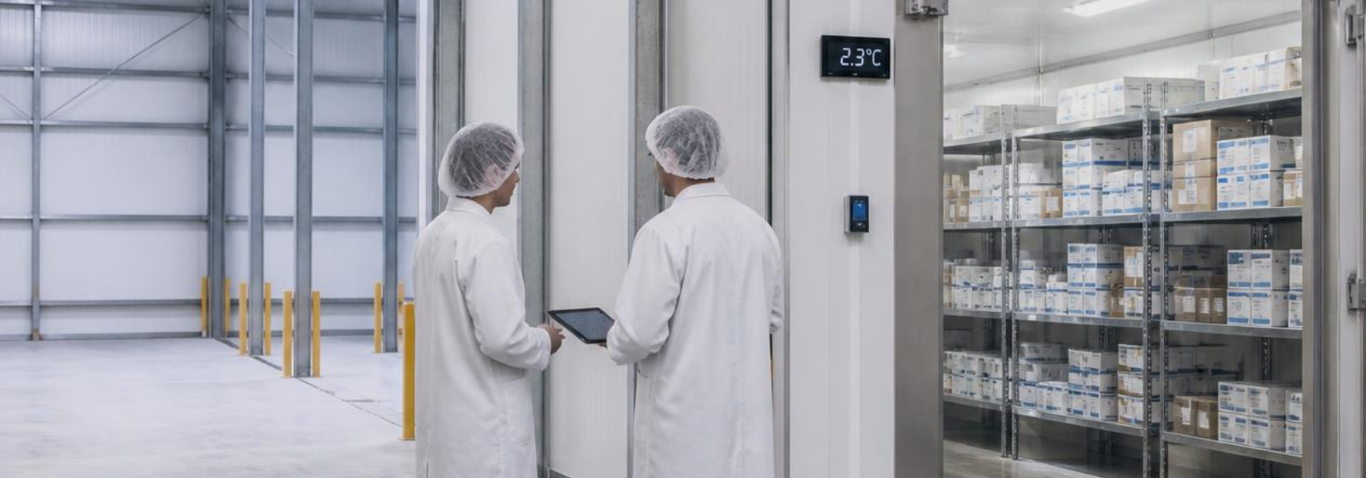
Pharmaceutical businesses may eventually reach a point where their existing cold storage is no longer sufficient. Inventory volumes can increase, new products may be introduced, or additional customers and distribution requirements can place greater pressure on refrigerated space. When this happens, adding capacity may appear straightforward, but pharmaceutical cold storage cannot simply be expanded without considering the products and operations already inside the facility.
Existing pharmaceutical inventory may need to remain within controlled conditions throughout the project. Staff may still need to receive, pick and dispatch products, while temperature monitoring and access procedures continue as normal. Any expansion work therefore needs to account for the operational environment as well as the physical requirements of the new cold room.
For pharmaceutical operators, the goal is not simply to build a larger cold room. The expansion should protect existing inventory, maintain reliable temperature control and create a practical storage environment that can support future requirements.
Why Pharmaceutical Cold Storage May Need to Expand
Cold storage requirements can change for several reasons. A pharmaceutical manufacturer may increase production volumes, while a distributor may take on additional clients or introduce new product categories that require controlled storage.
Growth can also occur gradually. An existing cold room may operate effectively for years before storage levels begin approaching its practical limit. Once the facility regularly operates close to full capacity, even a relatively small increase in inventory can create congestion.
Common signs that additional capacity may be required include:
- Regularly reaching high storage occupancy
- Limited space for incoming pharmaceutical products
- Difficulty separating different product categories
- Increasing congestion during picking and dispatch
- Products requiring temporary storage outside the main cold room
- Limited flexibility for future inventory growth
These signs should be assessed alongside inventory movement and storage conditions. A facility may have unused floor space but still lack suitable capacity if that space cannot support the required temperature range or workflow.
Expansion Should Begin With the Existing Facility
Before deciding how much additional cold storage to build, the existing facility should be reviewed. The assessment should consider the current cold room dimensions, insulation condition, refrigeration capacity, access points, storage arrangement and available surrounding space. It should also consider how products move between receiving, storage, picking and dispatch.
This is important because an expansion does not always need to take the form of a completely separate cold room. Depending on the building and operational requirements, additional space may be integrated into the existing facility or developed as a separate temperature controlled area.
The condition of the existing refrigeration system is also relevant. If the current system is already operating close to its design capacity, simply adding storage space may not provide the expected result. The additional room may require its own refrigeration capacity or a wider upgrade to the existing system. A proper assessment can therefore help determine whether the project should involve expansion, renovation, additional refrigeration or a combination of these approaches.
Protecting Existing Inventory During Construction
Pharmaceutical inventory cannot simply be treated like ordinary warehouse stock while construction takes place. Products may have strict storage requirements, and temporary exposure to unsuitable conditions can create quality risks. The expansion plan therefore needs to consider how existing inventory will remain protected while work is being carried out. Depending on the project, this may involve completing construction in a separate area first, using temporary storage arrangements or scheduling certain activities during lower volume periods.
The practical approach will depend on the existing facility and the amount of additional space required. A small extension may be handled differently from a major redevelopment involving several temperature controlled zones.
Communication between the construction team and facility operators is also important. Access routes, work areas and product movement need to be coordinated so that construction activities do not interfere unnecessarily with normal pharmaceutical operations.
Phased Expansion Can Reduce Operational Disruption
A phased approach may be appropriate when a pharmaceutical facility cannot afford to stop normal storage operations. Instead of modifying the entire cold room at once, additional storage can potentially be developed in stages. Once the new area is ready and operating correctly, inventory can be moved into the new space before further work begins.
This approach can provide greater flexibility, particularly for facilities that operate continuously or handle high value pharmaceutical inventory. The exact sequence will depend on the building layout, refrigeration system and operational requirements. However, the principle remains the same: separate construction activities from critical storage operations wherever practical. Planning the project in phases can also make it easier to identify issues before the entire facility is affected.
Refrigeration Capacity Needs to Grow With Storage
Adding physical storage space without reviewing refrigeration capacity can create an imbalance within the cold room system. A larger refrigerated area requires the refrigeration system to remove additional heat and maintain the required conditions. The system also needs to account for door openings, product loading, ambient conditions and other operating factors.
For pharmaceutical facilities, this is particularly important because the room may need to maintain a narrow temperature range even when activity increases. The refrigeration assessment should therefore consider the expected inventory volume and traffic after the expansion rather than simply matching the new room size to the existing system.
Other components may also need to be reviewed, including evaporators, condensers, controls and monitoring equipment. If the expansion introduces another temperature zone, that area may require independent refrigeration and control.
Layout Should Be Planned Around the New Capacity
Additional cold storage should improve the operation rather than simply provide more pallet positions. The new area should have a logical relationship with receiving, existing storage, picking and dispatch. If staff need to travel significantly further to retrieve frequently used products, the additional capacity may create new operational inefficiencies. The internal layout should also consider product segregation and storage turnover. Frequently accessed inventory can be positioned where it is easier to retrieve, while lower turnover products can be stored in less active areas.
Where pharmaceutical products have different storage conditions, separate temperature controlled zones may also be required.
|
Planning Consideration |
What the Expansion Should Address |
|
Storage capacity |
Additional inventory requirements |
|
Temperature range |
Product specific storage conditions |
|
Product movement |
Receiving, picking and dispatch routes |
|
Access |
Staff and equipment movement |
|
Monitoring |
Temperature records and alerts |
|
Maintenance |
Access to refrigeration and equipment |
|
Future growth |
Additional capacity or flexible configuration |
The purpose is to make the additional space work as part of the wider pharmaceutical operation rather than treating it as an isolated room.
Existing Cold Rooms May Benefit From Renovation
Expansion is not always the only option. An existing cold room may have inefficient storage arrangements, ageing insulation or refrigeration equipment that no longer matches current requirements. In some cases, improving the existing room alongside adding capacity may provide a more practical long term solution. Renovation can involve replacing damaged insulation, improving internal configurations or addressing refrigeration problems that have developed over time.
Kiat Lay provides Custom Cold Room solutions that can include renovation and remodelling of existing cold rooms, allowing businesses to address current limitations while planning for changing storage requirements. This can be particularly useful where building constraints make a completely new cold storage area difficult to accommodate.
Choosing Between a Separate Room and an Integrated Expansion
The choice between extending an existing cold room and building a separate room depends on the facility. An integrated expansion may make sense when there is suitable adjacent space and the existing layout can accommodate additional capacity without creating operational problems. A separate cold room may be more appropriate when different temperature requirements, product categories or access arrangements need to be kept apart.
Kiat Lay provides Walk In Cold Rooms for businesses that require dedicated temperature controlled storage, while custom solutions can be developed around specific space, inventory and accessibility requirements. The right decision should therefore be based on the existing facility, current inventory and future operational requirements rather than choosing a standard room size.
Maintenance Should Be Considered During Expansion
A new cold room should also be planned for long term maintenance from the beginning. Technicians need practical access to refrigeration components, doors, sensors, drainage systems and other equipment. If the new area is difficult to inspect or service, future maintenance can become more disruptive and potentially increase downtime.
The existing refrigeration system should also be assessed if it will continue serving part of the expanded facility. Any ageing components or recurring issues should be identified before the expansion is completed.
Kiat Lay provides Cool Room Repair and Cold Room Maintenance Services covering scheduled maintenance, component repair, system diagnostics and emergency support. Kiat Lay also offers cold room rental solutions to meet temporary or short-term cold storage needs. These services allow businesses to address both immediate storage requirements and ongoing maintenance alongside the design and installation of expanded cold storage systems.
Conclusion
Expanding pharmaceutical cold storage requires more planning than simply adding refrigerated space. Existing inventory, ongoing operations, refrigeration capacity, product movement and future storage requirements all need to be considered before construction begins.
A well planned expansion can provide additional capacity while allowing the existing facility to continue operating with minimal disruption. It can also create an opportunity to improve storage layout, refrigeration performance and long term maintenance access at the same time.
Contact Kiat Lay to discuss your pharmaceutical cold storage expansion or request a consultation for a solution planned around your existing facility, operational requirements and future growth.